
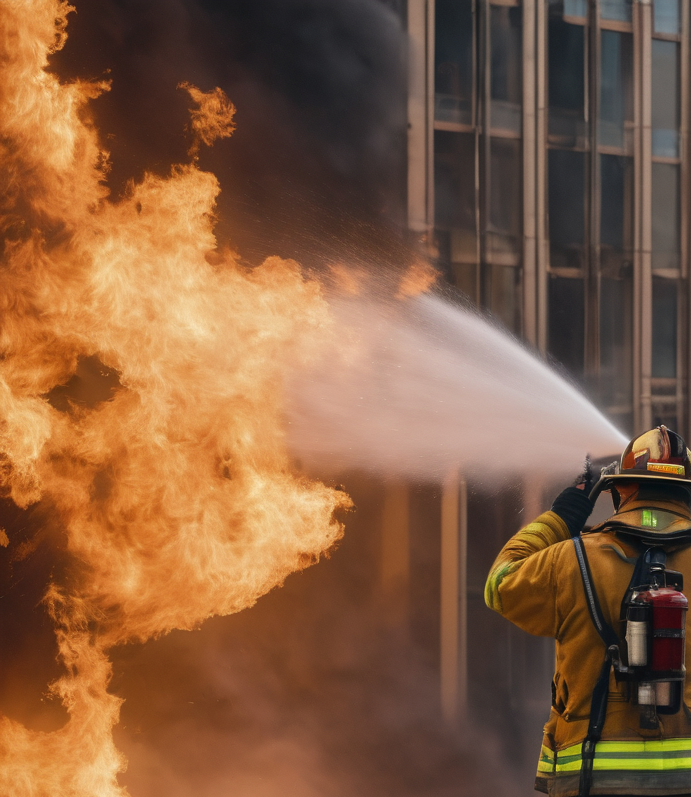
The United Arab Emirates (UAE) is a country known for many noteworthy achievements, including rapid urbanisation, turning the desert into futuristic metropolises with its many modern architectural marvels, embracing and adopting technological advances in safety and security towards the UAE being one of the safest places in the world. One of the essential pillars of this commitment is the UAE fire and life safety sector and emergency response. This industry is critical in ensuring the preparedness and safety of the UAE’s people, property, infrastructure and environment.
High standards and regulations
Over the past decade, the UAE has evolved and improved towards establishing and implementing remarkably high standards and regulations in fire safety and emergency response management. These regulations provide minimum requirements on building design, fire prevention, firefighting equipment and emergency response protocols. The government at the federal level and each of the Emirates has made it their top priority to implement and ensure the safety of citizens and residents.
The rigorous enforcement and practice of these regulations and operational procedures have improved the overall fire-safety landscape and set a precedent for other nations. With a strong focus on compliance, the UAE has significantly reduced fire-related incidents and casualties.
Technological advancements
One of the exciting aspects of the UAE is its embrace of cutting-edge technologies. Advanced fire detection and suppression systems are typically installed, ensuring fires are detected and tackled at their earliest stages. These systems often employ state-of-the-art sensors, alarms, wireless mesh, communication networks, etc. to respond swiftly and effectively.
Additionally, intelligent building management systems have been implemented to enhance safety and response times. These systems can automatically control various systems, including HVAC, lighting, vertical transportation, access control, etc. in a fire emergency, making it easier for occupants to evacuate and aiding first responders in their efforts.
Civil Defence (CD) has invested in developing an AI system that predicts the likelihood of fire occurrence within neighbourhoods among a particular community demographic and notifies the residents of fire-safety prevention educational content to increase awareness and reduce fire incidents. This is achieved via an SMS containing an AI-generated link to a video with an avatar of CD officers communicating in the recipient’s native language. This AI technology is contributing to reducing the number of fire incidents.
Modern infrastructure
The UAE’s breathtaking skyscrapers and modern infrastructure have redefined urban living and attracted millions of worldwide visitors. However, these architectural marvels come with unique fire-safety challenges. The UAE has had to adapt to address these challenges, especially in high-rise buildings, which are more vulnerable to fire incidents for many reasons, including the multicultural demographic of residents.
The industry invests in innovative fire suppression and evacuation technologies tailored to these structures. This includes new-era fireproof materials, advanced sprinkler systems, image recognition detection and warning, and smoke evacuation methods to ensure the safety of occupants and minimise damage.
Well-equipped fire departments
The UAE’s fire departments are highly equipped and well-trained. They possess state-of-the-art firefighting equipment, including modern fire engines, aerial appliances, water response, drone technologies and specialised/multi-terrain vehicles. Firefighters undergo rigorous training at the UAE’s operational firefighter training complex located between Abu Dhabi and Al Ain to handle complex firefighting scenarios, including Fire, Hazmat CBR, Urban Land & Rescue, etc. in diverse mock in-the-field settings like high-rise buildings, medical facilities, aviation, rail, petrochemical, chemical warehouses, tunnel, trench and sub-terrain rescue and building collapse scenarios.
In addition to local training, the UAE regularly collaborates with international authorities, agencies, experts and organisations to ensure the highest level of preparedness and response. Such partnerships facilitate knowledge sharing, skill development and the adoption of best practices worldwide, contributing towards the UAE CD being one of the global emergency response leaders.
International collaboration
The UAE’s commitment to fire safety goes beyond its borders. The country annually hosts numerous international events, conferences and exhibitions related to the construction industry, fire safety, police, disaster management and emergency response. These global events allow the UAE to exchange knowledge and experience with experts from different countries, fostering a culture of continuous improvement in the fire safety and emergency response fields.
Furthermore, the UAE actively participates in international organisations and engages in knowledge-sharing partnerships to remain ahead of the latest trends, technologies, and fire safety and prevention strategies. This ensures that the UAE remains at the forefront of the field and is well prepared for current and emerging challenges.
Challenges and ongoing efforts
Despite its remarkable achievements, the UAE faces several challenges. First, the industry must continue to educate and train all stakeholders, including developers, building owners, building managers, facility managers, owners associations, occupants, manufacturers, installers and applicators of fire-safety products and systems, fire and life safety specialists, various governmental department employees, and their own fire and emergency responders, to ensure that they are all together well prepared for fire-related incidents.
Additionally, addressing fire safety in existing buildings, especially older structures that may not meet current safety standards, remains a significant challenge. Retrofitting and updating older buildings to meet modern fire-safety regulations is complex and costly. Still, it is essential to ensure the safety of occupants and protect historical assets.
The industry also faces the ongoing challenge of keeping up with the rapid growth and urbanisation in the UAE. As cities like Dubai, Abu Dhabi and Sharjah continue to expand and evolve, the fire-safety industry and jurisdictional authorities must adapt to the changing landscape and its associated demands.
Fire-safety education
The UAE has placed a strong emphasis on fire-safety education and awareness. Various programmes and initiatives have been launched to educate the general population about fire-safety practices. Educational campaigns, school programmes and public service announcements (including AI technology highlighted earlier) aim to ensure that residents and visitors are well informed, aware and prepared regarding fire prevention, initial response and emergency procedures.
Investment in research and development
UAE manufacturers have been investing significantly in research and development to stay ahead of emerging challenges. This approach is continuously contributing towards innovations in fire-resistant materials like microencapsulated gas-extinguishing agents and microcapsule sticker gas extinguishing devices, innovative building designs including 3D printed and carbon-fibre structures, and disruptive firefighting equipment like intelligent detection telescopic firefighting branches and firefighting extinguishing drones that can be launched to quench building fires.
Supporting this are the standards organisations and authorities, like the Abu Dhabi Quality and Conformity Council (ADQCC), Ministry of Industry and Advanced Technology (MOIAT) and the UAE Ministry of Interior General Headquarters of Civil Defence located in the nation’s capital, together with industry experts, higher-education researchers and engineers who continuously work to develop product standards and test methods in keeping up with the pace of the technological advancements. The result is more innovative, efficient and sustainable fire-safety products and solutions that benefit the UAE and contribute to global fire-safety industry advancements.
Looking ahead
The UAE is a shining example of what can be achieved with the proper focus, commitment and dedication to safety and security. With ever-improving standards, technological advancements and international collaborations, the local fire-safety industry has significantly reduced fire-related incidents and protected lives and property.
The fire industry faces exciting opportunities and ongoing challenges as the UAE continues to experience rapid growth and urbanisation. The UAE will continue its commitment to education, research and innovation as it positions itself as a global leader and symbol of fire and life safety excellence. It aims to become a benchmark for other nations striving to enhance their standards and practices.
For more information: go to www.eslglobal.com
About the Author

This post was uploaded by Mark Seton.
- Mark Seton
- Mark Seton
- Mark Seton
- Mark Seton
- Mark Seton
- Mark Seton
- Mark Seton
- Mark Seton
- Mark Seton
- Mark Seton
- Mark Seton
- Mark Seton
- Mark Seton
- Mark Seton
- Mark Seton
- Mark Seton
- Mark Seton
- Mark Seton
- Mark Seton
- Mark Seton
- Mark Seton
- Mark Seton
- Mark Seton
- Mark Seton
- Mark Seton
- Mark Seton
- Mark Seton
- Mark Seton
- Mark Seton
- Mark Seton
- Mark Seton
- Mark Seton
- Mark Seton
- Mark Seton
- Mark Seton
- Mark Seton
- Mark Seton
- Mark Seton
- Mark Seton
- Mark Seton
- Mark Seton
- Mark Seton
- Mark Seton
- Mark Seton
- Mark Seton
- Mark Seton
- Mark Seton
- Mark Seton
- Mark Seton
- Mark Seton
- Mark Seton
- Mark Seton
- Mark Seton
- Mark Seton
- Mark Seton
- Mark Seton
- Mark Seton
- Mark Seton
- Mark Seton
- Mark Seton
- Mark Seton
- Mark Seton
- Mark Seton
- Mark Seton
- Mark Seton
- Mark Seton
- Mark Seton
- Mark Seton
- Mark Seton
- Mark Seton
- Mark Seton
- Mark Seton
- Mark Seton
- Mark Seton
- Mark Seton
- Mark Seton
- Mark Seton
- Mark Seton
- Mark Seton
- Mark Seton
- Mark Seton
- Mark Seton
- Mark Seton
- Mark Seton
- Mark Seton
- Mark Seton
- Mark Seton
- Mark Seton
- Mark Seton
- Mark Seton
- Mark Seton
- Mark Seton
- Mark Seton
- Mark Seton
- Mark Seton
- Mark Seton
- Mark Seton
- Mark Seton
- Mark Seton
- Mark Seton
- Mark Seton
- Mark Seton
- Mark Seton
- Mark Seton
- Mark Seton
- Mark Seton
- Mark Seton
- Mark Seton
- Mark Seton
- Mark Seton
- Mark Seton
- Mark Seton
- Mark Seton
- Mark Seton
- Mark Seton
- Mark Seton
- Mark Seton
- Mark Seton
- Mark Seton
- Mark Seton
- Mark Seton
- Mark Seton
- Mark Seton
- Mark Seton
- Mark Seton
- Mark Seton
- Mark Seton
- Mark Seton
- Mark Seton
- Mark Seton
