

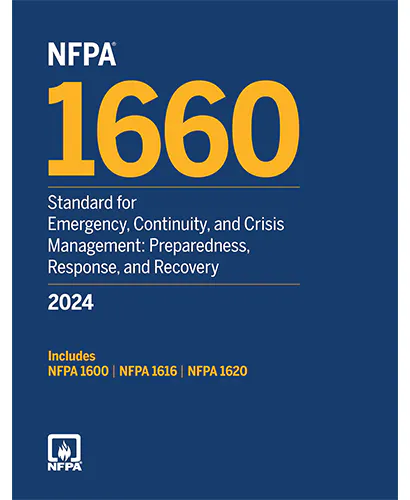
This article is the first of a four-part series that looks at the key elements of NFPA 1660 (2024) Standard for Emergency, Continuity, and Crisis Management: Preparedness, Response, and Recovery
In an era marked by increasing uncertainty and volatility, the importance of disaster preparedness and business continuity cannot be overstated. From natural disasters to cybersecurity threats and public health emergencies, organisations face a myriad of risks that can disrupt operations, threaten livelihoods and undermine their ability to thrive. In response to these challenges, the National Fire Protection Association (NFPA) developed this first edition of NFPA 1600, which forms part of the consolidation plan for NFPA’s Emergency Response and Responder Safety (ERRS) standards. At the April 2019 NFPA Standards Council meeting, all ERRS technical committees and NFPA staff were directed to consolidate and unify the ERRS standards with similar content areas. The objective of this consolidation is to increase usability, reduce errors and conflicts, and ultimately produce higher quality standards.
The 2024 edition of NFPA 1660 integrates NFPA 1600 2019 Edition (Standard on Continuity, Emergency, and Crisis Management), NFPA 1616 2020 Edition (Standard on Mass Evacuation, Sheltering, and Re-entry programs), and NFPA 1620 Edition (Standard for Pre-Incident Planning) into a single standard that establishes a common set of criteria for emergency management and business continuity programs; mass evacuation, sheltering and re-entry programs; and the development of pre-incident plans for emergency response personnel. For the 2024 edition, the technical committees have ensured consistency and continuity throughout the entire document by creating a single set of terminology and also revised the reference chapters to increase usability.
Several factors contributed to the development of NFPA 1660 as a consolidated standard:
1. Increased awareness of risks: With the growing recognition of various risks and threats, including natural disasters, terrorist attacks and other emergencies, there was a heightened awareness of the need for effective emergency management and business continuity planning.
2. Fragmented standards: Before NFPA 1660, there were numerous fragmented standards, guidelines and practices for emergency preparedness and continuity planning, often specific to certain industries or sectors. This fragmentation made it challenging for organisations to develop comprehensive and consistent plans.
3. Industry collaboration: NFPA 1660 was developed through a collaborative process involving stakeholders from various industries, government agencies, emergency responders and experts in emergency management. This collaborative approach ensured that the standard addressed the diverse needs and concerns of different sectors.
4. Comprehensive approach: NFPA 1660 provides a comprehensive framework for emergency management, covering a wide range of topics such as risk assessment, planning, implementation, training, exercises and evaluation. By consolidating these elements into a single standard, NFPA 1660 offers a holistic approach to emergency preparedness and continuity planning.
5. Recognition and adoption: NFPA 1660 has been widely recognized and adopted by organisations, government agencies and industries around the world as a benchmark for emergency management and business-continuity planning. Its status as a consolidated standard enhances its credibility and applicability across diverse sectors.
This comprehensive consolidated standard serves as a blueprint for organisations seeking to enhance their resilience and ensure continuity in the face of adversity. In this initial article, we’ll discuss the key requirements outlined in NFPA 1660 and explore how organisations can implement this standard to strengthen their disaster preparedness efforts. Future articles will do a deeper dive into the standard focusing on the key requirements highlighted below.
Understanding NFPA 1660
NFPA 1660 is more than just a set of guidelines; it’s a framework for building a culture of preparedness and resilience within organisations. Originally developed in response to the growing need for standardized disaster management practices, the standard has evolved to encompass a wide range of disciplines, including emergency management, business continuity and continuity of operations. Its primary goal is to help organisations anticipate, prevent, respond to and recover from emergencies and disasters in a systematic and coordinated manner.
Key requirements of NFPA 1660
1. Risk Assessment:
One of the foundational principles of NFPA 1660 is the importance of conducting thorough risk assessments. With the growing recognition of various risks and threats organisations are required to identify and evaluate potential hazards and vulnerabilities that could impact their operations. This includes natural hazards such as earthquakes, floods and hurricanes, as well as human-made threats like cyber-attacks, supply-chain disruptions and acts of terrorism. By understanding the specific risks facing their organisation, stakeholders can develop targeted strategies to mitigate these risks and enhance their resilience.
2. Emergency Response Planning:
Effective emergency response planning is essential for minimizing the impact of disasters and ensuring the safety of personnel and assets. NFPA 1660 mandates the development of comprehensive emergency response plans that outline clear protocols for responding to various types of emergencies. These plans should include procedures for evacuating personnel, securing facilities, coordinating with emergency responders and communicating with stakeholders. Organisations are also encouraged to conduct regular drills and exercises to test the effectiveness of their plans and identify areas for improvement.
3. Crisis Communications:
Communication is key during times of crisis. NFPA 1660 emphasises the importance of establishing robust communication channels and protocols to ensure timely and accurate dissemination of information to stakeholders. This includes both internal communication within the organisation and external communication with the broader community, media and regulatory agencies. Organisations are encouraged to develop crisis communication plans that outline procedures for delivering messages, managing rumours and misinformation, and coordinating with public authorities.
4. Recovery Planning:
Recovering from a disaster is often a complex and protracted process. NFPA 1660 requires organisations to develop comprehensive recovery plans that address both short-term and long-term recovery needs. These plans should include strategies for restoring essential functions, repairing infrastructure and resuming operations as quickly and efficiently as possible. Organisations are encouraged to prioritise critical activities and resources, establish alternative work locations and engage external support services as needed.
5. Continuity of Operations:
Maintaining continuity of operations is paramount for organisations facing disruption. NFPA 1660 mandates the development of continuity of operations plans (COOP) that outline strategies for maintaining essential functions and services during and after a disaster. These plans should identify critical processes, resources and personnel, and establish procedures for relocating operations, implementing telework arrangements and accessing backup systems. Organisations are encouraged to conduct regular assessments to ensure the effectiveness of their COOPs and address any gaps or deficiencies.
6. Training and Exercises:
Preparedness is not just about having plans in place but also about ensuring that personnel are trained and ready to execute those plans effectively. NFPA 1600 requires organisations to provide regular training and exercises to familiarise staff with emergency procedures, roles and responsibilities. This includes tabletop exercises, functional drills and full-scale simulations that simulate real-world scenarios and test the organisation’s readiness to respond to emergencies. Training should be tailored to the specific needs and capabilities of different departments and personnel roles within the organisation.
Wider risk assessment
When considering the risks that can affect the community, reference to NFPA 1300: Standard on Community Risk Assessment and Community Risk Reduction Plan Development is recommended. NFPA 1300 provides guidelines for conducting community risk assessments and developing community risk reduction (CRR) plans to enhance public safety and resilience. In addition, NFPA 3000: Standard for an Active Shooter/Hostile Event Response (ASHER) Program should also be considered in an overarching risk analysis. NFPA 3000 provides guidelines for preparing, responding to and recovering from active shooter and hostile events in various settings, including schools, workplaces, healthcare facilities and public spaces.
Conclusion
NFPA 1660 serves as a comprehensive roadmap for organisations seeking to enhance their resilience and ensure continuity in the face of adversity. By adhering to the key requirements outlined in this standard, organisations can strengthen their disaster preparedness efforts, protect their assets and stakeholders, and ultimately, enhance their ability to thrive in an increasingly uncertain world. As the global landscape continues to evolve and new threats emerge, NFPA 1660 provides a solid foundation for building a culture of preparedness and resilience that can withstand the test of time. Further detail of the standard will be discussed in future articles.
About the Author

Branch President, GCC Branch – The Institution of Fire Engineers.
