
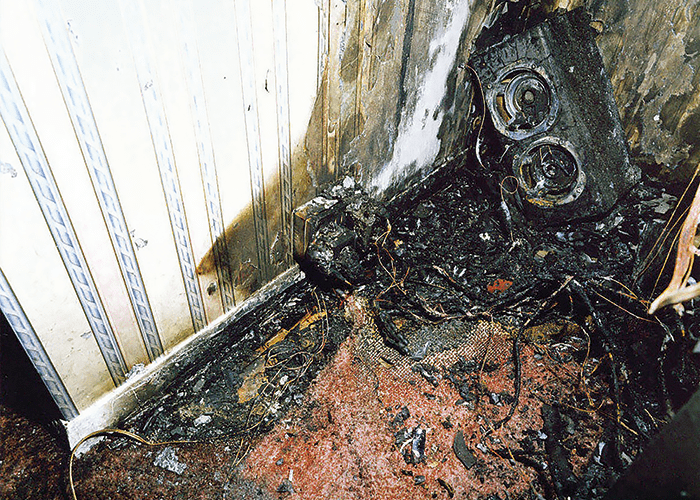
Seldom will a fire officer experience a more sobering feeling than when standing in the ruins of a gutted fire-damaged building pondering the cause of the outbreak. Gulf Fire’s Consultant Editor Neil Wallington, himself a former senior British Chief Fire Officer, highlights some of the more salient principles of fire investigation work.
Only experience and an appreciation of fire behaviour together with a systematic approach may lead to the correct conclusion. Past procedures for investigating fires tended to concentrate on eliminating accidental causes of fires (electrical faults, smoking, carelessness, etc), and these are still important. Nowadays, the elimination of arson as a cause is also an early priority in any investigation.
The Interpretation of Evidence
Only where evidence from a fire scene is documented is it possible to see the results of speculative evidence including such as:
- The appearance of char and cracks given meaning by experimentation.
- Spalling of concrete interpreted as being evidence of the use of an accelerant and the condition of the concrete – whether new, sub-standard or rapidly cooled when hot.
- ‘V’ patterns showing evidence of fast or slow burning fires whereas size, burning rate and ventilation are the really significant manifestations of ‘V’ patterns.
- Inverted cone patterns interpreted as conclusive evidence of flammable liquid fires. Any burning fuel source, where the fire plume is not vertically restricted, will produce inverted cone patterns.
- At the scene of a vehicle fire through an alleged electrical fault when no remains of a battery can be located on board.
Origin and Cause Determination
The following is an eight-point procedure which can generally be accepted as good investigative practice at the fire scene:
Secure the premises from unauthorised and unnecessary entry
Gather information about the fire from key persons. Interview:
- Department head/occupants/discoverer/reporter of the fire
- Firefighters for their general observations
Systematically appraise the total premises, beginning with an examination of the exterior walls of the building:
- Note area of most intense burning on windows, doors and exterior walls
- Confirm wind direction at time of the fire by observing burn patterns around windows and doors
- Look for obvious signs of incendiarism
Proceed to the interior of the building:
- Start at the area of least damage. Work back to those areas where damage is most severe
- Observe the indications of the fire for fire spread information
- Eliminate the common accidental causes of fire
Evaluate the fire for suspicious indications. Observe:
- Windows covered up to delay the external detection of the fire
- Obstacles blocking the entry of the fire brigade or civil defence
- Fixed fire protection systems shut off or damaged
- Measures taken to spread or accelerate burning
- Streamers or trailers, doors propped open, containers or other indications of flammable liquids
- Remnants of matches, candles, rags, etc.
- Indications of separate unconnected fires
Carefully evaluate the suspected area of origin:
- Locate the area of most intense overhead burning since this may indicate that the fire started directly below
- Retrace heat flow downward until you reach the lowest level of burning likely to be the point of fire origin
- Confirm the point of origin by examining surfaces of walls, furniture and other items for charring
Keep a look out for:
- Matches, candles, burners or other sources of open flames
- Electrical appliances, motorised equipment commonly found in most factories
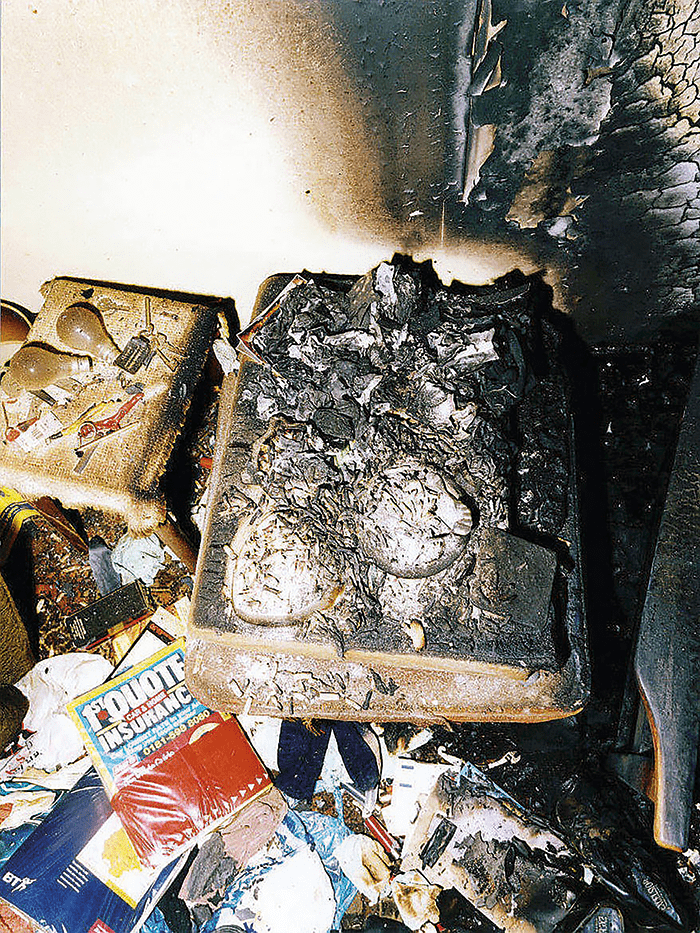
- Low temperature, slow acting devices such as light bulbs and steam pipes
Only seize hard, physical evidence if it is known that the arrival of the fire investigator will be delayed or if there is a strong possibility that the evidence could be damaged or destroyed
The Motivation for Arson
Arson from within is frequently started by employees who endeavour to cover a crime such as embezzlement, or to express a variety of grievances. Intruders, too, can have a high profile in arson cases. Fires can cover up other crimes and economic pressure has also seen an escalation of fraud-related fires.
Two particularly well-recommended sources of more detailed reading on fire investigation are:
Fire and Explosion Investigations: National Fire Protection Association (NFPA) 921.
Principles of Fire Investigation: R.A. Cooke & R.H. Ide, The Institution of Fire Engineers.
For more information, go to neil.wallington@gulffire.com
About the Author

Neil Wallington is a former British Chief Fire Officer, a Past International President of the Institution of Fire Engineers, and a holder of the Queen’s Commendation for Brave Conduct. He is the author of 17 books on the work of the fire service, and acts as a consultant with extensive experience in the Gulf on a range of projects.
