
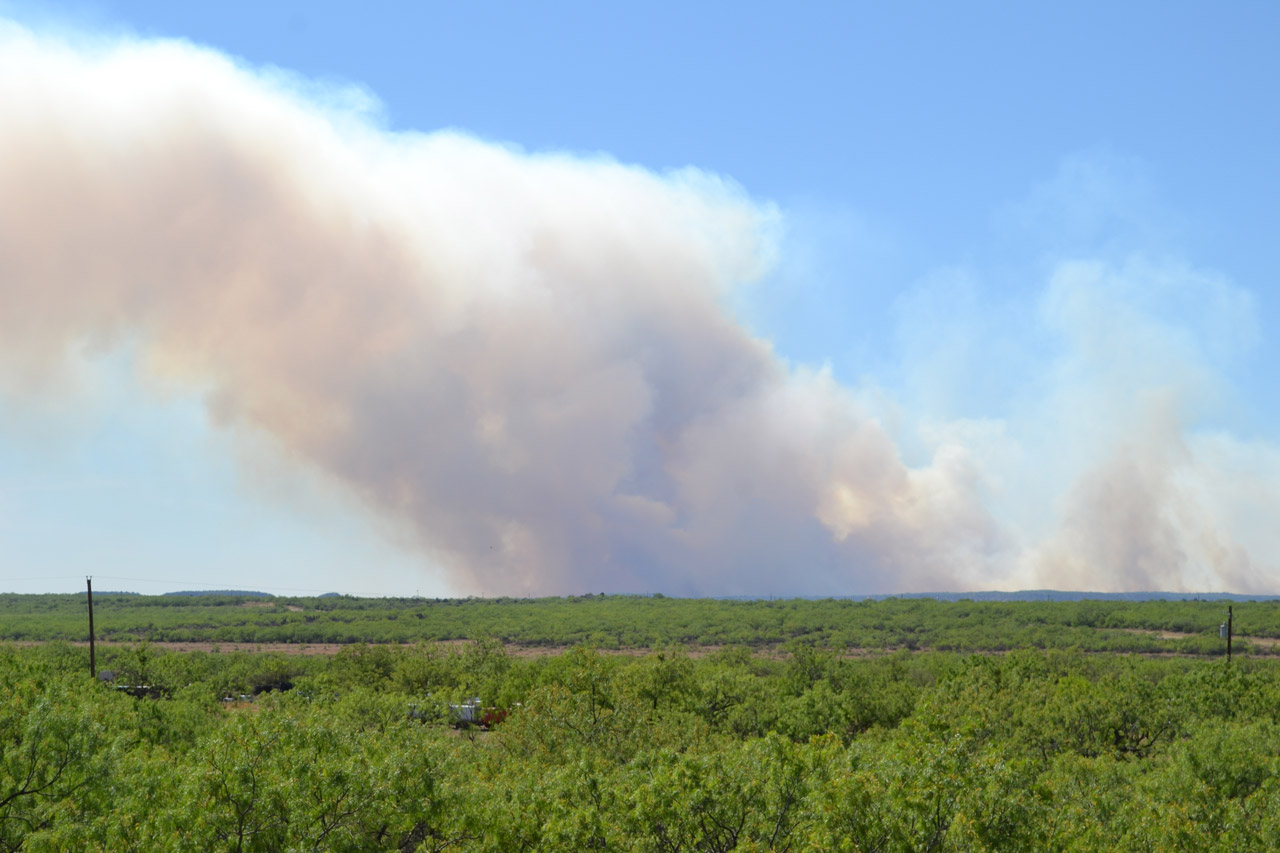
In recent months, global climate change has continually brought abnormally high temperatures which have worsened the severity and incidence of catastrophic forest, bush and wildfires affecting lives and properties.
During July and August 2022, mainland Europe and the UK particularly suffered from a wide geographic number of major fast-spreading and protracted wildfires. Throughout this fiery period, firefighters faced unprecedented physical challenges that in hindsight are posing questions about fire services being sufficiently prepared for such increasingly occurring situations.
Scientists expect extreme ‘fire weather’ conditions will also face firefighting teams with water supply challenges that will continue to become more frequent and severe without substantial and rapid action to combat climate change temperature rises.
Even in the Middle East, this growing trend of such serious and protracted hot-weather-induced fires has led to a development called ‘FireOut’, a new system designed by five engineering students from Heriot-Watt University in Dubai aimed at controlling wildfires in regions suffering from recurring outbreaks. The system has won the 2022 National James Dyson Award.
The students identified that areas that typically suffer from bushfires in the dry season, tend to receive a large amount of rainfall in the wet season. This inspired the team to design a system that stores rainwater during the wet season to use in controlling bushfires in the dry season. The winning team has received a cash prize of Dh 24,000, which can be used towards the next phase of their invention’s development. FireOut, along with runners up, will progress to the international stage of the James Dyson Award. The international shortlist will be announced on 12 October and the international winners on 1 November.
Dr. Eng. Suaad Al Shamsi, one of the local judges for the competition, said: ‘We were fascinated by the FireOut invention, and all the judges credited how the students identified a pressing current day problem and designed a potential solution to combat the problem. We were really impressed that the team focused on sustainability and environmental factors to create a technology that can help extinguish fires in areas that tend to suffer.’
FireOut uses a sensor camera that, upon fire detection, alerts a control room which then transmits the location of the wildfire over radio modules aided by antennas. Upon receiving signals, the controllers automatically operate a pump, distributing the collected rainwater from the tower to the sprinklers that project water to bring the fires under control until the first responders arrive. Once brought under control, the pumps can then be closed ready for the towers to collect rainwater again.
The Heriot-Watt University team identified that the first responders often have limited water supply, which can result in the fire burning for longer until sufficient water supply has been provided to extinguish the fire. FireOut’s design of a rainwater storage system, sensor cameras and a communication system can allow large quantities of water to be pumped to sprinklers when needed. This results in the extinguishing process starting well before the first responders arrive, saving time, life and land.
Forthcoming major Gulf events
At the time of this issue of Gulf Fire, there are two forthcoming major Gulf events to look forward to:
The 2022 FIFA Football World Cup
Qatar will have a global focus when it hosts the 2022 FIFA Football World Cup, which runs from 20 November to 18 December. This will be the 22nd running of the FIFA World Cup competition, the quadrennial international men’s football championship, which will be contested by 32 national teams. This will be the first World Cup ever to be held in the Arab world.
Six years of intense planning and construction have delivered eight impressive new stadiums in strategic locations right across Qatar. The principal stadium is at Lusail in capital Doha and has a capacity of 80,000 spectators where the first game and the final match of the tournament will be played. The other seven stadium sites are strategically located around the state and are connected by a new 76km-long Metro railway, with 38 stations above ground servicing all the stadiums. To accommodate the anticipated considerable number of worldwide visitors to the World Cup matches, a large number of new hotels have also been constructed.
Intersec 2023
The 24th edition of Intersec is under the patronage of His Highness Sheikh Mansoor Bin Mohammed Bin Rashid Al Maktoum, and will be staged at the Dubai World Trade Centre from 17 to 19 January 2023. The show theme is: The 24th Intersec will unite the industry and accelerate conversations to explore strategies and source technologies for the challenges faced by fire and global security leaders and professionals.
The staging of Intersec 2022 was under the shadow of the protracted Covid-19 lockdown period and the 2023 show already bids to break all records with over 1,000 exhibitors from 120 countries and a likely 30,000 attendees over the three days within the 47,000m2 area of Intersec.
Gulf Fire is proud that Messe Frankfurt Middle East GmbH, the organisers of the annual Intersec Dubai Show, marks Gulf Fire as a Key Media Partner for the event, an honour that MDM Publishing and its team greatly value.
About the Author

Neil Wallington is a former British Chief Fire Officer, a Past International President of the Institution of Fire Engineers, and a holder of the Queen’s Commendation for Brave Conduct. He is the author of 17 books on the work of the fire service, and acts as a consultant with extensive experience in the Gulf on a range of projects.
