
Now that daily life is getting back to something like normality, it seems that the varied pre-Covid challenges facing worldwide fire-safety activity and firefighters have not gone away.
The circumstances of the tragic West London Grenfell Tower fire of 2017 and its 72 tragic fatalities are still being examined by a lengthy government Inquiry which was halted during the height of the pandemic but has since reconvened.
In 2020, some new UK legislation was introduced embracing a number of pre-Grenfell fire-safety regulations, but more changes are awaited from the final recommendations of the Inquiry that will surely have ramifications well beyond the UK.
Staying with building fire protection, FDIS, a fire-door inspection organisation, has warned of a ‘tragedy waiting to happen’ after its data revealed that its approved inspectors carried out more than 100,000 UK inspections during 2021 and found that 75% of fire doors failed to meet the required standards.
Rather concerningly, FDIS found that in a 2019 survey, 76% of the fire doors it inspected were condemned as not fit for purpose, indicating that there has not been much improvement since its previous inspections.
Structures inspected that had the highest number of fire-door failures included those of healthcare buildings, local authorities, housing associations and private housing. As the fire doors in these buildings are subject to higher use and traffic than other building types, regular inspection and maintenance is key to ensuring they remain fit for purpose throughout their lifespan to ensure that fire safety is not compromised.
The most common reasons which can be a result of one or multiple issues to cause inspection failure were excessive gaps between the door and the frame (77%), care and maintenance issues (54%), and issues over smoke sealing (37%). In almost a third of cases, inspections failed due to improper installation – those doors concerned were never fit to perform their primary task of holding back fire and smoke.
Fires in electric vehicles
Apart from inadequate fire doors wherever they may be, another newer and rapidly growing operational challenge for firefighters is dealing with fires in electric vehicles (EVs) involving their lithium-ion high-voltage batteries.
Electric batteries create their own oxygen supply and traditional oxygen starvation is ineffective. In addition, extreme hot weather conditions and improper thermal management systems of the battery can apparently negatively impact performance and shorten their life.
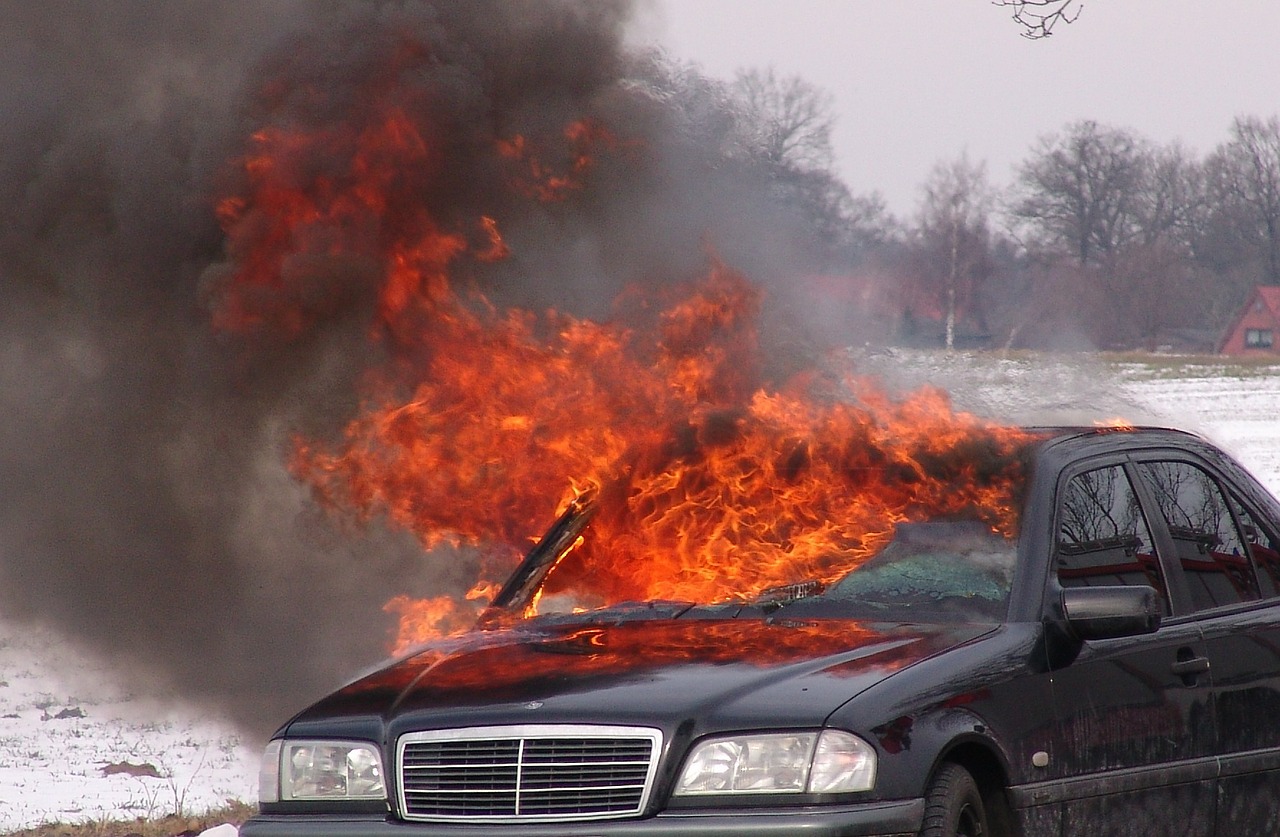
Fires in petrol and diesel cars are fairly commonplace, but an EV fire (there were 54 in London in 2019) commands a lot more attention. EV technology is new and EV fires are complex, often heralded by a highly toxic vapour cloud followed, possibly, by an explosion. They can occur spontaneously and, even when they appear to be out, can ignite again after a few hours or even later.
However, Fire & Rescue Services are adapting to develop strategies to deal with EV fires. For example, in the UK, Bedfordshire Fire and Rescue Service has confirmed that in the aftermath of any incident, road traffic collision or fire involving an EV, ‘one of our attending fire engines will follow the recovery vehicle back to the unloading point at their yard to assist with any fires’. It also said it has developed a system that enables fire crews to identify what model of EV is involved in an incident, and the location of battery and isolation switches.
Nevertheless, opinions do seem to be divided on how best to tackle an EV fire but, generally, immense quantities of water to cool the battery pack (although this will not prevent fire erupting again), a fire blanket to suppress the flames and breathing sets for the firefighters to protect themselves from the toxic vapour cloud is the standard approach. Either that or simply let the burning vehicle burn itself out.
Meanwhile, the surrounding area must be checked for discarded battery cells that could have been propelled from the battery pack by an explosion and might spontaneously ignite later. Following containment, the burnt-out EV must be removed and deposited in a compound away from buildings and other vehicles. Some 25% of scrapyard fires and other outbreaks in waste processing plants are caused by spent lithium-ion batteries.
Elsewhere, for electric cars that are on fire or at risk of being so, the Fire Service in Copenhagen, Denmark, has developed a truck-mounted vehicle containment solution. The smouldering EV is lowered into the demountable container, which, like a skip, is then hoisted onto a flatbed truck. Nozzles in the floor and sides of the container allow water to be pumped into it. Once full, the container and car are taken to a safe storage area and left, possibly for weeks, until the vehicle is no longer a hazard. All being well, the water is then filtered and treated for safe disposal.
The April 2022 issue of Gulf Fire and the May 2022 issue of our sister magazine UK Fire carried features of the difficulties faced by firefighters at EV fires, including details of a new and revolutionary extinguishing system. All can be seen on the MDM Publishing website.
Finally, look out for the feature in the October 2022 Gulf Fire edition highlighting Qatar’s Football World Cup focusing on the new stadiums and fire safety measures for the forthcoming month-long tournament.
About the Author

Neil Wallington is a former British Chief Fire Officer, a Past International President of the Institution of Fire Engineers, and a holder of the Queen’s Commendation for Brave Conduct. He is the author of 17 books on the work of the fire service, and acts as a consultant with extensive experience in the Gulf on a range of projects.
