Welcome to our latest edition of Fireside Chat, where we aim to shed light on the crucial and often underrated aspects of detector maintenance testing. I’m David Campbell, General Manager at ESL, and it’s my pleasure to bring you insights from an industry expert in this field. Recently, I had the privilege of sitting down with Stephen Beadle from Detectortesters for an informal yet enlightening catch-up over coffee. In what turned out to be a richly informative Fireside Chat, Stephen shared his expertise on the importance of detector maintenance testing, the evolving standards in this domain and the innovative solutions Detectortesters offers to meet these challenges.
In a world where fire risks are ever present yet often overlooked, understanding the nuances of fire-system maintenance and compliance is not just a technical necessity but a moral obligation. As we navigated through a series of questions, Stephen’s responses highlighted the technical aspects of detector maintenance testing and its impact on preserving human life and property. The insights provided are particularly pertinent, reflecting a deep understanding of global standards and localised requirements, especially relevant in the UAE’s rigorous fire and life safety codes.
As you read through our conversation, I invite you to reflect on the importance of regular fire system testing and maintenance. This discussion concerns technical compliance and a deeper commitment to safety and responsibility. I hope you find this dialogue as enlightening as I did.
Why is testing important?
The reason for testing for most people is clear and obvious. Testing ensures the fire system is operating as it should be and is ready to activate in the event of a fire. Failure to test puts both buildings and those that occupy them at serious risk. While, thankfully, the chance of fire is relatively low, when fires do occur, they are often severe events leading to significant damage and loss of life.
Fire systems are expensive, but rather than an unwanted cost, they need to be viewed as an investment – designed to protect the things that mean the most to us, whether human life, buildings or other assets. To maintain these investments, proper care and maintenance need to be carried out; without upkeep, system faults can develop and be left undiagnosed, causing the system to malfunction and, crucially, not activate appropriately in a real fire scenario.
Building owners or premises managers are responsible for owning this maintenance and ensuring the safety of the people occupying the building. If there were to be a fire, it would be this person that everyone looks to, asking questions about the system’s integrity, such as: When was it installed? When was it last tested? As part of a regular maintenance programme, only functional testing will allow these questions to be answered confidently and provide those responsible with the ultimate peace of mind.
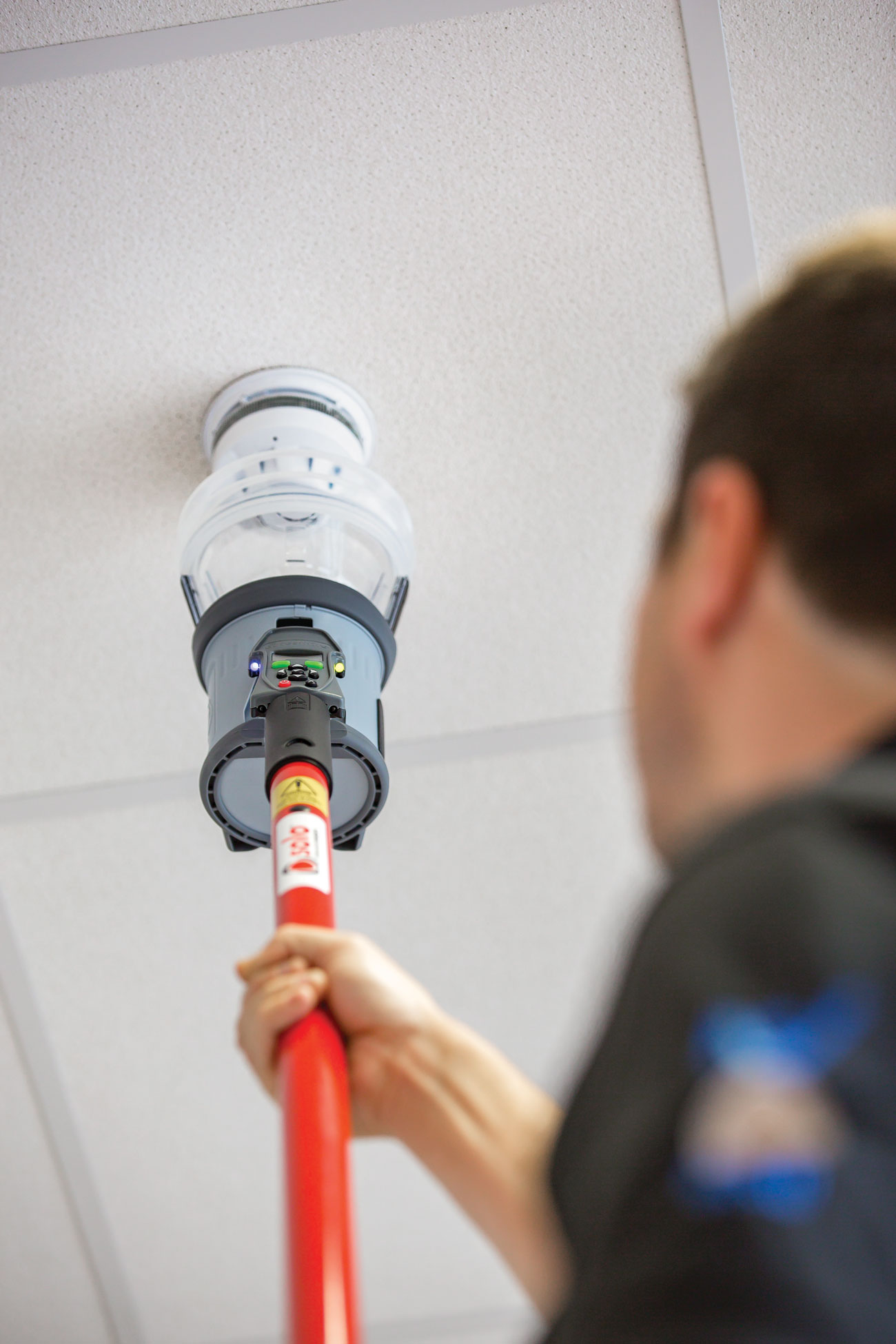
It’s also essential that all the detectors are tested. Testing one or two devices does not satisfy the requirements; one untested detector could be the difference between a fire taking hold and causing significant damage and a detected and suitably managed fire. At times, testing all detectors can require additional effort; not all detectors are smoke detectors and not all detectors are easy to access – they may be installed in high-ceiling buildings, lift shafts or secure rooms. However, solutions exist and are available to cover all these challenges with tools, from our Solo and Testifire range available for functional testing of smoke, heat and CO detectors and specialist solutions, including our Scorpion solution, for testing detectors that are hard to access and aspirating smoke detection systems. Compliance testing is easily achieved with access to these tools and correct use.
How often should testing be carried out?
Codes and standards exist that spell out the frequency at which testing should occur. In most cases, the recommendation is that functional testing should be carried out at least once a year, but this could be increased if the detector’s location requires it: for example, if it is installed in an area prone to dirt buildup. In addition to the functional testing, the recommendation is that maintenance visits be scheduled every six months, allowing any issues to be noted and corrected.
Standards such as BS:5839:1 and NFPA 72 have led the way when it comes to shaping best practices and informing on safety standards; however, the UAE has always strived to ensure adherence with these standards and in a logical progression from the adoption of these standards has worked to incorporate these stipulations in the country’s own single source – resulting in the introduction of the UAE Fire and Life Safety Code of Practice in 2017.
What’s your involvement in standards across the world?
The standards mentioned above reference functional testing. This type of testing differs from any other form of testing, such as magnet and electrical system testing. The standards stipulate functional testing as it requires testing detectors with a source that resembles genuine fire conditions (including smoke) and ensures that a detector can react accordingly.
Whether it’s our Solo smoke aerosols or the cartridges used within our Testifire range to simulate smoke, we develop solutions that allow easy compliance with the standards and ensure detectors can be tested without risk to the detector or the environment in which they are installed.
What does best practice look like?
Whilst codes and standards are well established and widely adopted, they are not the only source of recommendations. Detector manufacturers spend significant amounts of money investing in the design and reliability of their devices; as part of this, they have specific guidance on how detectors should be installed, tested and maintained to prolong their life. This will include undertaking regular functional testing using a certified solution, which the manufacturer approves to ensure that no damage is caused to the detector during testing.
Industry trade associations in specific countries also offer guidance papers, training and insight into various matters related to fire safety; these often draw reference from standards and help to spread awareness of best practices and ultimately raise fire standards worldwide.
If you were to look for a common theme or interpretation across the standards, you would find they require the following:
- A competent person should carry out periodic inspections and functional testing/servicing.
- Tests should ensure combustion products (e.g. smoke aerosol) can travel unhindered from outside into the chamber and cause activation.
- The period between successive inspection and servicing visits should not exceed six months.
- Visual inspection to ensure that the use of the room and setup hasn’t changed – is the correct form of detection being used?
- Only testing the detector utilising the test button or a test magnet should not be considered complying with the requirements as it does not satisfy the recommendation.
Only when testing is carried out in line with these requirements can those responsible for buildings be sure that the fire system is fit for purpose and ready to activate in the event of a fire. Only this gives them ultimate peace of mind, knowing they have done all they can to protect the people and buildings they are responsible for.
So, what are the tools that should be used for testing?
Only approved tools must be used for testing. A fire detector is installed to save lives, and it’s therefore vital that anything that comes into contact with it is approved by the manufacturer and guaranteed to cause no damage to the detector – the risk is just not worth it.
At Detectortesters, we have always worked closely with detector manufacturers to ensure compatibility and approval. All solutions from our Solo, Testifire, Scorpion and SmokeSabre ranges are designed for purposes, the result of comprehensive research programmes and collaborations with detector manufacturers to ensure they deliver a solution that is fit for purpose and provides a compliant functional test solution for fire detectors whether they be smoke, heat or CO and whether they are single or multi-sensor devices. In addition to the detector manufacturer approvals, further reassurance is provided with the UL certification of core products and our status as the world’s only ISO 9001-approved manufacturer of detector test equipment.
Products from our Solo and Testifire range are portable test solutions carried by a fire engineer around the site to allow functional testing of each detector. With the appropriate test tool attached to a Solo access pole, the tester is placed over the detector, initiating the test process by releasing the relevant stimulus (smoke, heat or CO) into the detector chamber and activating the detector. The test process is completed quickly thanks to the technology and design of the testers, which supports site productivity and ensures rapid activation of all detector makes and models.
Who is responsible for the testing?
As referenced above, the responsibility for ensuring testing occurs rests with the building owner (or premises manager). In the UK, the term ‘Responsible Person’ has two meanings. The law uses the term to describe the person in control of the building – they are legally responsible. The BS:5839-1 standard uses the same term to describe the person responsible for the fire system. In theory, both references could be for the same person, but in most cases, the legally accountable person will appoint someone responsible for the fire system.
The person responsible for the fire system is tasked with appointing a competent person to maintain the fire system. In most cases, this will be a fire service and maintenance company that will typically send a trained fire engineer to the site to carry out maintenance and testing. Whilst this is taken from UK guidance, the theory behind it is broadly adopted in other countries to ensure the importance of maintenance is understood and standards are upheld.

How are testing practices changing?
The need to test has long been understood in many countries, with standards from the UK, USA and Germany leading the way in spelling out how testing and maintenance should be carried out. As the risks of fire and details of high-profile cases become more widely shared, the importance of testing and maintenance has become understood globally. As a result, country-specific standards are now influencing countries without dedicated standards or guidance. As a result of this, the demand for approved test solutions is on the rise, and we’re seeing this with increased use of our Solo and Testifire solutions in the UAE, which is also leading to an increase in the demand for training and, ultimately, leading to an increased need for trained engineers.
A trend we’re experiencing in Europe and the USA is the need for fire maintenance companies to be able to prove that testing has taken place. Historically, site visits have taken place with the fire engineer walking the site, carrying out testing and then presenting the building owner with a piece of paper to acknowledge their work. With more significant pressure on the responsible person to ensure testing has taken place, they are increasingly looking for proof that the system has been tested in compliance with standards and that, crucially, each detector has been tested.
This need, coupled with technological advances, has led to a wave of new digital solutions, and Detectortesters is leading the way with this. Our latest solution, Testifire XTR2, is an all-in-one solution which combines the ability to test smoke and heat detectors with the functionality to create auto-generated test reports. These reports are populated live, with the status of each detector automatically recorded during testing. At the end of the site visit, the report with information is immediately available to share with the back-office team at the service company before being shared with the client, along with any other paperwork. The report pushes any failed test results to the top of the pages, allowing the service company to quickly alert the client of any issues requiring attention easily, and within the report, there is also room to note details of any other fire system-related tests or observations.
Testifire XTR2 has recently launched in the UK and will be part of our presentation at Intersec. Visit us on Stand No. 4-H39 for a demonstration and to learn more about all the products within our range.
Wrapping up the discussion
As our conversation with Stephen draws to a close, I’m left with a renewed appreciation for the complexities and critical importance of detector maintenance testing. Stephen’s insights underscore a vital truth in our industry: maintaining and testing fire systems is not merely a regulatory requirement but a fundamental aspect of safeguarding lives and assets.
From the detailed explanations of the standards and best practices to the discussion of the latest tools and technologies in the field, this interview has been a deep dive into the heart of fire safety. The role of companies like Detectortesters in advancing these technologies, and their commitment to ensuring compliance and safety is commendable.
As we continue to navigate the challenges and responsibilities of fire safety in a rapidly evolving world, let’s remember the key points Stephen shared with us today. Regular testing, adherence to international and local standards, and adopting approved, advanced testing tools are not just best practices but essential actions that make a real difference.
We thank Stephen for sharing his expertise with us and hope this conversation enlightens and inspires our readers. Stay informed, stay compliant and, most importantly, stay safe. Thank you for joining us in this important discussion, and we look forward to bringing you more insights and conversations in future editions of Gulf Fire magazine.
About the Author

Stephen Beadle is Marcomms Manager at Detectortesters and has over 10 years of fire industry experience. In his current role Stephen is responsible for promoting the company’s product portfolio to a global audience, working with regional sales teams, detector manufacturers and specialist distributors to promote best practice and build awareness of solutions from the Solo, Testifire, Scorpion and SmokeSabre ranges.

David Campbell is General Manager for Dubai Civil Defence’s Emirates Safety Laboratory, educated in Applied Sciences - Fire Technology, Fire Engineering and Environmental Sciences – Natural Resource Management and Digital Transformations with 33 years working in the sector of which the past 13 years supporting the Middle East region, specialising in Electrical Safety and Fire Compliance (active and passive systems), Testing, Inspection, Certification (TIC) and Advisory.