

In a world where safety is paramount, the importance of accreditation cannot be overstated, especially regarding fire and life safety products. Accreditation is a crucial process to validate the reliability and competence of organisations involved in testing and certification. This article aims to shed light on the significance of accreditation, the role of international bodies like the International Accreditation Forum (IAF) and the International Laboratory Accreditation Cooperation (ILAC), and how testing laboratories and certification bodies like Emirates Safety Laboratory (ESL) play a pivotal role in ensuring safety standards are met.
Understanding accreditation
Accreditation is the formal recognition of the competence of an organisation to perform specific tasks, such as testing, calibration, inspection or certification. It involves an independent assessment by a third-party body to ensure that the organisation meets the required standards and can deliver accurate and reliable results. In the world of fire and life safety products, accreditation is critical to maintaining public trust and confidence in the efficacy of these products.
The significance of accreditation for fire and life safety products
Fire and life safety products are designed to protect lives and property. Ensuring the reliability and effectiveness of these products is paramount, and accreditation provides a standardised framework for evaluating the competence of testing laboratories and certification bodies. Accredited organisations adhere to rigorous standards, assuring consumers, regulators and other stakeholders that the products they certify meet the highest safety standards.
Benefits of accreditation
Using an accredited certification body offers various benefits: minimises procurement risks, boosts confidence in service alignment with your needs, enhances competitiveness in acquiring new business, facilitates entry into global markets with widely recognised certificates, identifies best practices, controls costs through knowledge transfer, showcases credibility for market differentiation, demonstrates due diligence in legal matters and streamlines operations by minimising the need for re-audits.
Accredited laboratories play a vital role in minimising risk, as they ensure products meet specifications, reducing the likelihood of costly and reputation-damaging retests. Independent testing in competent laboratories enhances customer confidence, mainly when third-party assessments verify the laboratory’s competence. Additionally, accreditation facilitates international acceptance, reducing costs for manufacturers and exporters by eliminating the need for retesting in importing countries. Accreditation relies on standards such as ISO/IEC 17025, evaluating factors like staff competence, validity of test methods, traceability, equipment maintenance, testing environment and quality-assurance procedures.
Laboratory customers benefit from using accredited laboratories due to the assurance of technical competence. The selection criteria include qualified staff, well-maintained equipment, quality-assurance procedures, proper testing practices, valid methods and traceability to national standards. The technical competence of a laboratory is crucial for manufacturers, suppliers, exporters and customers as it minimises the risk of producing faulty products, avoids expensive retesting, and enhances customer confidence.
The regulatory and governmental bodies also benefit from accredited laboratories for testing, measurement and calibration. Accredited laboratories provide a reliable tool for informed decision-making, particularly in protecting public health, ensuring environmental safety, formulating regulations, and measuring compliance with legal requirements and technical resources. Confidence in the data generated by accredited laboratories is crucial for policymakers to make sound decisions.
Furthermore, the use of accredited laboratories supports trade and economic growth. The accreditation process involves a consistent and widely accepted approach to determining laboratory competence, making it a global industry practice. This uniformity in testing and measurement practices enhances the acceptance of exported goods in international markets. The data generated by accredited laboratories may lead to greater acceptance of products in overseas markets, reducing the need for retesting and thereby cutting costs and facilitating smoother exports and imports.
International Accreditation Forum (IAF) and International Laboratory Accreditation Cooperation (ILAC)
The IAF and ILAC play pivotal roles in the global accreditation landscape. The IAF is a worldwide association of accreditation bodies that develop and maintain a Multilateral Recognition Arrangement (MLA), facilitating the recognition of accredited organisations across borders. ILAC focuses on the accreditation of laboratories, providing a global infrastructure for the mutual recognition of test and calibration results.
Multilateral Recognition Arrangement (MLA)
The MLA established by the IAF ensures that other participating countries recognise accredited organisations in any other country. This harmonisation of accreditation processes promotes international trade and the acceptance of products and services across borders, creating a more interconnected and safe global market.
Notification Body
A Notification Body is an organisation designated by a regulatory authority to assess and certify products or services against specific standards. Being a Notification Body is a mark of trust and compliance with regulatory requirements in the context of fire and life safety products.
Memberships
Membership in international bodies such as EGOLF (European Group of Organisations for Fire Testing, Inspection, and Certification) and ASFP (Association for Specialist Fire Protection) enhances the global recognition of testing labs and certification bodies. It provides access to valuable resources, encourages harmonisation of standards, facilitates networking, supports mutual recognition agreements and helps with regulatory compliance. This membership is crucial for staying competitive, ensuring credibility, and accessing international markets.
ESL’s journey
ESL’s certification department holds accreditation from the GCC Accreditation Center (GAC) and Emirates International Accreditation Center (EIAC) for ISO 17065:2012, covering over 600 test methods. This accreditation attests to ESL’s competence in certifying a wide range of products, including being a Notification Body for Saudi Standards, Metrology and Quality Organisation (SASO) and Ministry of Industry and Advanced Technology (MoIAT) for fire suppression systems intended for engine compartments of buses and coaches.
ESL’s laboratory operations are accredited by the International Accreditation Services (IAS) and EIAC for ISO 17025:2017, encompassing more than 110 test methods. Additionally, ESL serves as a Notification Body for SASO, further highlighting its commitment to ensuring the safety and reliability of fire and life safety products.
Furthermore, ESL is an Associate member of EGOLF and ASFP. This affiliation demonstrates ESL’s dedication to providing high-quality testing and certification services on an international scale, enhancing credibility and competitiveness in the industry.
ESL has been selected to host the EGOLF Annual Meetings in 2025. This prestigious event, organised by the European Group of Organisations for Fire Testing, Inspection and Certification (EGOLF), represents a significant milestone for ESL. Hosting these meetings reflects our expertise and standing within our industry and underscores the trust and recognition we have earned on a global scale.
World Accreditation Day
World Accreditation Day has become a notable fixture in the calendar due to the collective efforts of numerous international organisations, accreditation bodies and stakeholders worldwide. It showcases their commitment to upholding the highest standards and promoting best practices across various sectors.
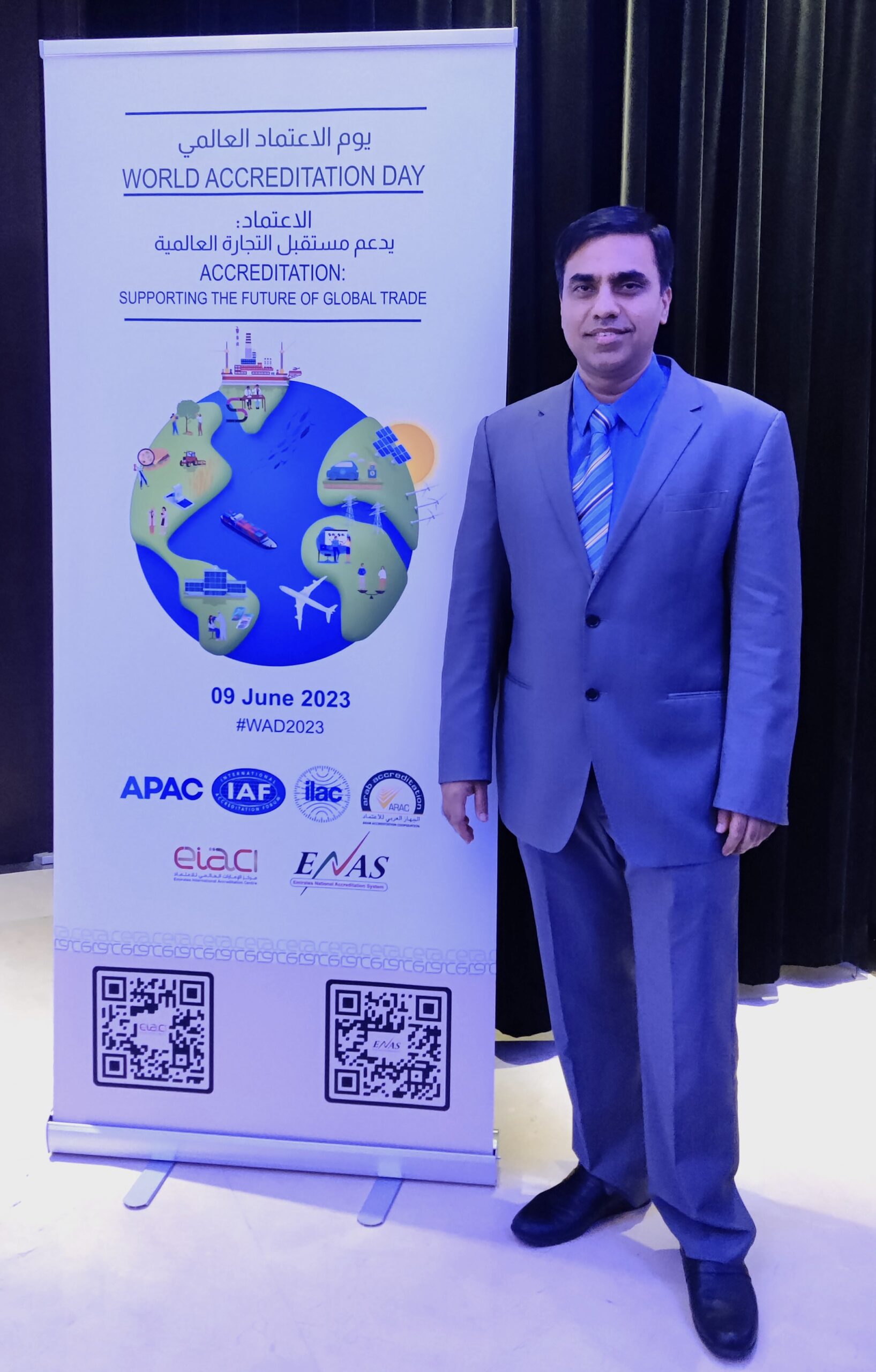
World Accreditation Day, celebrated annually on 9 June, highlights the importance of accreditation in various sectors. The theme for 2023 was ‘Accreditation: Supporting the Implementation of the Sustainable Development Goals (SDGs)’, showcasing the role of accreditation in achieving global sustainability targets.
The theme for World Accreditation Day 2024, ‘Accreditation: Empowering Tomorrow and Shaping the Future’, underscores the pivotal role accreditation plays in ensuring a safer and more secure future. Accreditation is not just about meeting current standards; it’s about preparing for the challenges and innovations of tomorrow. This theme acknowledges that accreditation is a dynamic process that evolves with technological advancements, industry and global challenges.
Why accredited bodies and laboratories should be your first choice for testing and certification
In a landscape where safety is non-negotiable, accreditation stands out as a beacon of reliability and competence. With accreditations from reputable bodies like GAC, EIAC and IAS, and recognition as a Notification Body by SASO and MoIAT, ESL exemplifies a commitment to the highest standards in testing and certification.
ESL’s extensive accreditation portfolio covers many test methods, ensuring that fire and life safety products are thoroughly evaluated and meet or exceed regulatory requirements. As a trusted partner in safety, ESL’s expertise extends beyond mere compliance; it encompasses dedication to shaping a safer future through cutting-edge testing methods and a forward-thinking approach to accreditation.
In conclusion, accreditation is the cornerstone of ensuring the safety and reliability of fire and life safety products. The global framework provided by organisations like the IAF and ILAC and the meticulous accreditation journey undertaken by ESL reinforce the importance of a standardised and recognised system for evaluating competence. As we look towards the future, the theme of World Accreditation Day 2024 resonates – accreditation is not just about today; it’s about empowering tomorrow and shaping a safer future for all. ESL stands as the first and foremost choice in the world of testing and certification, embodying a commitment to excellence, safety and a future where accreditation paves the way for a safer world.
About the Author

Mustafa Chamadiya
With a rich tapestry of two decades dedicated to championing sustainability, quality, and health and safety management, Mustafa stands as a seasoned professional in the field. Holding the prestigious title of an approved IRCA (International Register of Certificated Auditors) principal auditor, Mustafa brings forth a wealth of knowledge and insights garnered through a decade-long auditing journey.
Presently, Mustafa serves as the guiding force behind Governance, Compliance, and Regulations at ESL, bringing a unique blend of strategic vision and hands-on experience to the forefront. In this pivotal role, Mustafa continues to navigate the complex landscape of standards and regulations, ensuring ESL remains at the forefront of industry best practices.
