
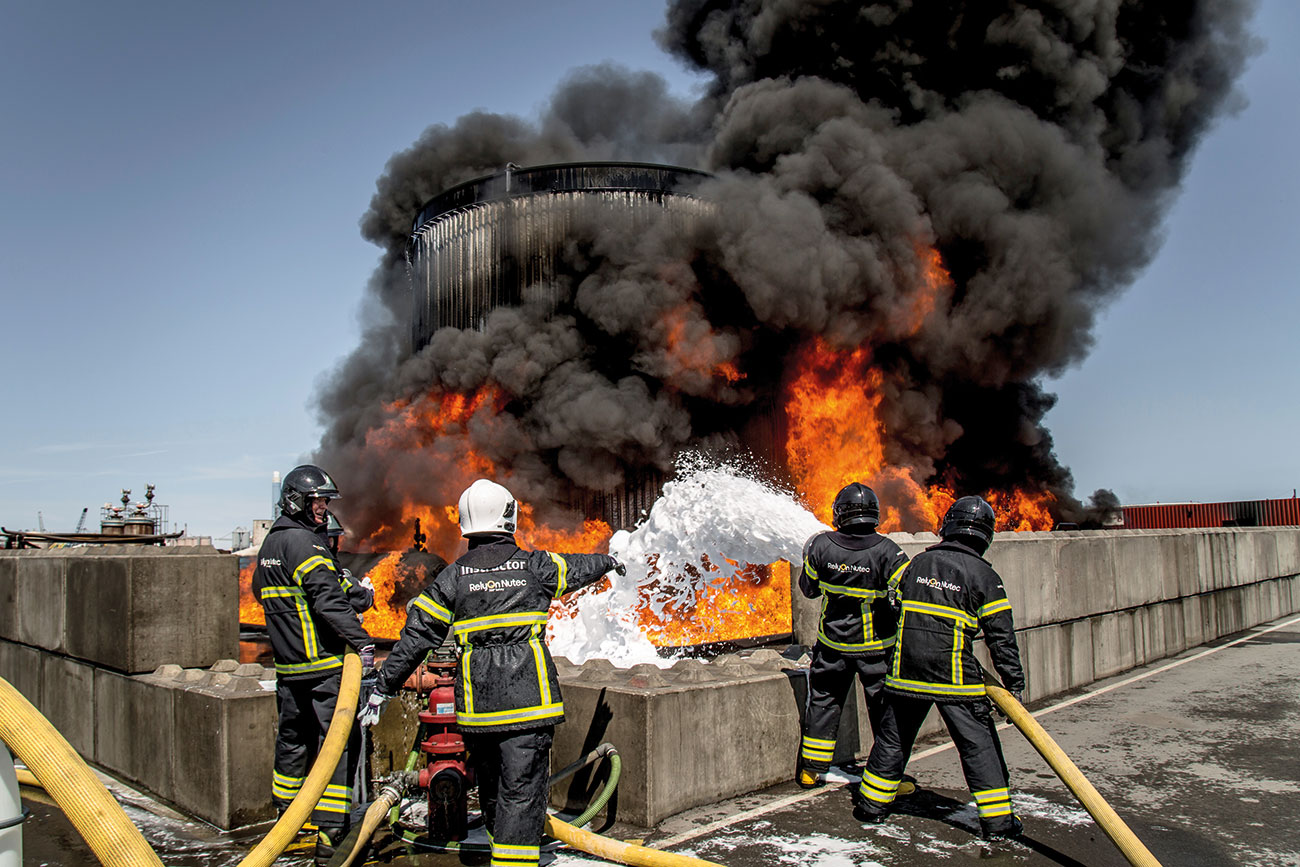
Since the prohibition of the production of PFOA (C8) based foam concentrates back in July 2020, there is now a five-year transition period to remove all C8s from use. C8 foams are those fluorine-based foam concentrates containing long-carbon chain, environmentally damaging and persistent surfactants.
Their replacement, the less-damaging shorter-carbon chain C6 variety has also come under scrutiny. Although less invasive on the environment and more biodegradable, many jurisdictions have introduced bans on those too, putting Fluorine free foams (F3) are now in the spotlight. The transition to F3 foams has begun.
Foam manufacturers are scrambling to make F3 foams that are a replacement for the fluorine-based varieties. Unfortunately there is not a direct ‘drop in’ F3 replacement, meaning you cannot simply swap the foam concentrates, even though F3 foams may have test certificates which mirror fluorine-based foams. This means that in order to get systems to work with F3 concentrates, application rates, foams stocks, proportioning rates and even application techniques need to be reviewed. F3 foams also need to be compatible with the product to be extinguished and be able to extinguish those products in real-life scenarios. Clients need confidence that the new technology will work for them. There is no historic real incident data regarding F3 foam performance at major liquid fires in comparison to their fluorine counterparts. Will it extinguish a large atmospheric storage tank containing crude? Will it work on a large release with a product with a high vapour pressure? Those are the thoughts on everyone’s mind.
Testing protocols
There are many testing protocols depending on the end use of the foam. There are generic tests such as UL162 and EN1568 or specific tests such as ICAO for aviation, IMO for maritime, LASTFIRE for Large Atmospheric storage tanks. These tests are used by certifying bodies to assess the performance of foam according to strict test protocols.
There are F3 foams that already carry the highest 1A rating certificate under the EN1568 part 3 (low-expansion foam). How can these test certificates ratify your choice of foam concentrates? There are F3 foams on the market that have identical test ratings but may have completely different characteristics, i.e. logistically more water requirements, more concentrate over a longer application time and, due to the quicker drainage times, frequent topping up to preserve the foam blankets are necessary. Longer application times means longer burn times resulting in higher pollutant emissions to the atmosphere and more CO2 releases, on top of an enormous extra expense in foam stock lying around until required.
Most of the generic test protocols use Heptane as the test product to be extinguished, so the question needed to be asked: ‘Will the new foams be effective on other products?’ Evidence suggests that some F3 foams have a greater fuel pickup, meaning the foam quality is poor due to fuel contamination. Can the foams be used on specific products and what is the effect if the foam has to be a hard plunged application on those products?
LASTFIRE has done extensive testing both on small and larger scale simulations mimicking larger atmospheric storage tanks, and can offer a certificate of performance. LASTFIRE is also conducting flow tests to assess if the foam can reach all areas of the tank with the current application methods. For example: can the foam generated by a fixed foam chamber on the tank shell reach the centre of the tank surface fire? There is still much work to be done in this area to get a clear picture of the capabilities of F3 foams.
The Fire Protection Research foundation which underpins the NFPA 11 foam standard has already conducted extensive testing and has conceded that much more research needs to be done. They summarised in a report that more information is needed on foam quality/aspiration levels to look at extinguishment and suppression abilities on large surface fires. Performance on fuels other than the test fuels, the compatibility of non-fluorinated surfactants, viscosity of concentrates and how concentrates react to temperature are issues high on their priorities to get a more defined insight.
There hasn’t been so much testing, even with the old foams, but everyone wants to protect the environment but still be able to control their risks. The large testing organisations have still much to do and cannot answer all the questions. That is why RelyOn Nutec Fire Academy based in Rotterdam has the facilities to explore some of these issues. They have invested in the equipment to test according to the test protocols such as LASTFIRE and EN1568 part 3 and 4.
RelyOn Nutec Fire Academy can provide the following services:

Test according to EN1568 Part 3
They are able to provide tests using a fuel of your choice with the foam concentrate of your choice on the EN test pans. They can provide a comparison of performance with other fuel products, such as the products stored or processed at your facility. Although they are not a certification testing entity, they can facilitate and provide valuable evidence for a client looking to purchase a particular foam concentrate.
Test according to LASTFIRE protocol
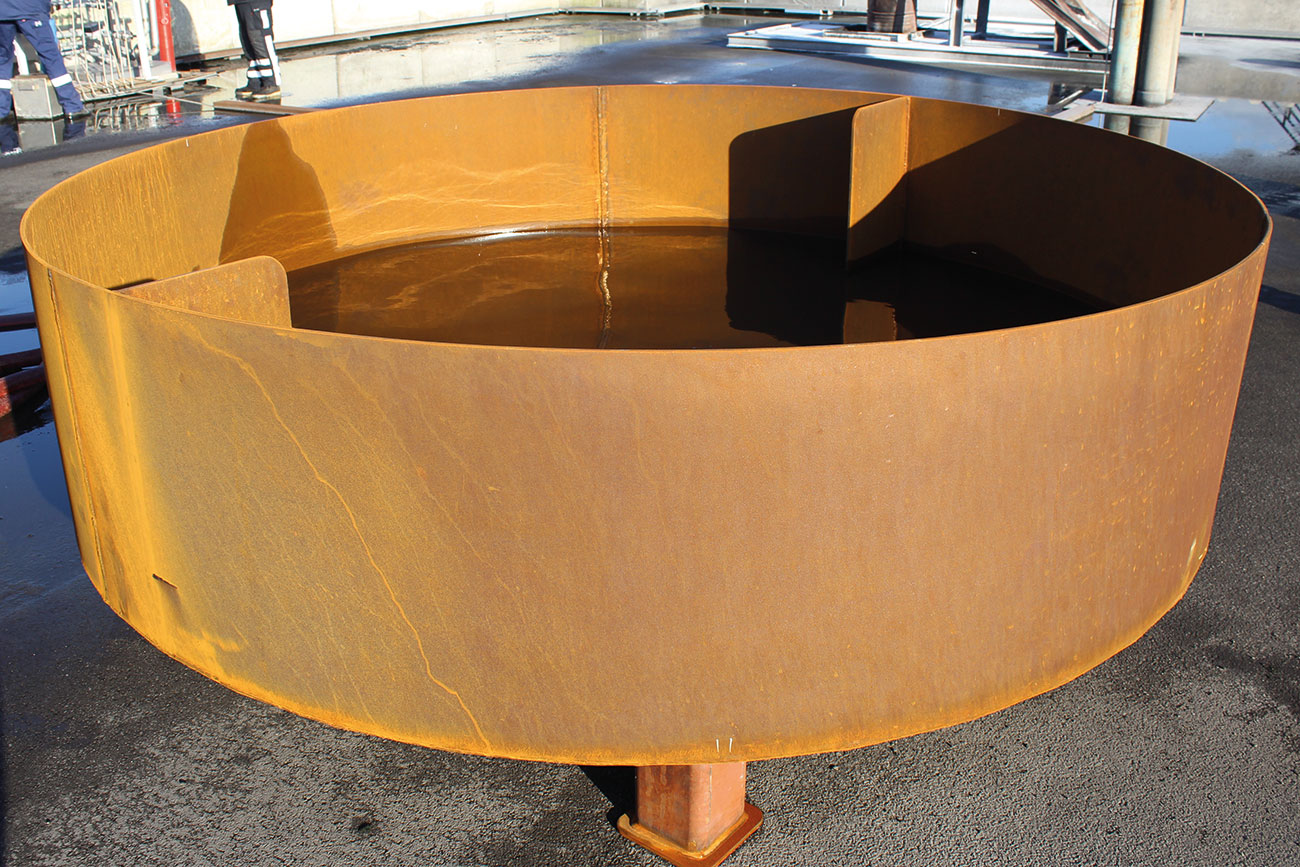
LASTFIRE test pan and nozzles are specifically designed to replicate an application on a large atmospheric storage tank fire. The test pan is 2.44m in diameter with vertical baffles built in to hinder the flow of foam across the surface and has three possible application nozzles, aspirated, semi aspirated and fixed pourer. The discharge rate is calibrated before the test to ensure the correct application rate is achieved. The test pan for water-miscible fuels (alcohols) has a vertical back board for a soft indirect application technique.
Create simulations with your equipment and foam concentrate of your choice
If you are happy with your choice of foam concentrate, before you commit to the procurement, you want to see if your choice will work with your foam-making systems. Evidence suggests that some F3 foam concentrates can be very viscous and are more difficult to proportion into a premix. Can the concentrate be mixed efficiently and at what rate? How do foams perform with compressed air foam technologies? These practical issues can also be explored at the RelyOn Nutec Fire Academy facility on one of the many realistic simulators or test pans.

Team training
A fire team using foam may have built up experience and skills over the years. However, F3 foams need other application techniques to ensure the foam works effectively. F3 foams may not have the same aqueous film layers associated with the common aqueous film forming foams (AFFF) and may have an increased fuel pickup and a lower resistance to fuel contamination. Therefore lesser invasive application techniques are required. Foam has always worked better with an indirect application technique, but now it’s even more important. What are the implications when using non aspirating nozzles when foam quality is different? Are there now safety issues for the responders during and after the incident? If you want to train your personnel on the safety issues or revised application techniques then our instructors can, with the help of simulators address the gaps in knowledge and skills.

Foam schools
In 2021 RelyOn Nutec Fire Academy will be conducting a number of foam schools to highlight and try to resolve the concerns of our clients regarding their transition to F3 foams. Manufactures can utilise our platform to demonstrate the performance of their foams or RelyOn Nutec can provide an independent seminar that covers all aspects of the foam transition.
Are you a foam manufacturer or supplier or perhaps a customer who is about to tender for a major investment to replenish foam stocks to cover your risks? RelyOn Nutec Fire Academy can help you in your foam transition.
For more information, go to www.relyonnutec-fireacademy.com
About the Author

Steve Watkins is Business Development Manager and Gijsbert van Pinxteren is International Account Manager with RelyOn Nutec.
