

In a rapidly developing region like the UAE, where public transportation is a vital part of daily life, ensuring passengers’ safety is not just a priority – it’s a mission. Fire-suppression systems, especially in high-risk areas such as bus and coach engine compartments, are not just crucial, they are potential life-savers. The UAE.S 5041:2021 standard is vital in setting stringent requirements to ensure these systems can effectively prevent and control fires, safeguarding lives and property.
These fire-suppression systems serve as a vital line of defence, crucial for protecting passengers’ lives and preventing significant property damage during fire emergencies. Their efficiency is particularly important in high-risk environments like school buses and coaches, where evacuation time is minimal. The UAE.S 5041:2021 standard specifies rigorous performance and testing requirements to ensure these systems function reliably under real-world conditions, offering peace of mind that they will perform when needed most.
The necessity of testing fire-suppression systems for safety
Testing fire-suppression systems according to the UAE.S 5041:2021 standard is crucial for validating their effectiveness and reliability. These tests are designed to ensure that the systems meet the stringent safety and performance criteria necessary to protect lives and property in the event of a fire. By adhering to the UAE.S 5041:2021 standard, manufacturers can confirm that their fire-suppression systems respond swiftly and effectively to fire incidents, enhancing the safety of buses and coaches.
The need for such rigorous testing is underscored by the unique challenges presented by the environments in which these systems are deployed. Buses and coaches are often confined spaces, with limited room for passengers to evacuate quickly in the event of a fire. Additionally, combustible materials and potential ignition sources, such as fuel leaks or electrical short circuits, increase the fire risk. For instance, a fuel leak in a confined space can lead to a rapid and intense fire, making it crucial for the suppression system to act swiftly and effectively. Therefore, fire-suppression systems must be thoroughly tested to ensure performance under these challenging conditions.

Critical standards in fire-suppression system testing
The UAE.S 5041:2021 standard is part of a broader framework of regulations and guidelines that govern the testing and certification of fire-suppression systems in buses and coaches. Other relevant standards include those that outline bus construction requirements, provide uniform provisions for vehicle approval, specify testing procedures for fire-suppression systems, and focus on the requirements for bus fire detection and alarm systems.
- SASO -2946: This standard outlines the construction requirements for buses, including provisions for fire safety.
- UN Regulation No. 107 Revision 8: This regulation provides uniform provisions for the approval of category M2 or M3 vehicles, focusing on their general construction, including fire-safety measures.
- SP Method 4912: This method specifies the testing procedures for fire-suppression systems intended for use in compartments with combustion engines.
- AIS-135: This standard, developed by the Automotive Industry Standard, focuses on the requirements for fire detection and alarm systems (FDAS) and fire detection and suppression systems (FDSS) for buses.
These standards collectively ensure that fire-suppression systems undergo comprehensive testing and certification processes, confirming their readiness to protect passengers and vehicles in real-world scenarios.
Why UAE.S 5041:2021 is crucial for fire safety testing
The UAE.S 5041:2021 standard is particularly significant because it establishes stringent testing requirements designed to replicate the most challenging conditions a fire-suppression system might encounter. The tests outlined in this standard are intended to evaluate the system’s ability to detect, suppress and prevent fire spread in various scenarios, including those involving high fire loads, low fire loads and the risk of re-ignition.
The importance of adhering to this standard cannot be overstated. Failure to meet these requirements could result in fire-suppression systems that are not adequately prepared to handle real-world fire scenarios, potentially leading to loss of life and property. By ensuring that fire-suppression systems are tested under the conditions specified by UAE.S 5041:2021, manufacturers and operators are not just meeting a requirement, they are fulfilling a crucial responsibility. This, in turn, enhances the safety of buses and coaches, providing peace of mind to passengers and reducing the risk of significant property damage.

Step-by-step breakdown of testing procedures: ensuring comprehensive safety
The UAE.S 5041:2021 standard outlines several specific test scenarios that fire-suppression systems must pass to be considered compliant. These scenarios include:
1. High fire load test: This test simulates a severe fire involving a large amount of flammable material. The fire-suppression system must demonstrate its ability to quickly and effectively extinguish fires such as diesel pool fires, diesel-soaked fibreboard fires and diesel spray fires. The system is tested at the minimum operating temperature specified by the manufacturer to ensure it can perform under extreme conditions.
2. Low fire load test: This test focuses on smaller fires, such as peripheral diesel pool fires, that involve a lower amount of flammable material. The test is conducted with a controlled airflow of 1.5m³/s, simulating the conditions that might be encountered in a real-world fire scenario. The fire-suppression system must be able to extinguish the fire within one minute of activation or immediately after the system discharges.
3. High fire load with fan test: This test is similar to the high fire load test but includes the additional challenge of airflow, which can complicate the suppression process. The fire-suppression system must be able to extinguish fires in the presence of airflow, ensuring that it can perform effectively in dynamic conditions where wind or ventilation systems may influence the spread of fire.
4. Re-ignition test: The re-ignition test evaluates the fire-suppression system’s ability to prevent the re-ignition of a fire. This is particularly important in scenarios where dripping oil or other flammable substances might come into contact with a hot surface after extinguishing the initial fire. The test is conducted without airflow, and the system must prevent re-ignition within 45 seconds of the fire being fully extinguished.
These test scenarios are designed to replicate the conditions that a fire-suppression system might encounter in a bus or coach’s engine compartment. The test setup includes a full-scale engine compartment mock-up, complete with typical engine features and obstructions that simulate the complexities of a real-world environment. This ensures the tests are as realistic as possible and thoroughly evaluate the fire-suppression system’s performance.

Test setup: key preparations for success
Before the fire-suppression system can be tested, several preparatory steps must be taken to ensure that the test conditions accurately reflect the real-world environment in which the system will be used. These steps include:
1. Conditioning the system cylinder: The fire-suppression system’s cylinder, which contains the extinguishing agent and propellant gas, must be conditioned to the minimum operating temperature specified by the manufacturer. This ensures the system is tested under the conditions it will likely encounter in practice.
2. Pressurizing the cylinders: The cylinders are pressurised on-site to the nominal pressures specified by the manufacturer. This critical step ensures the system will operate with the correct pressure levels during the test.
3. Verifying the pressure: Before the test begins, the pressure in each cylinder is verified by visually inspecting the pressure gauge. This ensures that the system is properly pressurised and ready for testing.
4. Weighing the cylinder: The weight of the pressurised cylinder is checked and recorded to ensure that it meets the required specifications. This is important for confirming the correct amount of extinguishing agent in the system.
5. Installing the suppression system: The fire-suppression system is installed according to the manufacturer’s design manual, ensuring it is set up correctly for the test. This includes placing the nozzles, controller and other components in their proper positions.

Why fire-load testing is essential for fire safety
Fire-load testing is a critical component of the UAE.S 5041:2021 standard because it measures the severity of a potential fire in a given environment. The fire load represents the amount of heat that will be released per unit area during a complete fire, and it is an essential factor in assessing the fire risk of any structure.
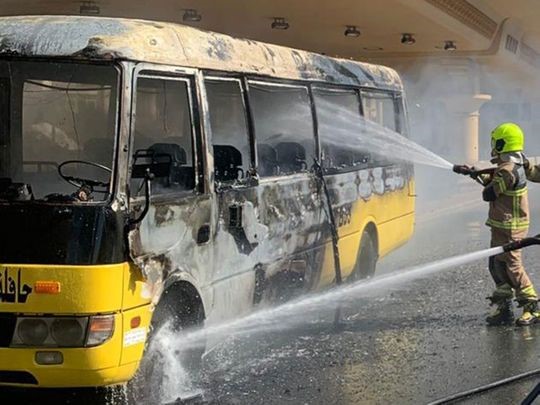
In the context of buses and coaches, the engine compartment is the most common location for fires to start, making it a particularly high-risk area. Approximately 1% of all buses on the road are involved in fires yearly, with around 70% occurring in the engine compartment. This highlights the importance of ensuring fire-suppression systems can handle the fire load in this critical area.
Fire-load testing involves assessing the flammability of all materials within the engine compartment, including the materials used in the structure and any flammable objects or substances that may be stored in it. Manufacturers can ensure that their fire-suppression systems can control and extinguish fires in the most challenging conditions by conducting thorough fire-load inspections and tests.
Raising the standard: testing and certifying fire suppression systems in buses and coaches
The UAE.S 5041:2021 standard sets an exemplary benchmark for the testing and certification of fire-suppression systems in buses and coaches. Adhering to these stringent requirements is not merely about compliance; it is about a steadfast commitment to safety, quality and excellence – values that resonate deeply with Emirates Safety Laboratory (ESL). By ensuring that these systems undergo rigorous testing, manufacturers and operators can guarantee their reliability in real-world scenarios, ultimately enhancing passenger safety, safeguarding property and upholding the industry’s integrity.
At ESL, we believe that thorough testing is crucial for systems designed to detect, suppress and prevent the spread of fire under the most challenging conditions. These comprehensive evaluations are essential to confirming that fire-suppression systems perform as intended, mirroring our purpose of ensuring a safer and more sustainable future for all.
The UAE.S 5041:2021 standard is more than a regulatory requirement – it is a critical component of public safety that protects lives, property and the reputations of those involved in public transportation. By embracing these rigorous standards, manufacturers and operators meet their legal obligations and demonstrate their commitment to the highest safety standards, reflecting ESL’s core values of integrity, trust and innovation. Together, we can ensure that every journey is a safe one.
About the Author

Amirtharaj Arun, Senior engineer at DCD’s Emirates Safety Laboratory offers a comprehensive overview of the protocols and standards for bus fire suppression system testing.
