
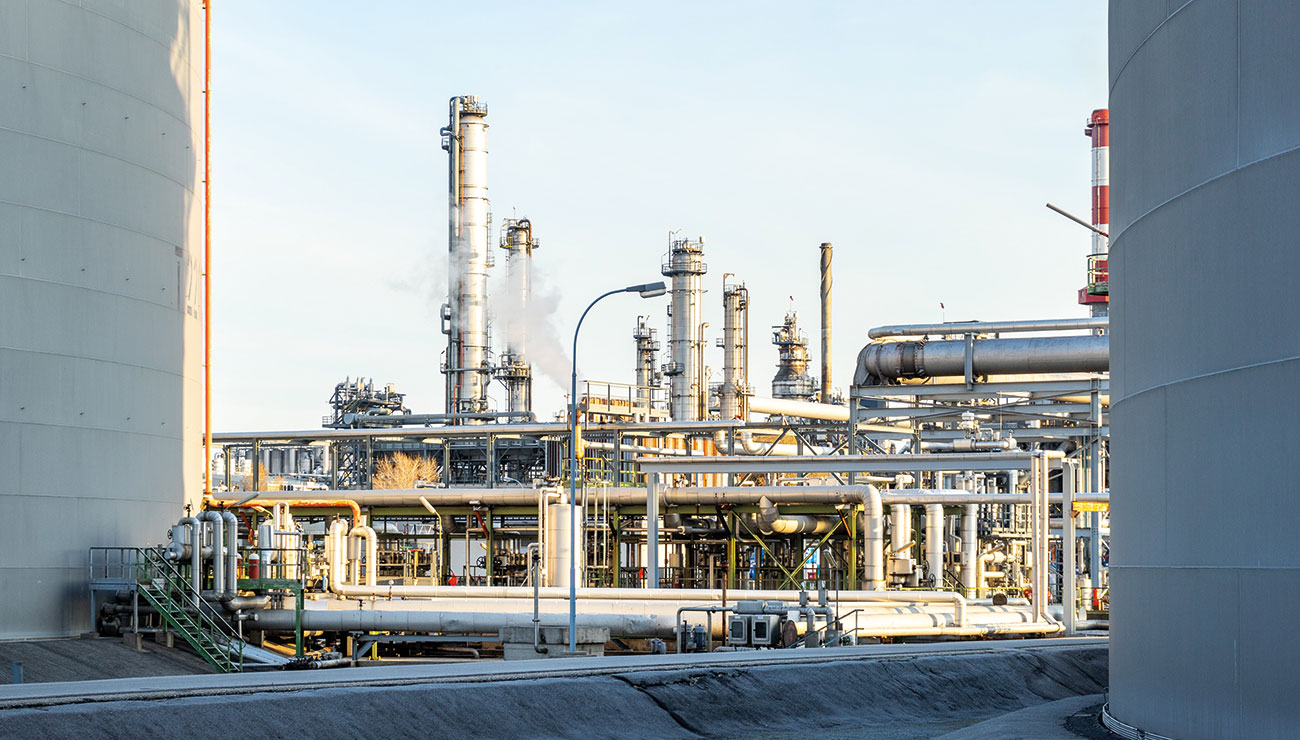
Fire is the greatest single threat to safety that oil refineries and plants face. It is therefore essential that quick-acting and reliable fire-suppression systems are in place to protect these personnel and assets.
Fire-suppression systems are designed to extinguish fires rapidly through the discharge of gas and chemical agents. Heat, smoke or some other warning signal triggers the fire detectors, followed by the activation of fire alarms and the fire-suppression measures. Most fire-suppression systems automatically release these agents at such a rate and volume that significant environmental pressure builds up. This swift increase in air pressure can lead to the following:
- Cause structural damage to the area – with potentially fatal injuries.
- Make entry or exit from the area challenging.
- Hamper additional fire-safety measures by disrupting balances between negative and positive air pressures to contain fires.
The necessity of pressure relief vents
No fire-suppression system can function safely without air-pressure-relief vents. In the event of a fire-suppression discharge, these vents will open to alleviate the accumulated air pressure and by doing so protect the structural integrity of the room or building.
Apreco’s pressure-relief vents have been installed within oil and gas facilities all over the world, with some notable projects including:
- Badra Oilfield, Iraq
- Dodsal Oil Project, Kuwait
- Centrica Gas, Kuwait
- Duqm Refinery, Oman
- Al-Zour Refinery, Kuwait
- Sulpher Treatment Plant, Kuwait
- Gasco, Abu Dhabi
Pressure relief vents for all locations
It is important to note that choosing the wrong fire-suppression system or failing to install the correct pressure-relief vents could cause more harm than the actual fire. Apreco’s range of pressure-relief vents provide solutions to all locations and all types of gaseous fire-suppression systems, providing market-leading performance across a range of pressures. All Apreco vents are also offered in several standard sizes for installation in both internal and external walls.
An over-pressure relief vent, or inert-gas pressure-relief vent, controls air pressure when inert-gas systems, such as the IG-55 and IG-541, are used. Under-pressure venting also applies when gas fire-suppression systems, such as the FM200 or NOVEC 1230, are used.
The IGV Inert Gas Vent, IGV-M Motorised Inert Gas Vent, and FSV-F Ceiling Mounted Gas Vent were specially designed to be used with inert gaseous fire-suppression systems. These over-pressure venting installations open when an inert gaseous fire-suppression system discharges. These vents remain closed below 70Pa for suitable room integrity testing. They fully open at 100–150Pa for optimum structural protection.
The IGV-R Gas Vent Reverse Flow and SGV Dual Flo Halocarbon Pressure Relief Vent are under/over-pressure venting systems that open on the discharge of synthetic fire-suppression systems. These vents utilise agents such as FM-200 and Novec 1230, which cool and breakdown the chemical reactions found in a fire, producing both negative and positive pressurisation during a system discharge.
To overcome the potential for structural damage in this scenario, the SGV Dual Flo blades operate in both directions, with the integrated capability of pressure setting adjustments. No other vent on the market has this true two-way performance.
The SGV Dual Flo was also the first pressure relief vent to be EWCL5 certified, passing all testing and audit standards. At the time there was no harmonised code available for the fire-resistance testing of pressure relief vents, so Apreco developed a test protocol in conjunction with the EWCL5. This scheme arms building owners and specifiers with the confidence that the products supplied are of the same specification as those that have been successfully tested. As part of the continued registration, the vents are retested every five years. Tested at Warrington Fire, in line with BS EN 1364-1, the SGV Dual Flo achieved fire resistance of up to three hours. Apreco’s range of pressure-relief vents are also BSRIA-validated for Free Vent Area performance.
Choosing a gaseous fire-suppression system
There are a variety of fire-suppression systems that work best in different scenarios, so it is imperative to understand which system is most suitable for your facility. The most suitable fire-suppression systems for oil and gas applications are typically those systems that use chemical or inert agents. These gas fire-suppression systems extinguish or control fires by starving a fire of its heat or oxygen sources.
An inert-gas fire-suppression system requires an inert-gas pressure-relief vent to guard against over-pressure. A synthetic/halocarbon fire suppression system requires a halocarbon pressure-relief vent to protect against under and over-pressure. Apreco’s range includes an over-pressure relief vent and under-pressure relief vent for every fire suppression system.
Inert-gas fire-suppression systems
An inert-gas fire-suppression system uses mixtures of argon, nitrogen and carbon dioxide to reduce and limit the oxygen feed in a room to suppress fires. The inert gases minimise the oxygen levels so that combustion is no longer possible. Stored in pressurised steel cylinders, the combined gas releases quickly to suppress oxygen supply to the fire.
Halocarbon fire-suppression systems
A halocarbon fire-suppression system, sometimes referred to as a synthetic-gas fire-suppression system, uses synthetic gases to quell fires. These systems typically use chemical extinguishants such as 3M Novec 1230 in combination with the FM-200 Clean Agent, which is more commonly known as HFC-227ea.
For more information, go to www.apeco.com
