A bus fire is a devastating incident that can result in the loss of lives, damage to property and severe disruption to public transportation systems. With increasing passenger traffic and bus usage around the world, it’s essential to have adequate safety measures in place to minimise the risk of bus fires. Through this article, we will investigate several factors causing bus fires, some of the past bus fire incidents, the various research and studies conducted to limit bus fires, available international regulations, laws, standards and the applicable laws and regulations in UAE.
Factors leading to a bus fire
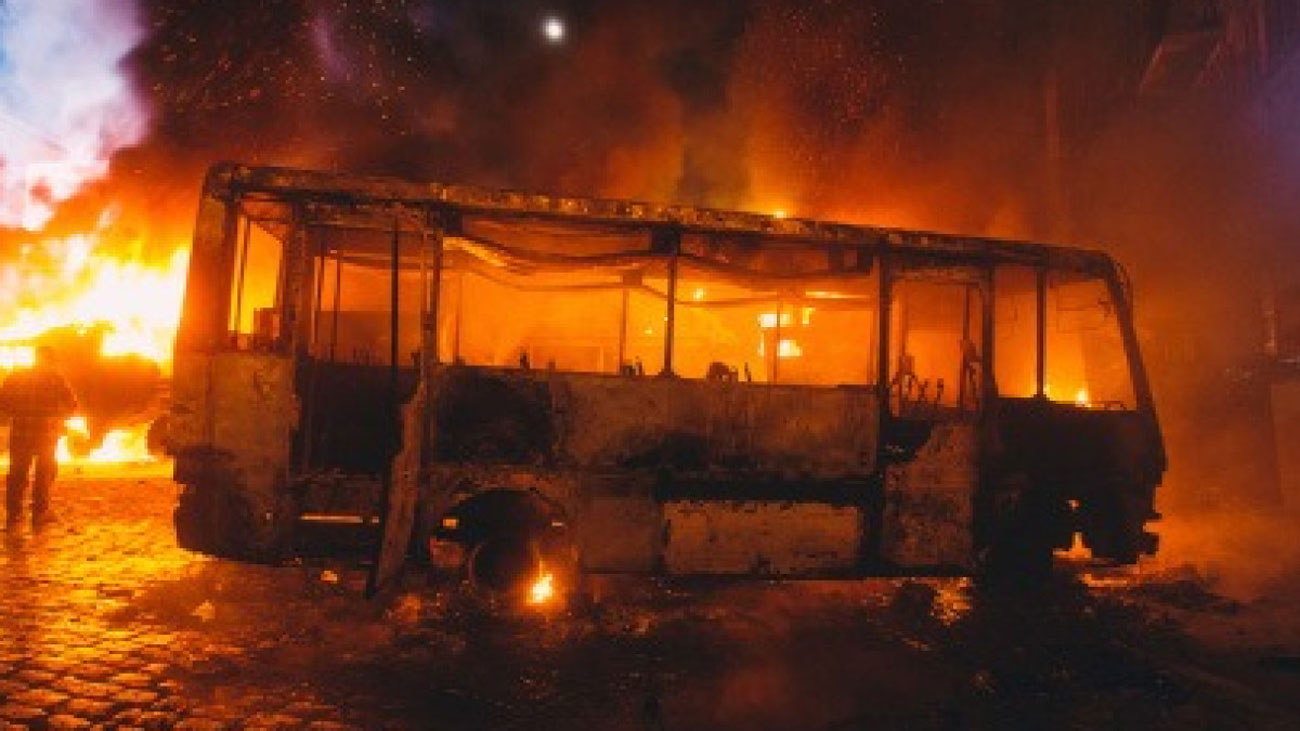
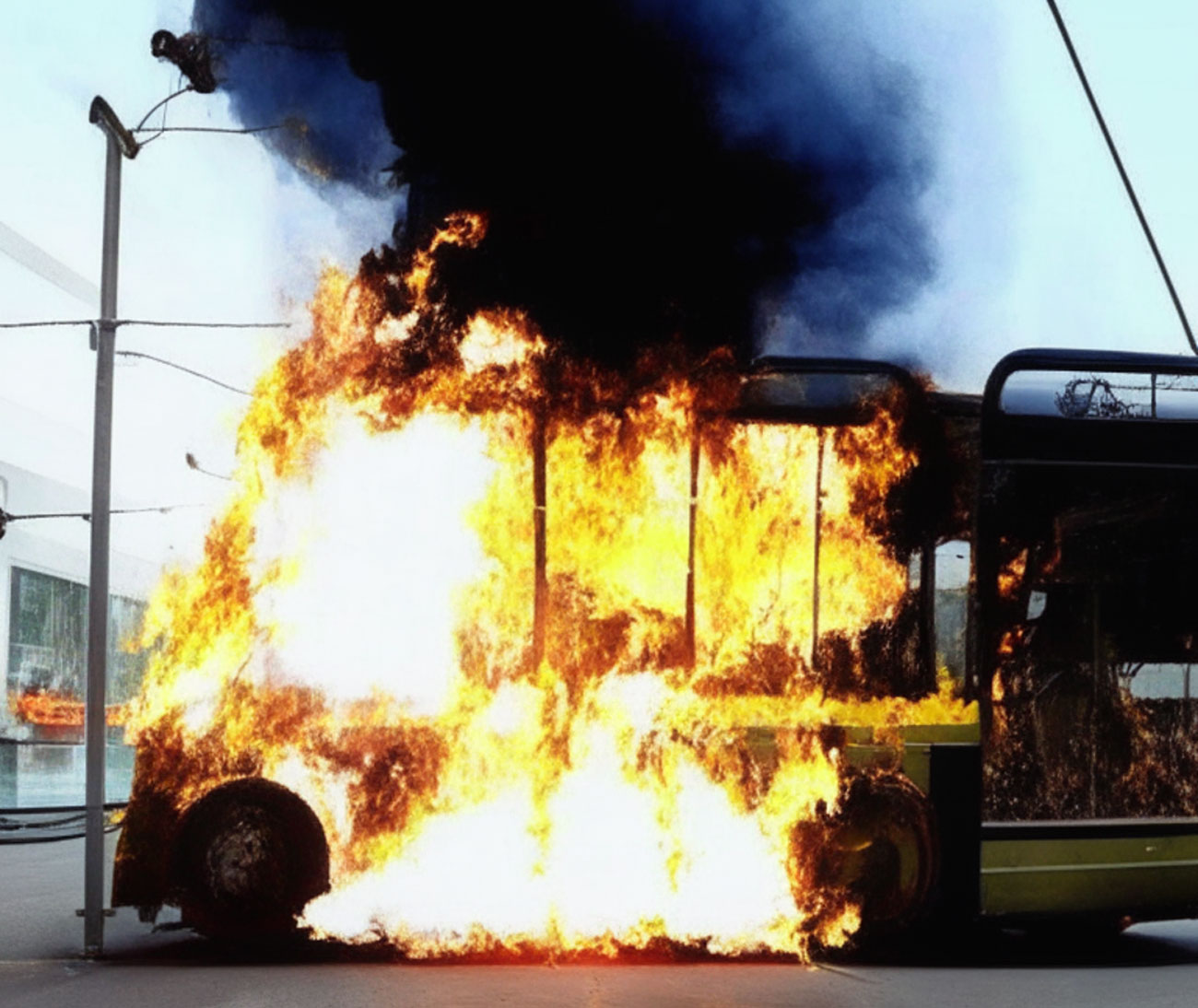
Several factors contribute to bus fires, including electrical issues, fuel system problems, engine problems and human error. Poor maintenance, overloading and outdated equipment increase the likelihood of bus fires. The space inside a bus is small, and many combustible materials can contribute to bus fires. In the event of a fire, the fire will develop rapidly due to flammable materials, and the flue gas released from various internal materials will fill the entire coach in a short time, which will quickly cause casualties and significant economic losses. From different historical accidents, it has been noted that most bus fires originate from the engine bay/compartment when ignitable liquids or gases come in direct contact with hot engine components.
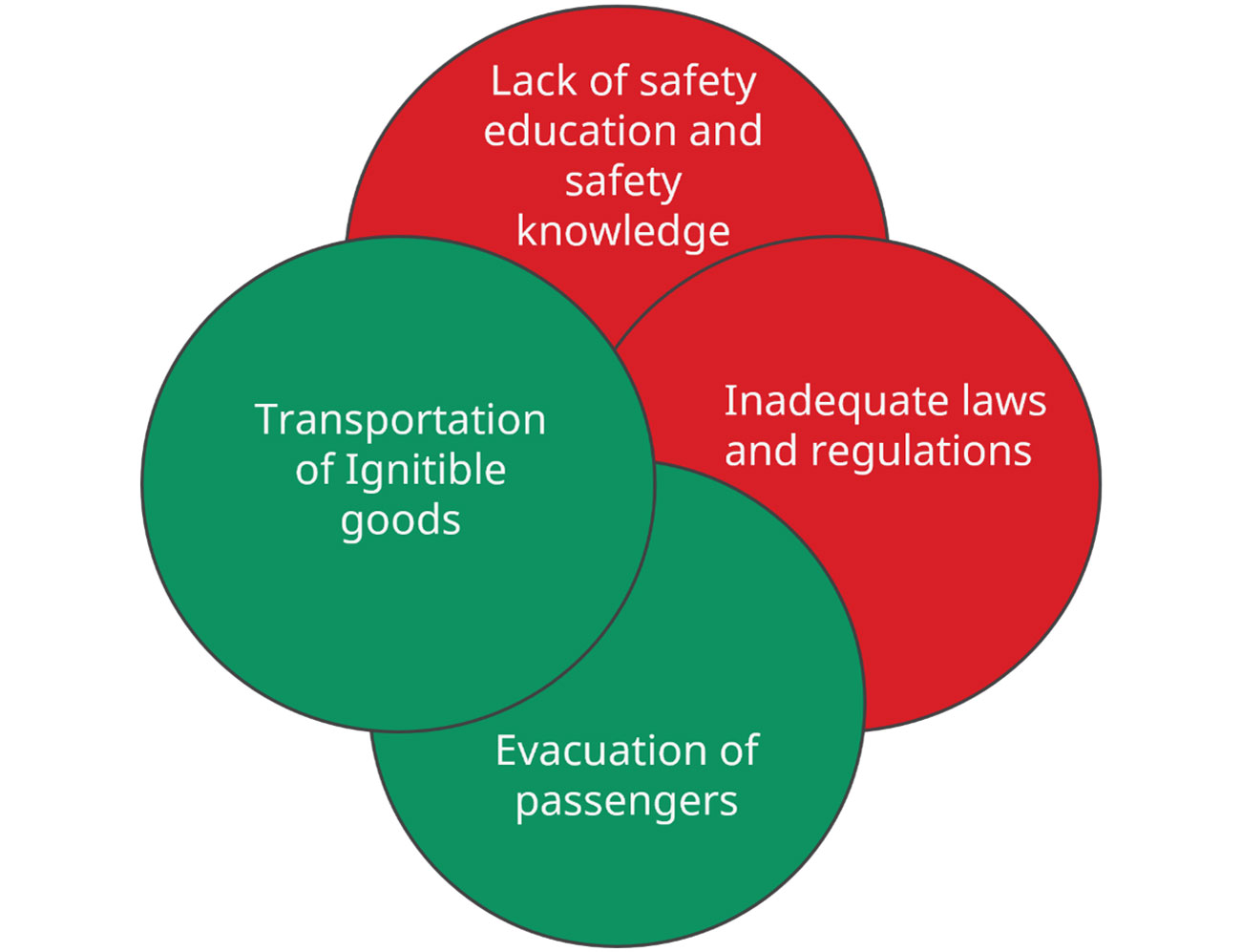
More widespread use of plastics in modern engine compartments compared to engines on old buses increases the number of combustible materials, creating a risk of faster fire development. Apart from these, other factors like fuel grade quality, poor road conditions, bad weather, transportation of ignitable substances, delay in reporting anything suspicious to the driver, risky driving, etc. can all contribute to developing a minor or significant bus fire accident.
Past historical bus fire incidents
Over the years, numerous bus fires have been reported globally, leading to significant damage and loss of lives. In many cases, the cause of the fire was due to poor maintenance, outdated equipment and human error.
Some of the most notable bus fire incidents include:
- A German tour bus caught fire on a German highway killing 20 people and injuring 13 others.
Reason: Electrical malfunction developed in the engine bay.
- Hensies fire, Belgium, 2003
A bus caught fire in Belgium, killing 11 people and injuring 37 others.
- Karachi fire, Pakistan, 2022
A bus caught fire in Karachi, killing 17 people (12 children) and injuring at least 20 others.
Reason: A fire broke out in the AC system, and the emergency exit was not working
- A bus caught fire in India, killing 11 people and injuring 37 others.
Reason: Transporting flammable liquids.
In most cases, during such bus fire accidents, passengers were not getting adequate time for safe evacuation before the fire engulfed the bus. Also, it gets more devastating whenever passengers try to break the glass due to the backdraft phenomenon. So, the agencies who were investigating these accidents came up with an additional note in their final reports conveying the necessity of further research and studies in the design of the bus itself along with a system that can provide early warning/detection of fires or smoke and can provide sufficient time for the safe evacuation of passengers.
What research and studies have been conducted so far in limiting bus fires?
It’s been a significant safety concern for many years and has led to various research and studies being conducted to limit the occurrence of these incidents. We will look at some of the most significant research and studies on bus fires and the measures taken to prevent them.
A study by the National Transportation Safety Board (NTSB) in the United States revealed that the primary causes of bus fires are electrical system malfunctions, engine problems and collisions. The study also found that a combination of factors, such as a lack of fire suppression systems, poor maintenance and substandard design caused many bus fires.
National Institute of Standards and Technology (NIST): NIST has conducted extensive research on bus fire suppression systems, including studies on the effectiveness of various fire suppression agents and the development of fire suppression system standards.
Federal Transit Administration (FTA): The FTA has researched bus fire suppression systems, including developing guidelines for designing and testing fire suppression systems in transit buses.
Swedish National Testing and Research Institute (SP): SP has conducted research on bus fire suppression systems, including studies on the performance and effectiveness of fire suppression systems in transit buses.
Fire Suppression Systems Association (FSSA): The FSSA is an international organisation conducting research and developing fire suppression systems standards. The organisation has researched bus fire suppression systems, including studies on the design, installation and maintenance of fire suppression systems in transit buses.
So, to prevent bus fires or to minimise their intensity, researchers have developed and tested fire suppression systems suitable for buses. Fire suppression systems release an extinguishing media to suppress the fire, and fire suppression systems use either a chemical agent or watermist to control and extinguish the fire.
Also, to minimise the risk of electrical system malfunctions and fires, researchers have developed and tested electrical systems with multiple layers of protection, such as over-current protection, short-circuit protection and thermal protection. These systems are designed to detect and isolate problems before they can lead to a fire.
Researchers have also focused on selecting materials for bus construction to reduce fire risk. Flame-retardant materials are being used to construct bus interiors to prevent the spread of fires.
In addition to technology and design solutions, bus driver training programmes have begun in several countries to help drivers recognise and respond to potential fire hazards, such as smoke or unusual smells, and to evacuate passengers quickly in the event of a fire. This training programme provided adequate safety knowledge to drivers who can act swiftly during emergencies that may turn devastating.
Another research study aspect was regular maintenance and inspection of buses; they effectively prevent fires and minimise the risk of injury and damage in the event of a fire. The manufacturers were forced to provide proper guidelines for periodic inspections and regularly inspect them for potential fire hazards. Bus operators are encouraged to maintain their vehicles per the guidelines.

What were the findings of some research and study?
Various research and studies have shown that effective fire suppression systems, proper maintenance procedures and strict regulations are crucial in reducing the risk of bus fires. The studies also showed that regular training and education for drivers and maintenance personnel can help to minimise the risk of bus fires.
Some of the key findings from various studies include:
A study by the National Institute of Standards and Technology (NIST) found that bus fire suppression systems can significantly reduce the evacuation time for passengers in the event of a fire. The study found that fire suppression systems can help control the spread of fires and reduce the amount of smoke and heat generated by the fire, making it easier for passengers to evacuate the bus safely.
A study by the Federal Transit Administration (FTA) found that the type of fire suppression system used in a bus can significantly impact evacuation time. The study found that clean agent fire suppression systems were the most effective in reducing evacuation time, as they did not produce harmful by-products that could impede the evacuation process.
SP study, conducted by the Swedish National Testing and Research Institute (SP), found that the design of bus fire suppression systems can also impact evacuation time. The study found that fire suppression systems with multiple nozzles and dispersed distribution of nozzles were more effective in reducing evacuation time, as they helped to suppress the fire more quickly and effectively.
A study by the Fire Suppression Systems Association (FSSA) found that the installation and maintenance of bus fire suppression systems can also play a role in reducing evacuation time. The study found that regular maintenance and inspection of fire suppression systems can help to ensure that they are functioning correctly and are ready to respond in the event of a fire.
An FPRF study conducted by the Fire Protection Research Foundation (FPRF) found that the availability of emergency exits and the layout of the bus interior can also impact evacuation time. The study found that buses with clear and well-marked emergency exits and spacious and open interiors can help facilitate a rapid and safe evacuation in the event of a fire.
Overall, these studies highlight the importance of various factors in reducing evacuation time in the event of a bus fire, including the type of fire suppression system used, the design and installation of the system, the availability of emergency exits and the layout of the bus interior. By considering these factors, bus operators can work to ensure that their buses are equipped with effective fire suppression systems and are designed to facilitate safe and efficient evacuation in the event of a fire. A bus fire suppression system is a safety system designed to prevent or control the spread of fires in buses. These systems are designed to automatically detect and respond to a fire, extinguishing and preventing it from spreading.
What were the international regulation, laws and standards available for limiting bus fires?
International rules, regulations and standards are critical in reducing and mitigating bus fires. Some of the essential criteria are as follows.
- United Nations Regulation Nr. 107
- SP Method 4912
- UAE.S 5041 standards.
- SASO 2946
- AIS 135
What are the applicable laws and regulations in UAE for limiting bus fire?
The UAE issued a standard in 2021, UAE.S 5041, for fire suppression systems in the engine compartments of buses and coaches. The standard applies to new and existing single-deck, double-deck, rigid or articulated buses with a capacity of more than 22 passengers, including the driver (Class I, Class II and Class III). The standard requires that a complete fire suppression system be tested using the fire testing procedure outlined in the standard, which applies to fire suppression systems intended for diesel-fuelled buses and coaches with engine compartments having a gross volume between 2 and 6 cubic meters.
Who can test and certify a bus fire suppression system in UAE?
Emirates Safety Laboratory offers professional testing and certification services for vehicle fire suppression systems following the UAE.S 5041 standard. With our state-of-the-art facilities and experienced team of experts, we can provide reliable and thorough evaluations of fire suppression systems to ensure they meet the highest safety and quality standards.
By choosing Emirates Safety Laboratory for your fire suppression system testing and certification needs, you can be confident that your vehicles are protected against fire risk and that your passengers will be safe in an emergency. Whether you operate a single-deck, double-deck, rigid or articulated bus with a capacity of more than 22 passengers, including the driver, our team is equipped to provide you with the professional and comprehensive testing services you require.
So, if you want to confirm the safety of your vehicles and your passengers, trust Emirates Safety Laboratory for all your fire suppression system testing and certification needs.
At Emirates Safety Laboratory, we not only test and certify vehicle fire suppression systems based on the UAE.S 5041 standard but we are also equipped to evaluate systems according to the SP Method 4912, SASO 2946, AIS-135, and UN Regulation Number 107. Our team of experts is knowledgeable in the latest industry standards and has the experience necessary to provide reliable and thorough evaluations of fire suppression systems.
ESL has the expertise and facilities to provide you with the comprehensive testing and certification services you need. So, let us help you ensure the safety of your vehicles and passengers with our world-class fire suppression system testing and certification services.
About the Author

Vivek Vijay
Vivek is an expert in providing in-house fire protection engineering, risk assessments, life safety/code consulting & inspections, conformity assessment services, and MEP consulting & supervision. He is presently associated with Emirates Safety Laboratory, UAE as a Certification Specialist for Extinguishing Systems.
Vivek holds a degree in Engineering from Anna University. Over his 11 years of career progression, he has acquired wide-ranging experience in the design, inspections, testing & commissioning of various FLS and MEP services. He also possesses in-depth knowledge of various international codes, standards, regulations, and specifications. Some of the significant projects he has worked on include Abu Dhabi Mid-Field Terminal, Muscat International Airport, and Salalah Airport.