

Masonry work plays an indispensable yet often overlooked role in fire safety. This meticulous craft is essential in preparing supporting construction for fire-test specimens, and this article discusses the crucial role of masonry artisans in this preparation.
Fire resistance testing, a pivotal process that gauges the resilience of building materials against fire, is underpinned by masonry work, also known as CMU block or brickwork. This often-unnoticed craft is at the heart of the process. At Emirates Safety Laboratory (ESL), we recognise our masons’ precision and expertise as one of the bedrocks of test accuracy and reliability.
Our highly skilled masons are the unsung heroes of test specimen integrity. Their role is not just to adhere to specifications and guidelines but to do so with meticulous precision. They ensure that the walls are constructed to securely hold the materials or specimens to be installed and that the test setup faithfully replicates real-world conditions, showcasing their expertise and the importance of their role.
One key aspect of masonry work in fire-resistance testing is the precision required in maintaining opening dimensions. This involves using calibrated measuring instruments to ensure test specimens are constructed to the dimensions specified in testing standards.
The right tools for the job: precision perfected
The art of masonry in fire-test preparation is a meticulous process that relies on the right tools. Our masons use a variety of tools, each with its specific purpose. Trowels for spreading mortar, levels for ensuring evenness, tape measures for precision, brick hammers for shaping and plumb bobs for alignment. These tools are the backbone of our masons’ work, ensuring that test samples are crafted with the utmost precision and accuracy.
These basic yet essential tools in masonry work enhance the work, spreading and smoothing mortar, ensuring that bricks or blocks are laid evenly and securely, achieving the desired finish and structure integrity. The supporting constructions are built perfectly either vertically or horizontally; even a slight deviation from plumb or level can result in a structurally unsound building, impacting the test outcome,
Attention to detail is paramount in masonry work. Correctly using these tools ensures that every aspect of the construction process is executed with precision, resulting in aesthetically pleasing and structurally sound structures. The importance of these tools cannot be overstated; they are the foundation upon which skilled masons build reliable and robust structures.
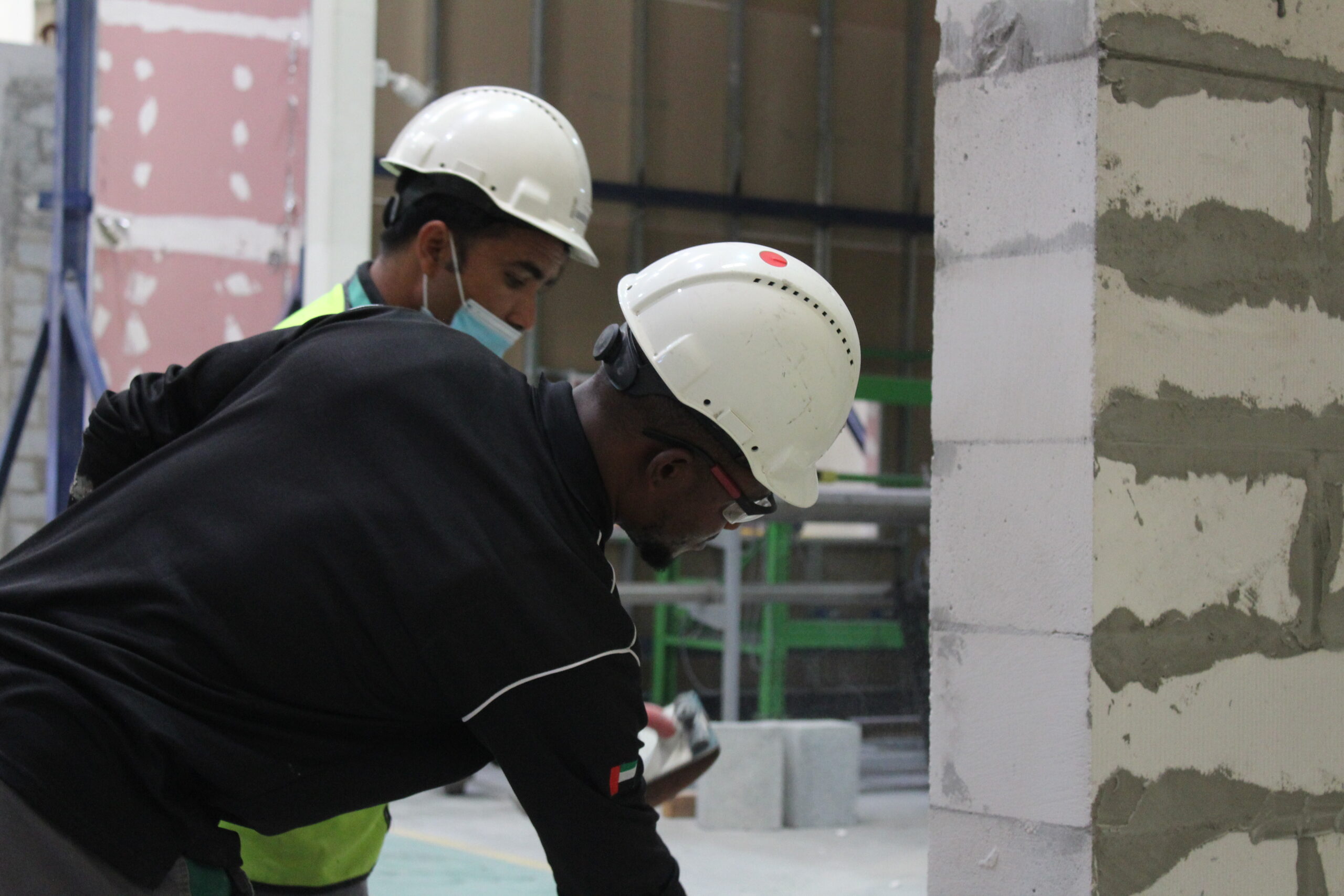
Calibrated measuring instruments: the art of accuracy
Masonry work is a precise craft that requires meticulous attention to detail. One key aspect of this work is the use of calibrated measuring instruments. These tools are essential for ensuring that the openings in test samples meet the specifications mandated by testing protocols.
The accuracy of these measuring instruments is crucial. Even the slightest deviation from the required measurements can lead to inaccurate results, which can undermine the entire purpose of fire-resistance testing. For example, if an opening is slightly larger than it should be, it could allow more heat or flames to penetrate into or around the test sample, leading to a false indication of its fire-resistance capabilities.
Inaccurate measurements can also have profound safety implications. If a material’s test results are determined based on a specimen installed in an inaccurately laid masonry, it could, in the future, be installed in situations where it may not provide the same fire performance as the specimen tested, potentially putting lives at risk in the event of a fire.
To ensure the accuracy of measurements, the masons must be effectively trained in using these instruments. They must also ensure the instruments are regularly calibrated to maintain accuracy. Additionally, masons must exercise caution and precision when using these instruments to avoid any errors that could compromise the integrity of the test results.
The use of calibrated measuring instruments is essential for masonry work, especially in the context of fire-resistance testing. These instruments ensure that the openings in the supporting construction wall meet the required specifications, ensuring the test results’ accuracy and reliability.
Precision in opening dimensions: the architectural foundation
Fire-resistance testing is a critical process aiming to replicate real-world scenarios accurately. One fundamental aspect of this test is to ensure that the opening dimensions in test samples closely mirror those of actual structures. Masonry work plays a crucial role in this process.
Masonry work is essential for maintaining these dimensions with impeccable precision. By ensuring that the dimensions are accurately replicated, masonry work helps to create test conditions that closely resemble real-world scenarios. This attention to detail is crucial because it allows researchers and engineers to assess how materials perform under conditions that mimic those found in actual buildings.
Accurate replication of opening dimensions is essential because it helps to ensure that test conditions remain as close to reality as possible. This is critical for obtaining reliable test results that can be used to inform building design and construction practices. Inaccurate dimensions could lead to misleading results, potentially compromising the safety of buildings and occupants.
Selection of aggregate mixtures
Aggregate mixtures are another critical aspect of the process in achieving accurate test results. Masons must carefully select and mix aggregates to ensure that test specimens have the correct composition and properties required for the test. Aggregate mixing involves a meticulous approach to detail. The selection of aggregates, their quality and the precise ratios of constituents such as cement and aggregate to water play a critical role in replicating the characteristics of actual construction materials. Achieving the right blend demands a profound understanding of material properties and proportions.
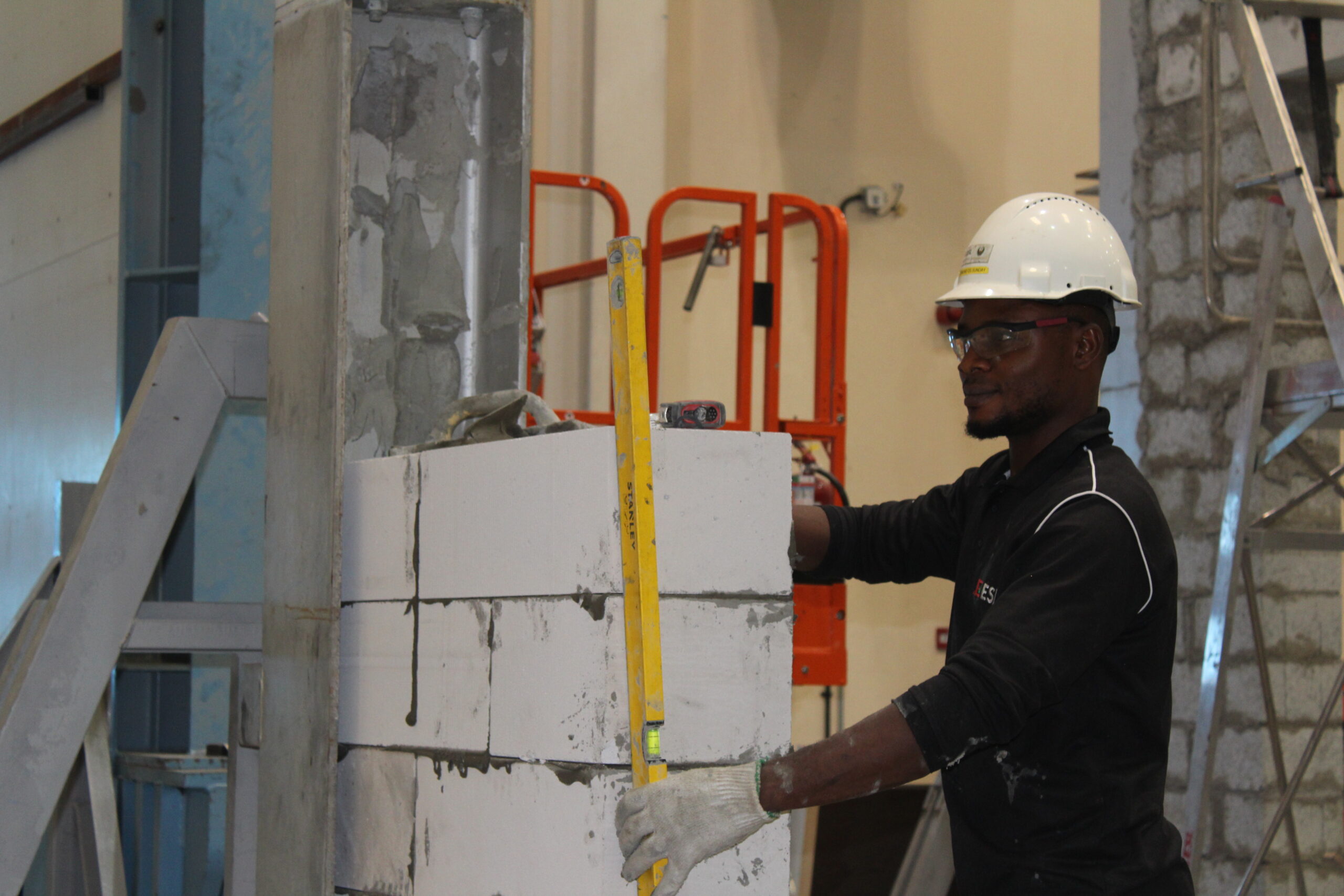
The art of proportion and quality
The proportion of cement and aggregate to water in laying masonry is a critical factor that can significantly impact the performance and integrity of test specimens in fire testing. The masonry team carefully manages this delicate balance to ensure the test specimens accurately reflect real-world construction materials.
The proportion of cement and aggregate used in masonry work is crucial because it directly affects the finished product’s strength, durability and fire resistance. Too much cement can result in a brittle and less durable material, while too little cement can lead to a weaker and less fire-resistant material. The masons must achieve the right balance between cement and aggregate to ensure the test specimens meet the required standards and specifications.
A well-trained mason exercises their expertise in several ways to achieve the right balance in the aggregate mixture. Firstly, they carefully select the type and quality of aggregate based on the specific requirements of the test. Different aggregates, such as crushed stone, sand or gravel, have various properties that can affect the overall performance of the test specimen, and choosing the right combination of aggregates ensures that the test specimen meets the required standards.
Secondly, our masons carefully measure and mix the cement and aggregate to achieve the desired proportions. This requires precision and attention to detail, as even a tiny deviation from the necessary ratio can result in significant changes in the properties of the test specimen. They use calibrated measuring instruments and follow strict mixing procedures to ensure that the cement and aggregate are thoroughly mixed and evenly distributed throughout the test specimen.
Finally, the masons carefully control the curing process to ensure the test specimen reaches its maximum strength and durability. Curing is keeping the test specimen moist and at the right temperature for a specified period after it has been cast using technical skills to achieve the desired properties.
Safety for masons while on the job
Ensuring the safety of our masons during the masonry work while preparing the supporting constructions for fire testing is of utmost importance. One effective way to enhance safety is by conducting regular safety briefings before the start of each shift. These briefings provide an opportunity to discuss potential hazards associated with masonry work, review safety protocols and procedures, and emphasise the importance of following safety guidelines. They also serve as a platform for masons to voice concerns or suggestions regarding workplace safety.
Following safety guidelines is essential in preventing accidents and injuries. Masons must be well versed in the safety procedures specific to their tasks, including correctly handling tools and materials and using the proper personal protective equipment (PPE). Adhering to these guidelines ensures that all safety measures are in place, reducing the risk of incidents and maintaining a safe working environment.

Masonry mastery: the unsung heroes of fire-safety testing
In the intricate world of fire-safety testing, masonry work is a cornerstone of preparation, ensuring the accuracy and reliability of test results. From selecting the right tools and materials to meticulously maintaining precise dimensions, the role of masonry artisans is indispensable. Their expertise guarantees test specimens’ integrity and replicates real-world conditions, providing crucial data for building safety.
At ESL, we deeply value the precision and dedication of our masonry team. Their work aligns with our purpose of ensuring a safer and sustainable future. By upholding our integrity, trust and innovation values, these skilled professionals contribute significantly to advancing fire-safety standards. Through their efforts, we continue to support manufacturers and authorities in creating safer communities, exemplifying our commitment to excellence in fire testing and certification.
For more information, go to: eslglobal.com
About the Author

Desmond Sunday
Desmond Sunday is a Health, Safety and Environmental (HSE) professional with a solid foundation in civil engineering. He holds an International Diploma in Occupational Health and Safety Management from the European Safety Council, as well as a NEBOSH International General Certificate (IGC). With over nine years of diverse industrial experience, including a tenure at Dubai Civil Defense’s Emirates Safety Laboratory, Desmond is well versed in the field. He is an approved DEWA Senior Safety Advisor, bringing extensive expertise in implementing HSEMS systems following international codes, standards and regional regulations. Email:desmond.sunday@eslglobal.com
