
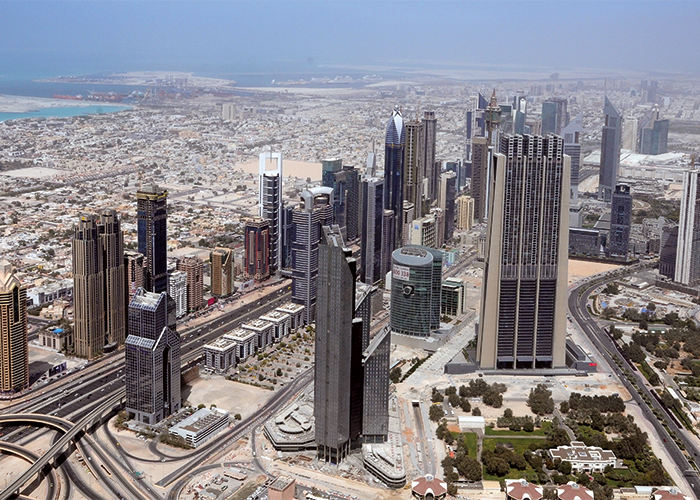
National building codes aim to ensure a reasonable standard of life safety in the event of fire. The protection of property, including the building itself, its contents and the work conducted within it – for instance, in enclosed shopping malls, tall towers, complex process industries, and data centres – often requires additional measures and insurers will, in general, seek their own higher standards before accepting the insurance risk.
Background
Fire safety engineering was originally the pioneering way of enabling successful design of buildings which were simply too large, or complex to fit within the prescriptive fire safety design framework. As the use of performance-based fire safety engineering methods has grown, and many successful designs have been realised, some significant concerns have emerged. The motivations for using fire safety engineering are increasingly being questioned in some quarters. Concerns over the fire safety objectives used in the design process have been also been raised. It appears to be common practice for some projects to concentrate solely on life safety because this is often the element mandated by local building codes and legislation.
Recent research1 has concluded that fire safety engineering facilitates architectural design freedom and supports creative construction, but also revealed that since fire safety engineering has become accepted, significant concerns have been raised regarding various elements of the design process including;
- The appropriateness of application of fire engineering to some design issues and misuse of the term ‘fire safety engineering’ to merely describe deviation from established codes,
- The real motivations of the client and design team for using fire safety engineering techniques are often economically driven motivations, or a means of addressing design errors or omissions.
- The ability of the construction industry to select high quality materials and to ensure the high standards of installation and workmanship which is crucial for successful fire safety engineering, and
- The lack of involvement of the insurer and the ability to consider design objectives other than life safety,
All these issues need to be addressed if fire safety engineering is to enjoy continued growth as a profession, and continued acceptance as a legitimate contribution to the building design process.
Ensuring Resilience at Building Stage Design
In response to the concerns raised above, a new approach to fire engineering objective setting was required. An important step is to actively involve the end-user client, i.e. the organisation who has commissioned the new building and intends to occupy and use the facilities, in order to derive a complete set of design requirements. Therefore, the remainder of this article describes a process that is used to assess business risks, known as business impact analysis (BIA), and discusses how the process can be used to inform the fire safety engineering objective-setting process.
BIA is defined as the procedure for collecting and analysing the urgency of organisational functions or activities, and their tolerance of loss2. It describes the resources necessary for the activities to be accomplished. BIA is fundamental to ensuring a successful building design that fully meets the needs of the client. It is also essential for ensuring the continued viability and success of the client organisation.
Central to the BIA process is the identification of critical activities and the resources upon which they depend. Resources are often grouped into categories such as people, plant, premises and infrastructure, and where the built environment is a part of the provision of these resources, there is clearly a need to consider them during the building design phase.
As such, solutions relevant to the built environment where fire safety engineering tools may be used include the duplication of assets, splitting and separation of assets, protection of assets, and early detection of threat.
By identifying these fire-related disruptions and potential consequences at the design stage of a building or plant, it is possible to incorporate design features designed to reduce property loss, assist in ensuring business continuity and provide resilience against the effects of fire. For the fire safety engineer, the BIA process will;
- Identify those activities critical to the end user client’s organisation,
- Identify the resources needed to support the activities, and,
- Identify the fire safety objectives necessary to protect the resources.
Whilst fire safety engineering alone will be unable to, or not be the most appropriate means to achieve these aims, some building elements could be instrumental in meeting these goals.
The fire safety engineer, architectural design team and insurer should endeavour to fully understand the end-user client’s organisation in terms of its objectives, stakeholder obligations, statutory duties and the environment in which the organisation operates. By including the information derived from a BIA, within the traditional qualitative design review (QDR) process, the fire safety objectives can be informed from a business resilience point of view, as shown in the figure below.
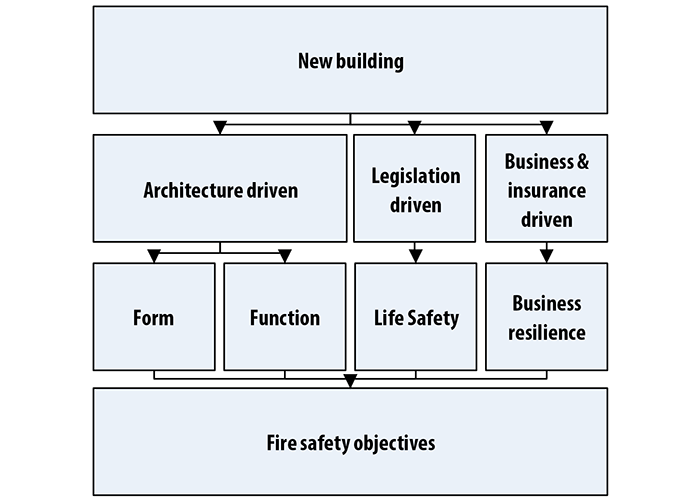
The data gathered from the organisation’s continuity and recovery strategy, and BIA will identify mission critical activities and the timeframe within which they must be recovered (the maximum tolerable outage, or recovery time objective), and will be used as a means to establish dependencies and relationships between business processes and supporting infrastructures.
A New Standard
In order to help consulting fire safety engineers, and architectural design teams, incorporate business protection objectives in their fire safety designs, the established British Standard which defines a fire engineering procedure, and is widely used by fire safety engineers across the Middle East, has been enhanced. Since September 2012, PD 7974-8 Application of fire safety engineering principles to the design of buildings- Part 8: Property protection, mission continuity and resilience has been available. This new document embeds the use of BIA as an integral part of the QDR process.
For the first time, this document enables the building designer to be fully cognisant of the client’s critical processes and the resources required to support these processes. It, therefore, enables the appropriate fire safety measures to be incorporated into the building design to enhance business resilience.
For more information, go to www.pyrology.co.uk
References
- Wilkinson, Peter. An investigation into resilient fire engineering building design. Diss. Loughborough University, 2013.
- Reuvid J., Managing business risk: a practical guide to protecting your business. 3rd Edn. London: Kogan Page, 2006.
About the Author

UK-based Peter Wilkinson is a both a Chartered Fire Engineer and a Registered Fire Risk Assessor, with a passion for helping organisations understand and manage physical risks within the buildings they design, own, occupy, insure or regulate. He is Director of Pyrology Limited, an independent fire and risk engineering practice, providing a wide range of high integrity, cost effective services to both established buildings and new build projects.
