
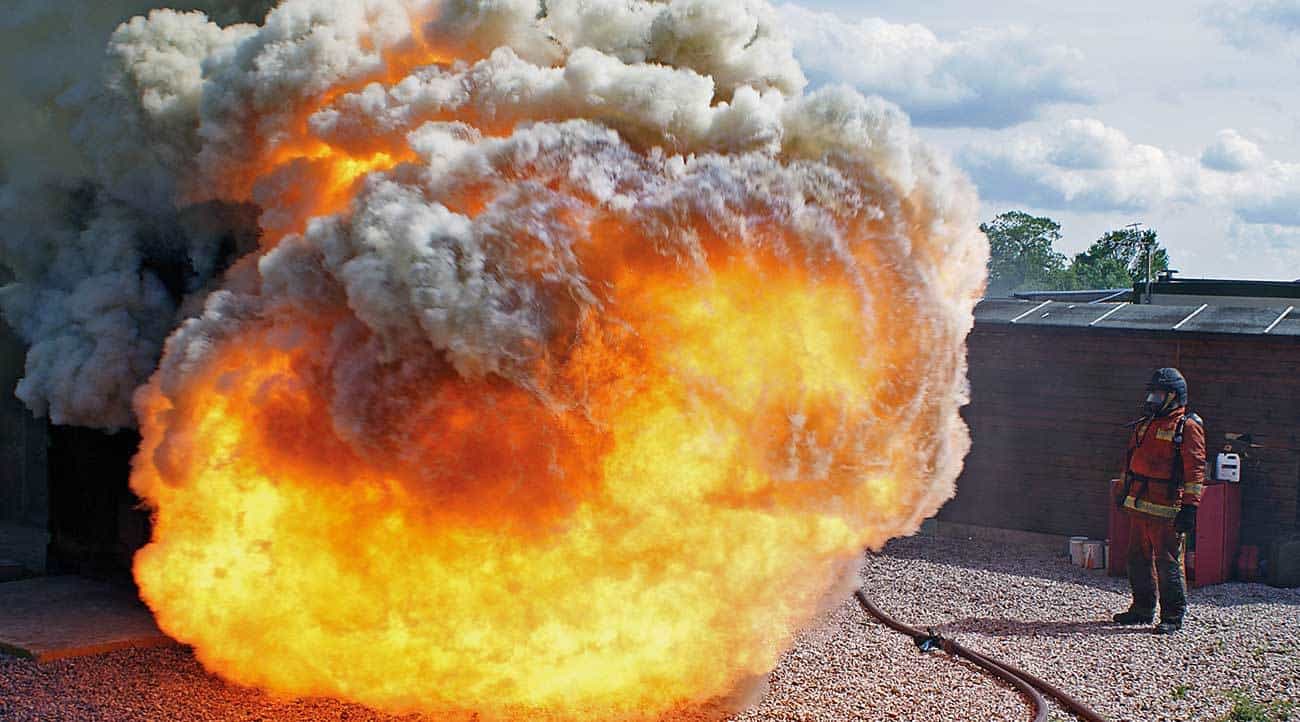
It’s incredible to think that in just a few years live firefighting training has been transformed. In the early days, firefighting training was sometimes referred to as ‘beasting’, a brutal test of endurance to withstand the hottest possible conditions. Thankfully, thinking has now evolved to put the health, safety and welfare of the trainee at the core of the programme.
Training now tends to be longer, more structured and with more opportunities for practice to ensure the delegate leaves confident in their abilities and the instructor assured that he has witnessed numerous examples of the firefighter performing in a pressurised environment.
This hands-on training required to learn live firefighting techniques is the cornerstone of working in the fire and rescue service. However, it’s also an area of training that’s never ever complete. There will always be innovation, improvements to old techniques and the need for continuous professional development to ensure that firefighters remain one step ahead.
Here are some of the factors we believe contribute to making live firefighting training as successful as possible:
Ensure your live fire fighting experience happens in your climate
We all know fires behave differently in different climates and conditions, so it makes sense that instructors are able to mobilise and provide on site training or to clients wherever they happen to be in the world, ensuring that delegates get the very best opportunity to experience live fire fighting in the most realistic setting to their own operating environment.
The arid and intense heat of the Gulf creates a somewhat different firefighting experience to the more temperate, seasonal conditions found in the UK for instance. We would recommend that if you are a Gulf based enterprise seeking live firefighting technique training for a number of delegates then, if possible, you enable the instructor to come to you for the most credible and contextually realistic training.
This also allows the instructor to provide additional support beyond the actual technique training, including sharing of operational experiences and reviewing the inventory of equipment, facilities and apparatus, so all the factors that are required for training success are in place.
Ensure you get sector specific expertise
For the training instructor, the first step in live firefighting training is to fully comprehend and understand the dynamic risk profile of each client and then to providing a training solution that’s meets those specific requirements. Live firefighting for an oil platform risk would be a very different experience to the numerous human factors that would need to be taken into account if you were fire fighting at a large public event for instance.
Although the general principles of live firefighting often remain the same regardless of incident type, gaining specific expertise related to the sector you work in, whether that be nuclear energy, oil & gas, public sector, utilities, maritime, communications or military for example is utterly invaluable.
In order to get the best return on your training investment, you need to invest in a training course that is tailored to your industrial sector and your particular risk.
Ensure your instructors have current front line experience
Choosing an instructor who has considerable and current front line exposure is really important. The first-hand knowledge gained through attending ‘real-life’ incidents in the line of duty is much more valuable than working with a partner that perhaps relies on ‘text book’ trainers who having retired from active service, will suffer skills fade over time.
British fire, rescue and safety training has long been recognised as world class. However, over the past decade it has become increasingly more sophisticated and niche. UK health and safety legislation is the most developed on the globe and this, coupled with stringent sector requirements for continuous professional development (CPD); has created an industry culture that highly values training and planning.
This culture is combined with a new priority within the UK Fire & Rescue service towards commercialisation which puts British fire and rescue services in a solid position to provide international consultancy, operational services and training to companies and organisations anywhere in the world who are looking to improve the skill sets of their internal team and to minimise loss, reduce risk and increase their overall safety.
Ensure you look after your people and equipment
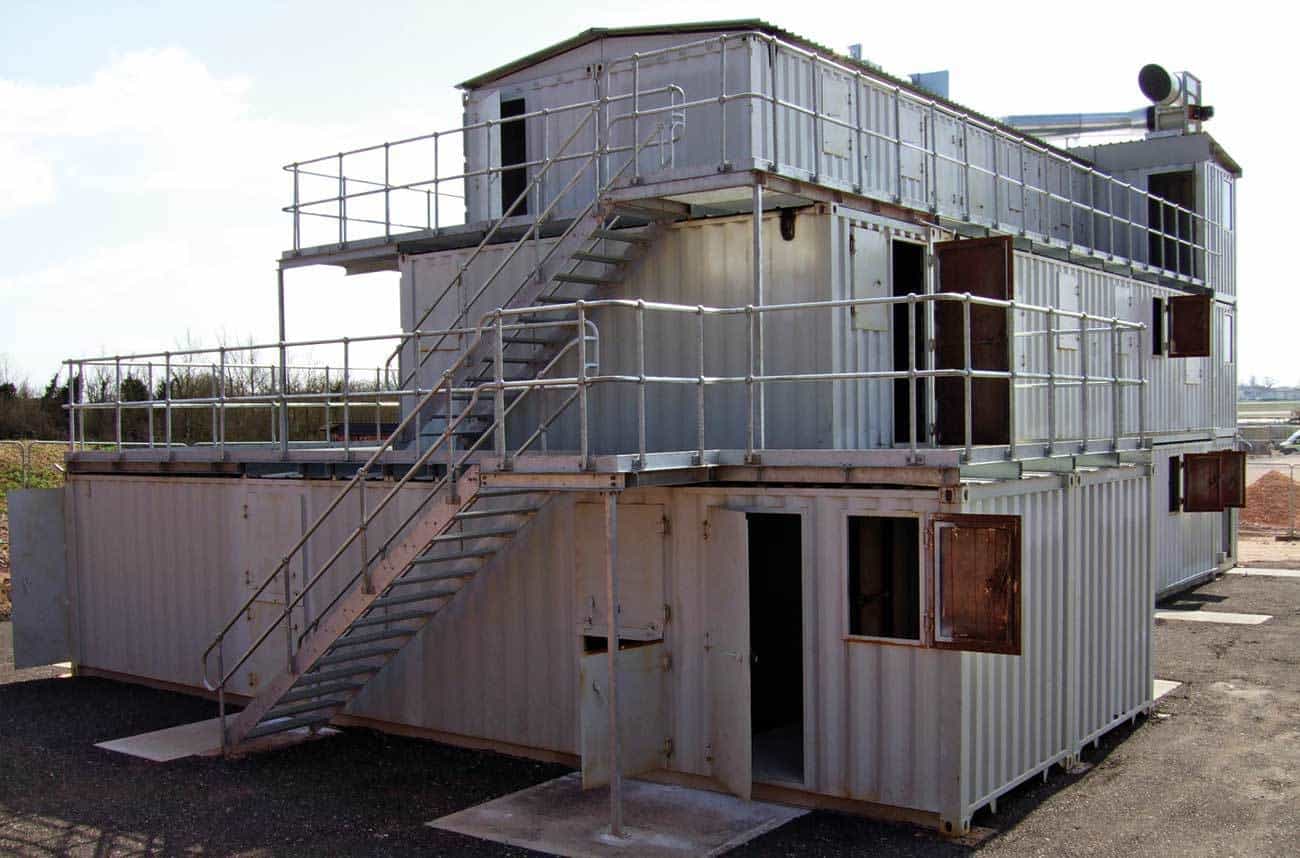
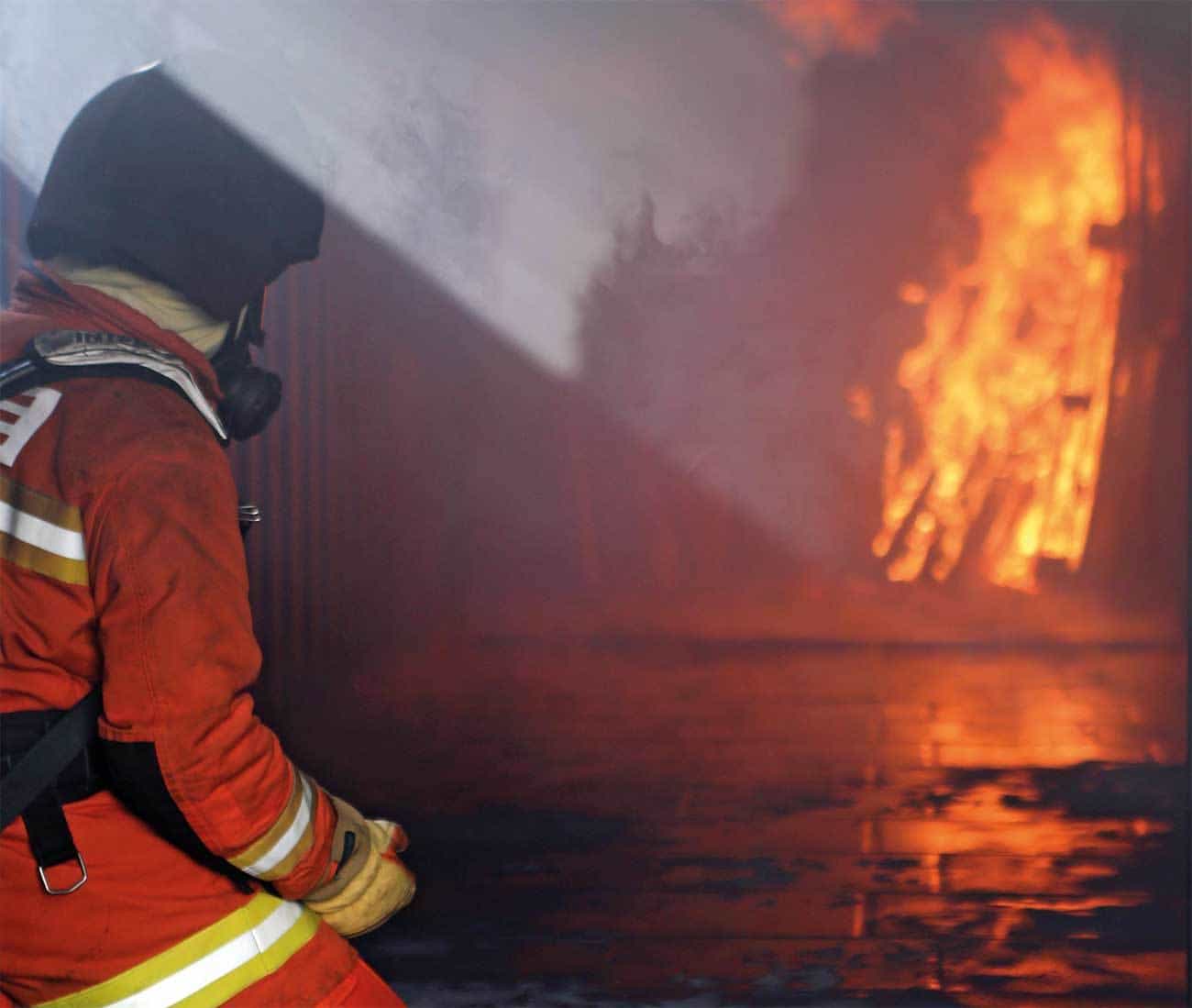
Live firefighting training is no longer about just students withstanding high temperatures within an attack container. Temperatures are now controlled much more precisely to ensure training is not just a feat of endurance but a credible opportunity to learn and practice firefighting techniques and to gain confidence in skill development within a safe, workable environment.
Conditions must of course still be realistic and temperatures will still be challenging but much more attention is now paid to the health and safety management of the student, with continual medical assessments to monitor hydration levels, heat exposure and health.
A further benefit of this change in approach is that training equipment comes under less duress and its life span is therefore prolonged which not only means equipment is safer but also has a positive cost consequence as the training equipment and facilities do not need to be replaced as often.
We always work very closely with the facilities/equipment manufacturer and have been instrumental in designing our own training facilities, taking into account the requirements of our training aims and objectives and coming up with innovative solutions to the layouts and function of our training buildings.
Red One has proven experience in assisting other Fire and Rescue Services with specifying, establishing and operating their own live firefighting training facilities. In recent years we have advised Fire Services in Bogota, Columbia and also in the Turks and Caicos Islands, using our knowledge of the desired training outcomes and the knowledge gained in designing our own live fire facilities. Our ongoing relationships with Compartment Fire Behaviour Training Instructors from across the UK’s Fire and Rescue Services has contributed to a standard design template for live firefighting facilities and equipment now being adopted by most other services in the United Kingdom.
Courses & qualifications at the cutting edge of live firefighting
Red One works alongside Devon and Somerset Fire and Rescue Service Academy Fire Behaviour School, who, in partnership with the Swedish Rescue Services Agency (SRSA), has been instrumental in the development of Fire Behaviour training in the UK and is a recognised provider for National and International Fire Behaviour Instructor courses.
The Academy’s experienced Fire Behaviour instructors and assessors have attended extensive training courses in Sweden and now deliver in-house and external training with the common aim of providing fundamental, procedural, tactical and realistic experiential fire training.
Situated at Exeter Airport, the Academy Fire Behaviour School continues to invest in its major capital programme to ensure that the on-going development of its training facilities supports the advancement of additional new live firefighting techniques such as tactical ventilation.
Among the courses offered by Red One and delivered at the Academy Fire Behaviour School are Compartment Fire Behaviour Training (initial) and Compartment Fire Behaviour Training Instructor (initial and refresher) programmes to BTEC Level 3, Breathing Apparatus Instructor courses and Tactical Ventilation (PPVI) to BTEC Level 3.
Many of Red One’s courses have also been cross-mapped to meet the additional specifications of the US NFPA standards, which are often required by clients within the GCC.
For more information, go to www.red1ltd.com
About the Author

Chris Thain is Business Development Manager, Fire & Rescue Services at G3 Systems Ltd based in Portland, Dorset, UK. He was previously the Commercial Business Development Manager for Devon and Somerset Fire & Rescue Service.
