
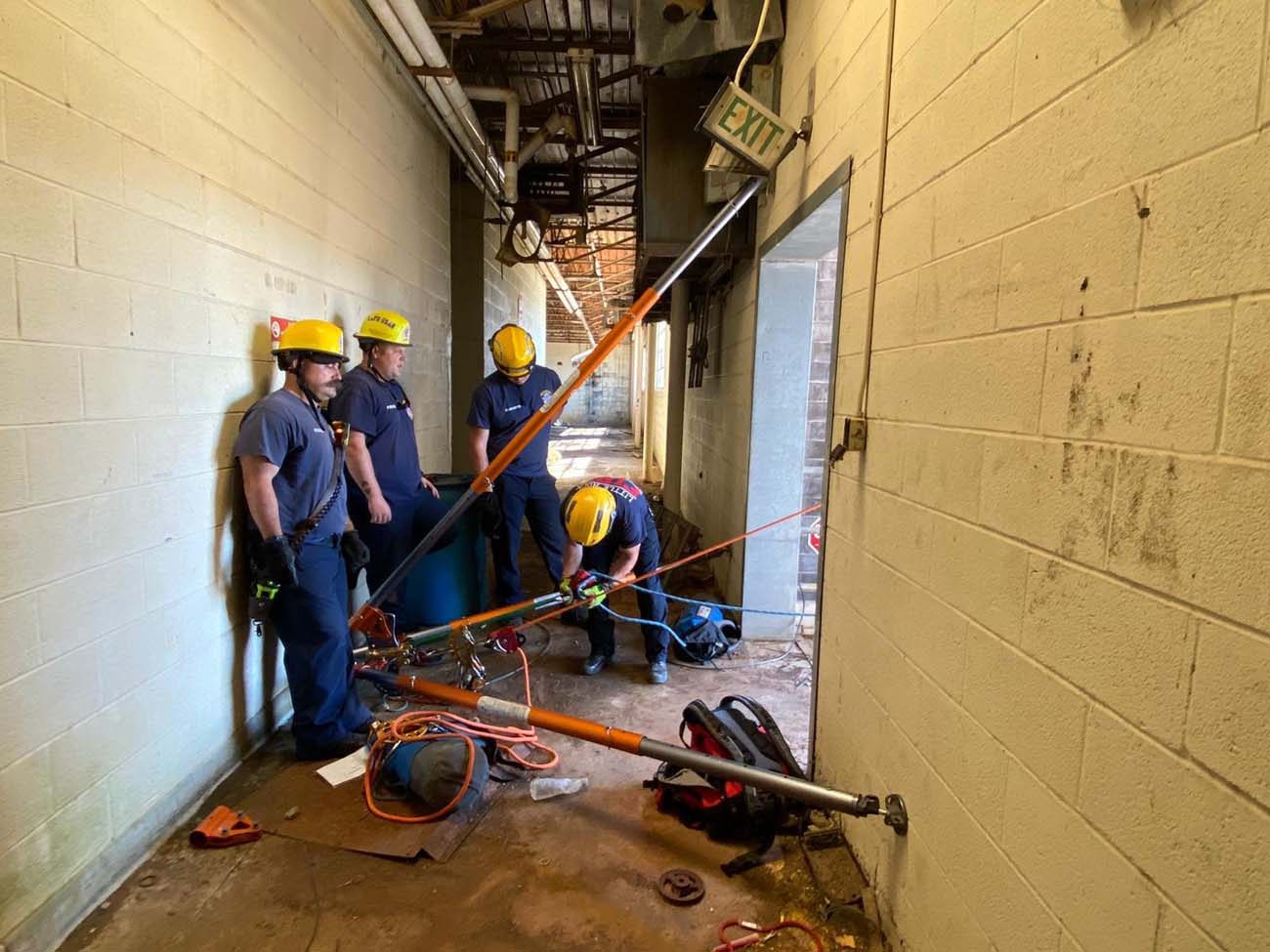
Disasters can strike at any time, and when they do, they require a rapid and effective response. That’s where Urban Search and Rescue (USAR) teams come in. These highly trained teams are equipped to respond to a wide range of disaster scenarios, from natural disasters such as hurricanes and earthquakes to man-made disasters such as terrorist attacks or building collapses. But putting together an effective USAR team is no easy feat. It requires careful planning, diverse skill sets and a strong commitment to teamwork and communication. In this article, we’ll explore the basics of USAR skills sets and information, covering topics such as identifying necessary skills, fostering teamwork and communication, developing contingency plans and engaging with the community. Whether you’re a first responder, emergency manager, or just curious about USAR, this article will provide valuable insights into the fundamentals of Urban Search and Rescue.
The concept of USAR originated in the 1960s as a result of the increasing number of high-rise buildings in urban areas. The first USAR team was established in Los Angeles in 1968, and since then, the concept has evolved into a multidisciplinary response that includes specialized personnel and equipment to respond to a wide range of emergencies. The Federal Emergency Management Agency (FEMA) created the National Urban Search and Rescue Response System in 1989, which is responsible for coordinating USAR activities across the United States.


Strategies and best practices
Urban Search and Rescue (USAR) teams play a critical role in responding to disasters, and putting together an effective team requires careful planning and preparation. Here are some strategies and best practices for putting together an effective USAR team:
First, it’s important to identify the necessary skills and expertise that the team will need to respond to disasters effectively. This may include skills such as search and rescue, medical care, hazardous materials handling, structural engineering and logistics. Once the necessary skills are identified, it’s important to recruit a diverse team with a range of backgrounds, experiences and perspectives. This can bring a range of benefits, such as enhanced problem-solving, improved communication and better community engagement.
USAR team members should receive comprehensive training in the necessary skills and procedures to effectively respond to disasters. This may include specialized training in areas such as swift-water rescue, confined space rescue, or urban search and rescue. Effective disaster response also requires strong teamwork and communication skills, so USAR team members should be trained to work collaboratively, communicate effectively, and prioritize safety and efficiency.
Disaster response scenarios can be unpredictable, so it’s important to develop contingency plans and backup strategies in case of unexpected events. This may involve developing alternative access routes, identifying secondary search areas, or having backup communication systems in place. Regular drills and exercises can also help USAR teams stay prepared and hone their skills. This can involve simulating disaster scenarios, conducting tabletop exercises, or participating in joint training exercises with other response agencies.
Finally, USAR teams should engage with the communities they serve to build trust and develop relationships. This may involve providing disaster preparedness education, participating in community events, or collaborating with community organizations.


Scenario basics
In the event of an earthquakes, building collapses and/or landslides USAR teams will rapidly assess the damage and search for victims who may be trapped in collapsed buildings or under rubble. Specialized equipment, such as listening devices and search cameras, can be used to locate victims. USAR teams may also use heavy machinery to remove debris and create safe spaces for rescue operations.
In flood scenarios, USAR teams will perform water rescues and locate individuals who may be trapped in flooded buildings. Teams may use specialized equipment such as inflatable boats, ropes, and flotation devices to perform water rescues. USAR teams will also assess and monitor the structural stability of flooded buildings to ensure safety for rescue operations.
In the event of a hurricane or typhoon, USAR teams will assess the damage and search for victims who may be trapped under debris or in flooded areas. Specialized equipment such as drones and search cameras may be used to locate victims.
In the event of a transportation accident, such as a plane crash or train derailment, USAR teams will assess the damage and search for victims who may be trapped in the wreckage. Specialized equipment such as cutting tools and heavy machinery may be used to perform extrication operations to rescue victims.
In response to a terrorist-involved disaster, USAR teams would first secure the scene, assess the situation and search for survivors while considering potential secondary attacks. They would provide medical care to survivors and document the scene throughout the rescue and recovery operations. USAR teams would then hand over the scene to law-enforcement agencies for further investigation and analysis.
In the event of an industrial accident, such as a chemical spill or explosion, USAR teams will assess the damage and search for victims who may be trapped or injured. Teams will also need to operate in hazardous environments, and specialized equipment such as breathing apparatus and chemical protective suits may be used.


Challenges
Despite the importance of USAR teams in emergency response, there are several challenges that public safety authorities face when implementing USAR programmes. One of the main challenges is funding, as USAR teams require specialized personnel and equipment, which can be expensive to maintain. Ongoing training and education for personnel to keep them updated with the latest skills and knowledge is also costly.
In many disaster scenarios, the USAR team must navigate damaged infrastructure, such as collapsed buildings or damaged roads, to reach the affected area. This can be difficult and time-consuming, and may require specialized equipment like boats, helicopters or heavy machinery to clear debris and create access routes.
Disasters can create a range of hazardous environments that pose risks to the USAR team, including unstable structures, fires, toxic chemicals and contaminated water. USAR teams must be equipped with appropriate personal protective equipment (PPE) and be trained to operate safely in these environments.
When responding to a disaster, USAR teams may face resource constraints, such as limited personnel, equipment or supplies. This can make it difficult to carry out operations effectively and efficiently and may require teams to prioritize certain tasks over others.
Responding to a disaster can be emotionally challenging for USAR team members, who may be exposed to scenes of destruction, suffering and loss. Teams may need to provide emotional support and counselling to team members to help them cope with the stress of the situation.
In a large-scale disaster, multiple USAR teams, government agencies and other organizations may be involved in the response effort. Coordinating efforts and sharing information can be challenging, particularly in environments where communication infrastructure may be damaged or overloaded.
Overall, responding to natural and man-made disasters requires a highly skilled and trained USAR team that is prepared to operate in challenging and dynamic environments, and can adapt quickly to changing circumstances.


Knowledge, skills and abilities
Urban Search and Rescue (USAR) teams require highly trained and skilled personnel with specialized knowledge and capabilities to perform their duties effectively. Here are some of the training, knowledge and capabilities that USAR team members need:
Technical rescue training is required to perform complex and hazardous rescues. Technical rescue training includes courses on rope rescue, confined space rescue, trench rescue and structural collapse rescue. Team members must be proficient in using specialized tools and techniques to perform rescues safely and efficiently.
Team members must have medical training to assess and treat injuries on-site. Medical training includes courses on basic and advanced life support, trauma care and triage. Team members must be able to identify and manage life-threatening injuries and illnesses in the field.
Understanding of structural engineering is critical when assessing the stability of damaged structures. Team members must be able to identify hazards and understand how to stabilize damaged structures to perform safe and effective rescues.
USAR members should have hazardous materials training to the technician or specialist level to operate safely in environments that are considered immediately dangerous to life and health (IDLH). This training includes courses on hazardous material identification, use of personal protective equipment and decontamination procedures.


Effective communication is a necessity in emergency situations. This training includes the use of radios, satellite phones and other communication devices. Team members must be able to operate in situations with limited communication and in noisy or high-stress environments.
They must be proficient in various search and rescue techniques. This includes grid search patterns, marking and flagging systems, and using search dogs. Team members must also understand how to extract victims safely and efficiently. Navigation and map-reading skills are a must in disaster areas. This includes the use of GPS systems, maps and compasses.
Lastly, and perhaps most important, high levels of physical fitness are needed by USAR personnel to perform their duties effectively. They must be able to operate in high-stress and physically demanding environments while wearing personal protective equipment.
Conclusion
Urban Search and Rescue is a critical function in emergency response that plays a vital role in saving lives and reducing the impact of disasters. USAR teams utilize a variety of strategies and best practices to respond to emergencies, and public safety authorities must be prepared to address the challenges of implementing USAR programmes. By continuing to invest in USAR personnel and resources, we can improve our ability to respond to emergencies and protect the public from harm.
About the Author

Casey Jones is a Captain and Special Operations Specialist with the Little Rock Fire Department (AR). He holds advanced degrees in Fire Science, Fire Admin and Business. He is also a Chief Training Officer and Personal Trainer.
