
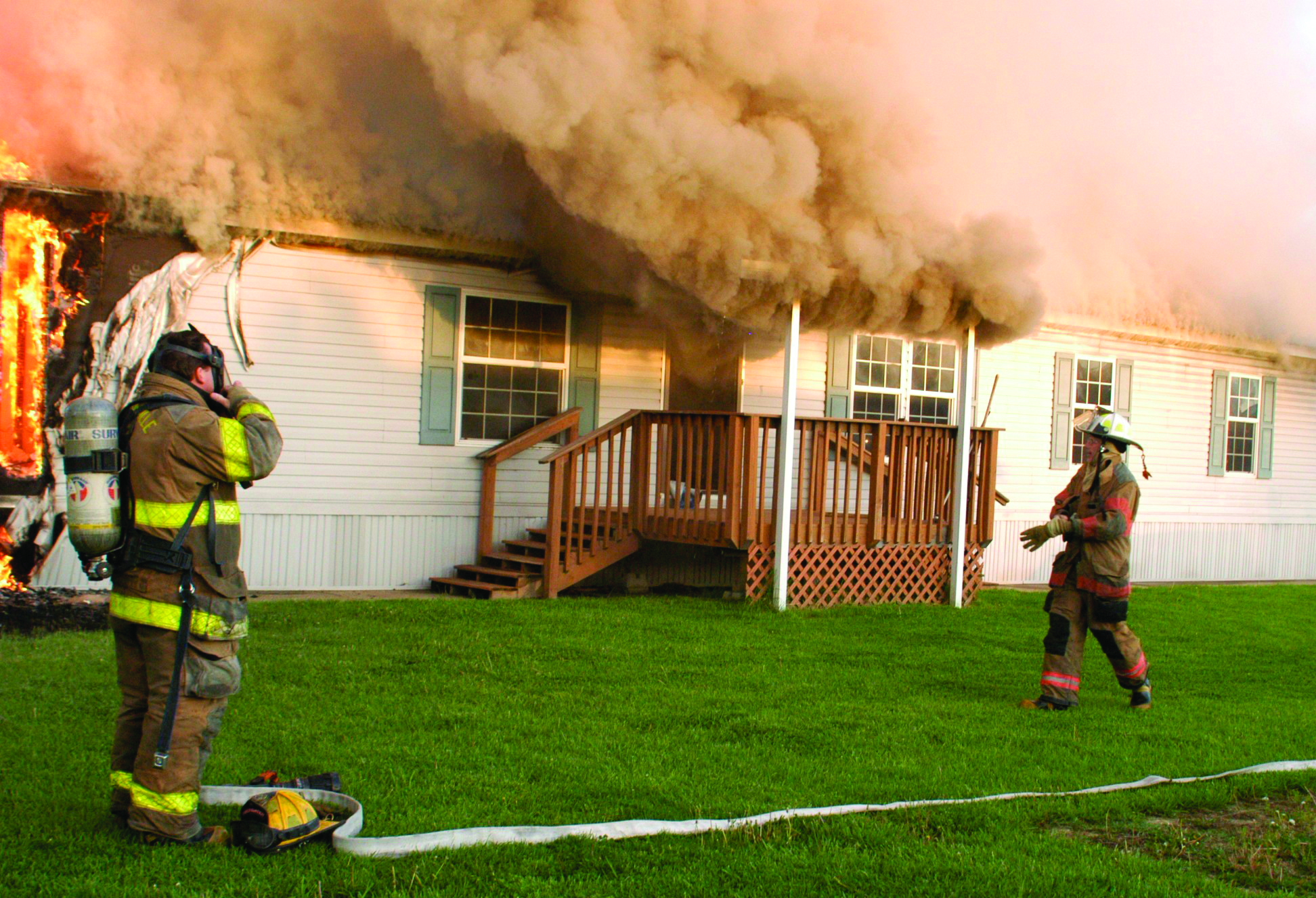
Flawed situational awareness is one of the leading contributing factors in first responder near-miss and casualty events. Complicating this problem is that most first responders know very little about what situational awareness is, how they develop it, how they lose it and how to get it back once they have lost it. Basic first responder training programs, for that matter, most officer training programs, do not teach Situational Awareness (SA). The programs that do address SA typically only dedicate a small amount of time to it and most instructors are under prepared to speak to the complexities of the topic.
The situational awareness-related issues cited in casualty reports often include: inadequate initial and ongoing size-ups, failure to continuously evaluate the risk versus benefits during the entire operation, ineffective communication of incident conditions, and failure to recognize hazards.
When asked, many first responders struggle to explain what it means to have SA. Even worse, many responders struggle to explain how SA is lost and what things can be done to keep it intact. In general, there is a lack of awareness . . . about awareness. How ironic.
Let’s start by discussing what SA is. After that, you’ll be in a better position to understand how situational awareness can be established, maintained, impacted, lost, and regained. I have heard several people offer simplistic definitions of situational awareness that, in some ways, capture the essence of the concept, yet do not do it justice. For example, I have heard it described as paying attention or where perception and reality meet. Can’t argue with that, but what does that really mean? To help you understand situational awareness in a meaningful way, I turn to the work of Dr. Mica Endsley, founder and President of SA Technologies. Endsley has written over 200 academic articles and several academic textbooks on issues related to situational awareness. Endsley (1988) defined situational awareness as a perception of elements in the environment within a volume of time and space, the comprehension of their meaning, and the projection of their status into the near future.
Stated another way, situational awareness is a first responder’s ability to capture information – cues and clues (think of gathering up jigsaw puzzle pieces) from what is happening around you . . . then being able to put those clues and cues together to mean something (think of assembling some of the puzzled pieces to start forming a picture). . . then being able to predict future events as a result of what you have captured and the meaning you gave to it (think of looking a partially completed jigsaw puzzle and making predictions about what the completed picture will look like). Endsley’s research discovered there are three levels of situational awareness. Level 1 is the perception phase (this is where responder’s capture the cues and clues). Level 2 is the comprehension phase (this is where responders put those cues and clues together to mean something). Level 3 is the projection phase (this is where responders predict future events based on the picture formed in the previous levels (1 and 2).
This is important to understand. If, for example, you fail to capture the right cues and clues, it will impact your ability to understand what is happening. This, in turn, will impact your ability to predict what is going to happen next. Chances are pretty good that you have read an after-action report or watched a fire scene video where something went wrong and said to yourself: “How could they NOT see this coming?” or perhaps you thought to yourself: “That could never happen to me.”
First of all, it is easy to read casualty reports or watch incident videos and become angry because what you see coming may appear to be SO obvious. Well, it wasn’t obvious to the responders operating at the incident where something is about to go wrong. Keep in mind, no responder ever goes to an incident thinking to themselves “I’m going to lose my situational awareness on this call . . . make some bad decisions . . . and jeopardize my safety and the safety of other firefighters.” Yet it happens – a lot!

The sad part of this is, most of the time the responders never see it coming until it’s too late. Maybe at the moment when the tragedy occurred they were doing the same thing, the same way they’d done it for years. And because they’d never experienced even so much as a minor near-miss event, they didn’t see anything wrong with what they were doing. Maybe the responders thought they had good situational awareness. Then, it happened . . . a catastrophic casualty. The first misnomer you need to come to grips with is, the loss of situational awareness can afflict any first responder and impact their decision making and there may be no warning signs at all.
Issues with flawed SA and its impact on decision making has been studied in a number of professions where decisions are made in dynamic, fast-paced, ever-changing, high risk environments. Extensive research has been done to understand SA among military battleground commanders, airline pilots (especially when something has gone wrong and the flight is in jeopardy), and surgical teams. From this research have come some very important lessons that first responders can learn from. These include:
- A responder with poor SA can still make a good decision, if only by luck.
- A decision made with good SA can still have a bad outcome.
- Maintaining SA requires a physical, mental and emotional commitment to paying attention.
- What to pay attention to . . . is NOT always obvious.
- A first responder’s attention is drawn away by things that are loud, bright, moving, or into close proximity of the responder (moving toward him or her).
- Responders rarely realize they are losing their SA until it is too late.
- Responders (in fact, all humans) can only remember seven (+/- two) unrelated pieces of information. Stress may reduce that number to five.
Unfortunately, most first responders simply do not know what they need to know about SA, how it is developed, how it is maintained, how it is lost, or how to get it back once it is lost. That was the position I was in just seven years ago. Then, in 2004 I went back to school to earn a Doctor of Philosophy degree. In that journey I was provided with a wonderful opportunity to conduct original research on first responder SA and high-stress, high consequence decision making. I was stunned to learn what I didn’t know about these topics after serving as a firefighter, company officer and fire chief for 25 years.
I was also frustrated and angry because no one had ever taught me these catastrophically important lessons. I couldn’t understand how I didn’t know this stuff already. I’d taken no less than a dozen strategy and tactics, incident command, and officer development classes throughout my career. Yet here I was, seeing for the first time that some important lessons had evaded me. It was a sobering experience.
Barriers to Situational Awareness
The purpose of my research was to answer a very simple, yet perplexing question. For many years I had read casualty reports and near-miss reports. While doing so, I kept asking: How could they not see this coming? There seemed to be so many clues, signs, symptoms and indicators the incident they were operating at was going to end in a disaster. But why? Why could they not see it coming? It was like they were blind and, in some cases, deaf to the things happening around them.
Early on when I would come across these cases I would find myself passing judgment on the persons operating at the incident. I found myself making up excuses for them – lack of training, lack of experience, lack of staffing, lack of equipment, incompetency, etc. I got so I was pretty good at categorizing each incident into a convenient, easily justifiable category. But it still did not answer the question – How could they not see it coming?
So that was among the questions my research would seek to understand. In the process, I uncovered “Barriers” to situational awareness. Simply stated, a barrier is something that prevents the formation of SA, causes SA to erode or prevents eroded SA from re-forming once lost. When I started on this journey I had no idea how many barriers there would be. I thought there might be fifteen or twenty.

Boy, was I wrong! Twenty turned to forty, then sixty, then eighty, then one hundred. When I was done there were one hundred and sixteen barriers on the list! I was stunned. With so many ways our SA could be impacted, how could we ever get it right? It was at that moment I had an epiphany. After 25 years in the fire service with over 20 years experience as a company officer and incident commander, I now realised I’d not been a GOOD company officer and fireground commander. I’d been a LUCKY company officer and fireground commander. When it came to understanding the barriers to situational awareness, I had been the incompetent one. It scared me.
Through an exhaustive search of the existing literature, coupled with interviews conducted with expert-level fireground commanders, I have been able to amass this extensive list of SA barriers. As I assembled this list, similar barriers were grouped together, resulting in 12 categories of SA barriers that included:
1 Staffing
2 Communications
3 Data/information management
4 Physical and mental stress
5 Workload management
6 Attention management
7 Mission/goals
8 Mental models
9 Human factors
10 Command location
11 Command support, and
12 Team/crew performance
Each of these categories contains a list of barriers. For example, in the staffing category, there are potential barriers to responder SA that can arise from understaffing, overstaffing, unpredictable staffing, quality of staffing, response time delays, lack of experience, and inadequately trained personnel. As another example, in the communications category, there were potential barriers to responder SA from issues with verbal and non-verbal communications, progress/update reports, misinterpreted words or phrases, incomplete communications loop, missed radio communications, radio equipment problems, non-compatible radio equipment, using multiple radio channels, too much radio traffic, and crews not willing or unable to communicate by radio. As you can quickly see the list of potential SA barriers is rather extensive. While there’s not enough space to list and discuss every barrier in this journal, here, I will share the most important lessons I learned from my interviews with first responders about how their SA impacted.
The decisions made by first responders impact the safety of fellow responders as well as the outcome of the event. But responders are human and, thus, are subject to limitations and errors. The fireground is a dynamic, complex decision making environment that is critically dependent on forming and maintaining strong SA.
There seem to be several identifiable factors that impact responder situational awareness. First, is incomplete size-ups and, more specifically, failing to read the smoke and fire conditions, failing to assess building construction and the deterioration of the component of construction, and failing to conduct a realistic assessment of savable lives (what some might term completing a survivability profile).
Second, responders are underestimating the speed in which the incident is progressing. This can cause a responder to get behind in the incident and apply strategy and tactics that are not appropriate because the incident has progressed beyond their plan.
Third, responders are overestimating their own abilities as well as the abilities of their fellow crewmembers. This is happening for several reasons, including not having enough personnel assembled to get the job done and the assemblage of personnel who lack the training or experience to be efficient and effective at the assignments they are given.
Forth, responders are stressed from a sense of obligation to be tactically aggressive. This pressure may come from the organization’s culture or from upset customers who have unrealistic expectations of what the fire department could or should be doing to mitigate their emergency. This can lead to a pressure to perform heroically and cause responders to take excessive risks, despite a high level of awareness of the dangers present in the situation.
Finally, responders struggle because they are focused on the wrong things or they try to split their attention among too many tasks – multitask. This is a big mistake. The human brain cannot multitask when it comes to paying attention. Some responders think they’re good at multitasking when in fact, they are not multitasking at all. They can only give their attention to one task at a time. Think of it this way. On your personal computer open up an email window and a word processing document. Now, multitask by typing an email and a sentence on the document at the same time. It can’t be done. You can go from one to the other and back but it simply is not possible to complete both tasks at the same time. The same is true for paying attention. You alternate your attention between tasks – back and forth – but no multitasking. The brain cannot do it.
So far I have provided you with a working definition of situational awareness and provided some examples for how situational awareness can be impacted. In the next issue, I will provide you with ten best practices, based on my research, for developing and maintaining situational awareness.
For more information, go to www.SAMatters.com
