
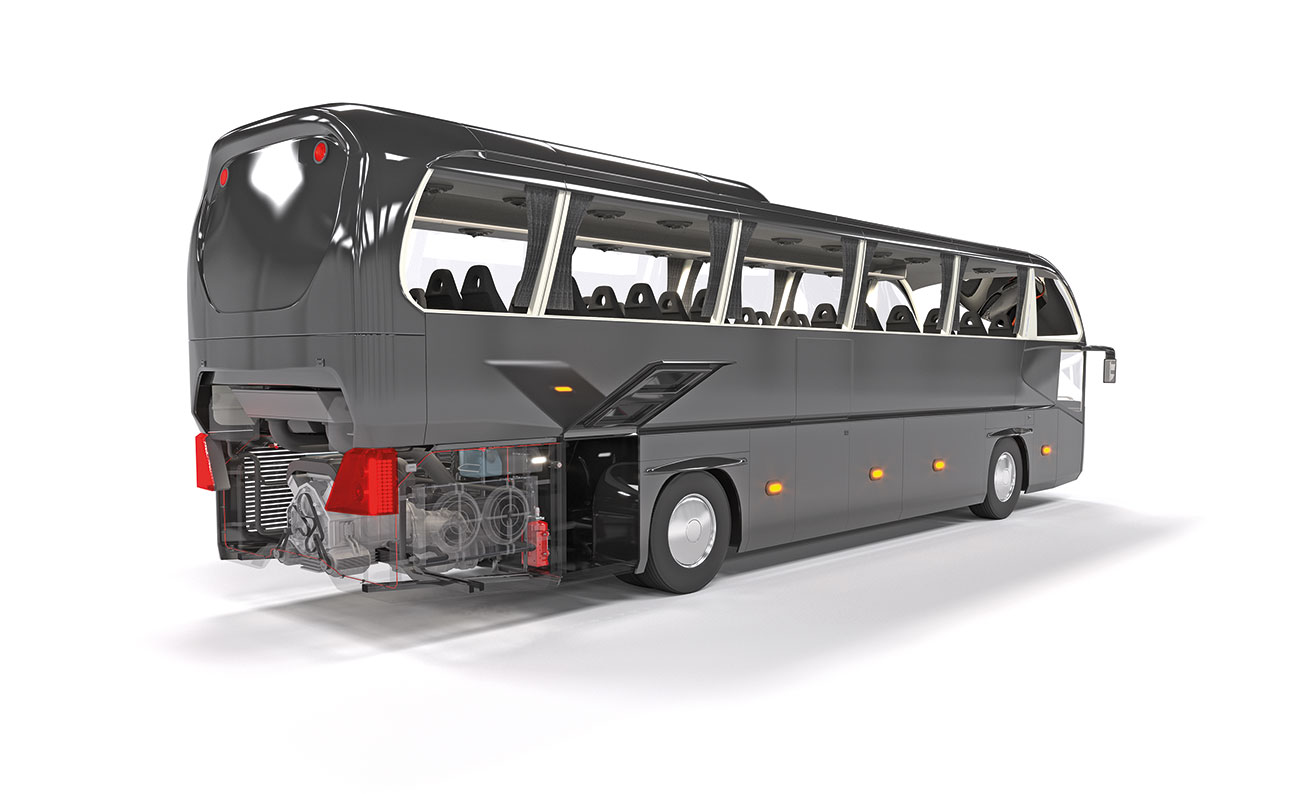
In 2019/20 over 4 billion bus journeys were made in England alone, over half of these journeys were made in London. With 12 London bus fires each month the safety of every passenger cannot be compromised, and the requirement for automatic fire-suppression systems has never been so important. The issue at hand cannot simply be narrowed down to one nation; travel and public transport are critical elements of millions of people’s everyday lives around the world. Even if they do not use public transport, they are still potentially affected by the logistics and issues of public transport either directly or indirectly. The passengers of the bus or coach and the driver are the most at risk to serious injury in the event of a fire, however, the surrounding population are still at risk, which increases the number of potential casualties, demonstrating how severe bus fires can be.
UK Government records show that between 2011 and 2017, 61% of bus and coach fires started within the engine compartment. Furthermore, 29% of these fires started with passengers present, thus increasing the risk and placing greater emphasis on the requirement for automatic fire-suppression systems. Traditional methods of fire suppression such as fire extinguishers are still effective in suppressing fires, but there are numerous implications with these methods. Firstly, they are not strategically located in fire-vulnerable areas, such as the engine compartments, meaning there could be implications with egress times for passengers, increasing the risk of injury. Secondly, they are not automatic, meaning human intervention is required, thus increasing the risk of serious injury. Additionally, they do not guarantee the prevention of re-ignition, which poses the threat of a second and a potentially more dangerous fire for the bus.
Therefore, automatic fire suppression is the most effective solution to tackling bus fires with the detection tube covering the most vulnerable area of the vehicle, the engine compartment, with a series of strategically placed nozzles that target the high-risk areas of the engine compartment and the suppressant agent rapidly knocking down the fire within seconds and preventing re-ignition.
In order to combat the threat of bus and coach fires, Reacton designs and manufactures specialist fire-suppression systems, which are certified to P-Mark SPCR 183 and UNECE R107, achieving a performance grading of A+ to offer 24/7 automatic protection. The system activates within a matter of seconds after the loss of pressure from our UL-approved detection tube to provide a rapid response to a sudden and high increase in temperature that could lead to a fire or a fire that has broken out. Our indirect system targets all identified risks to rapidly extinguish the fire and allows a safer egress for any passengers. This greatly reduces the risk of injury to any passengers and surrounding people.
Additionally, our on-road vehicle automatic systems use Dry Powder as the suppressant agent because of its rapid knockdown capabilities and its ability to extinguish hidden fires in engine compartments that other agents may struggle to tackle, thus eliminating the risk of re-ignition from any of the engine compartments that could go unnoticed. ABC Dry Powder is electronically non-conductive, therefore safely protecting any electrical hazards. Our system requires no electrical power for activation, meaning that regardless of the power status of the vehicle you have protection from our system at all hours of every day.
For more information, go to www.reactonfire.com
