

They remain inert in normal conditions but expand to many times their dormant size to seal critical gaps around doors, glass, ironmongery and service penetrations when the worst happens. This feature explains the application and characteristics of these key materials.
Intumescent materials form part of a complete Passive Fire Protection (PFP) system that has been tested and assessed in order to comply with the building regulations and laws applicable to the country of installation.
When exposed to a heat source, typically exceeding 100 to 250°C, an intumescent material will start an expansion stage that leads to an increase in volume. As the temperature increases beyond 650°C the expansion stage is nearing completion, and a gap-filling intumescent seal will have expanded and filled the void it was located in.
There are three main intumescent types, namely Mono Ammonium Phosphate, Hydrated Sodium Silicate and Intercalated Graphite, which we’ll look at in depth shortly. Other formats include surface coatings for both timber and structural metalwork as well as silicone sealants and acrylic mastics. In addition, a clear impregnated gel with intumescent qualities is frequently used to produce fire-rated glass, which has a requirement to provide an insulation and integrity rating. Intumescents are also categorised as non/low pressure generating and pressure generating. It is important to realise the difference between the two categories as using the wrong type in the wrong location can and will have a dramatic effect on the intended fire performance of the system it is used in.
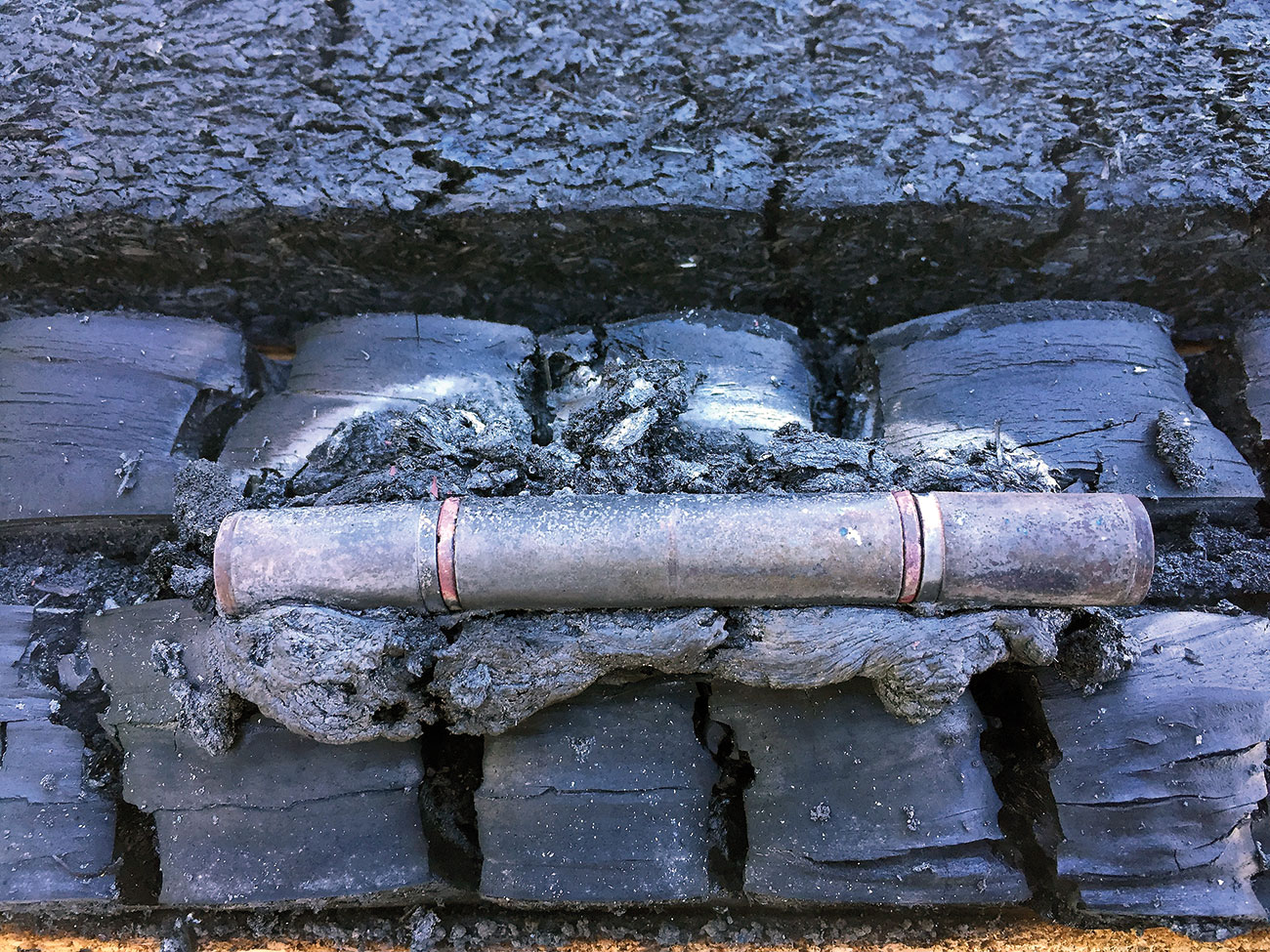
The type of char produced as a result of the heating and expansion process can be categorised either as soft or rigid char. Both have different qualities and are best in certain situations. Firstly, soft char is a light char which is produced when the intumescent expands. It is generally a poor conductor of heat and so therefore has the benefit of reducing heat transfer. Typically, the soft char consists of microporous carbonaceous foam, which is formed by a chemical reaction of three main components namely ammonium polyphosphate, pentaerythritol and melamine. Ablative surface coatings contain a significant amount of hydrates. These hydrates when heated decompose and release water vapour giving a cooling effect. Once the water has evaporated the insulation characteristics of the remaining char can reduce the heat transfer from the fire side to the non-fire side of an installation.
Secondly, rigid char is a harder char that is produced by sodium silicates and graphite. Products producing harder chars are best used where the pressure exerted by the expanding intumescent is needed to reduce the amount of distortion and movement that is shown by installations as they react to the intense heat and pressure effects of a fire. A pressure-generating intumescent with a rigid char is ideally used for installations such as creating a tight fire seal around plastic pipework that is passing through a fire-rated wall or floor. As the heat from the fire softens the pipe the expanding intumescent creates enough pressure to crush the pipe thus sealing the void that has opened up by the pipe falling away. This in turn stops the fire tracking through the void.
Material types
There are three main intumescent material types:
Mono Ammonium Phosphate (MAP) is categorised as a non-pressure-generating intumescent and will produce high levels of expansion. Depending on the thickness used it can exhibit an expansion of up to 40 times its original thickness and, as the expanded char exhibits no significant pressure, the material will have a minimal impact on the item it is designed to protect. MAP’s are commonly used under and around ironmongery items as well as in fire-rated glazing applications.
- Activates at around 180°c.
- Virtually no pressure and it has some flexibility when expanded.
- Allows it to accommodate movement between components.
- Mainly used as a multi-directional gap filler.
Hydrated Sodium Silicate is categorised as a pressure-generating intumescent and will produce a level of expansion of up to 8–12 times its original thickness. The expanded char is rigid in structure and it is this rigidity that provides the pressure-generating characteristic of this intumescent type. Expansion starts around 100°C when steam blisters are formed by evaporating water contained within the product, which, when released as part of the expansion phase, can have the added benefit of cooling the area around its location. Typically, this type of intumescent is used as door-edge seals for both timber and steel applications as well as glazing, pipes and cable penetrations and ventilation grilles. Silicates are often encased in PVC sleeves as the product has limited protection against atmospheric moisture.
- Activates between 100 and 120°C
- Expansion is predominantly in one direction.
- Forms rigid foam which also creates a substantial pressure.
- Once rigid it does not allow further movement, but the pressure created within the gap helps in restraining movement and holding adjacent components together.

Intercalated Graphite is manufactured by many different organisations and depending on the formulation of the product can provide low through to high pressure generating capabilities. Typical expansion ratios can be up to 25 times its original thickness. The expanded char is unique in as far as each flake of graphite when heated will react in a corkscrew manner and as the individual expanded flakes interlock the structure is formed. Expansion starts from around 180 through to 250°C. Graphite has the ability to re-expand if movement within the sample occurs or if part of the expanded char falls away as a result of erosion or movement. Typically, this type of intumescent is used as door-edge seals for both timber and steel applications as well as glazing, pipes and cable penetrations. Graphites are generally suited to high moisture and external environments and are often used in offshore applications.
- Activates between 180 and 250˚C.
- Multi direction expansion.
- High pressure forming.
- Gap filling properties with the ability to give secondary or tertiary expansion.
- Typical expansion is 15-25 times original height.

The importance of testing
It should be noted that there are now many different manufacturers producing an ever-increasing range of intumescent formulations and materials. Although the above gives an overview of the various intumescent types it is essential that the correct intumescent as recorded within the test report is used in the intended assembly. Manufacturers spend a significant amount of a Research & Development budget on fire testing, and often assemblies have to be re-tested to get the desired result. Not only is the correct type of intumescent required, it should also be matched to the manufacturer’s actual brand of intumescent as used in the original fire test. Only then can you be certain that any potential intumescent variation has been removed. Controlled substitution of intumescent materials is possible under third-party-approved certification schemes.
As always, the test evidence or certification should be studied and understood before selecting an intumescent product.
For more information, go to www.mannmcgowan.co.uk
About the Author

Russell Smith has over 40 years’ experience working with intumescent technology, all gained with Mann McGowan where he holds the position of Technical Manager. Russell is key to product development, leading the company’s comprehensive testing programme for fire, smoke
and acoustic products, and also conducts training and CPD presentations.
