
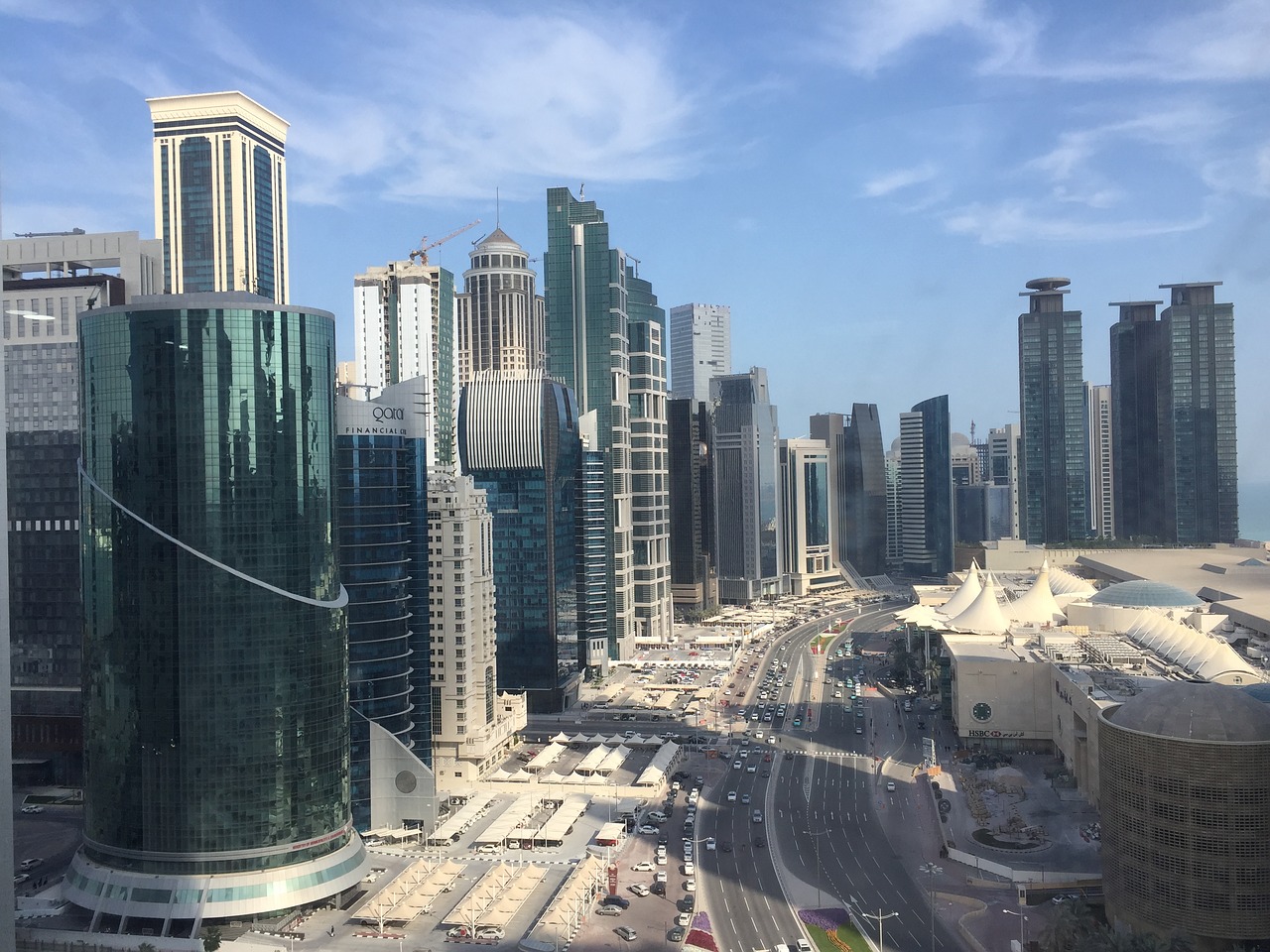
At the time of writing the UAE celebrates National Day commemorating the 51st anniversary of the formation of the country in 1971. The public holiday on the 2 December marks the day that six emirates bound together to form the UAE, with Ras Al Khaimah joining as the seventh emirate the following year. The UAE Founding Father, the late Sheikh Zayed bin Sultan Al Nahyan, led efforts to unite the emirates and became the first president. His son, Sheikh Khalifa, served as president from 2004 until his death in May. This year will mark the first time that President Sheikh Mohamed bin Zayed Al Nahyan will oversee National Day as leader, having been elected this year. This year’s celebrations take place against the backdrop of significantly relaxed Covid-19 restrictions.
I was delighted to attend the IFE AGM and Fire Conference 2022 held at the Aviva Building, St Helens, 1 Undershaft, London, EC3A 8EE, on 22 October 2022. Prior to the conference, I also attended the International General Assembly (IGA) meeting and workshop. This year’s fire conference focused on the impact of sustainability and saw over 400 delegates come together both in person and virtually to gain an insight into keys topics impacting on the sector. Sustainability was the main focus, with the IFE leading sessions focusing on emerging technology, the green agenda and changing environments. The knowledge shared at the conference relating to electric vehicle fire safety and operational response was very relevant to the Middle East.
Steve Hamm, IFE CEO, gave a very thought-provoking presentation on managing fire safety in a sustainable world and highlighted that the IFE, as a global leader in the industry, should be looking at engineering as a viable solution to practical problems through the application of tools, technologies and methodologies. It was suggested that the key to understanding sustainability is to recognise what is going on in society and politics across the globe. He said: ‘We need to understand that different people are viewing the sustainability agenda and therefore the fire safety challenges that stem from different perspectives.’ The presentation concluded by identifying that there needs to be a commitment to ethical behaviour and organisational and institutional values, reminding delegates that above all, trust in the fire sector was vital moving forward.
The IFE has appointed Paul Trew as their Alternative Fuels Coordinator and Paul presented and led a well-attended electric vehicles and emerging technologies workshop. Paul stressed the international importance of the green energy agenda and how the UK alone already has more than half a million fully electric vehicles and as many hybrids. Following Paul, Adrian Butler gave an overview on his work for the Risk Authority within the Fire Protection Association. He identified one of the main aspects the organisation is working on is updating its guidelines on fire protection for charging electric vehicles.
Adrian went on to explain that people were only now starting to understand issues around electric cars and a fire strategy: ‘For example, when the lithium-ion batteries catch fire, they produce their own oxygen. So you can’t put them out in the same way you would a normal combustible, but you can, by reducing the oxygen in other ways, reduce the intensity of the fire and reduce the fire spread. So containment, oxygen reduction and cooling are pretty major.’
Laurie Kenny from Transport for London gave a very insightful presentation regarding electric vehicles and the London infrastructure. By the end of 2022, 44% of London bus carriages will be zero emission vehicles including, hydrogen, electric and hybrid powered buses. Laurie highlighted the issue now was making people and professionals more aware of how to deal with fires and changes to the infrastructure resulting from electric vehicle fires: ‘We had a Prius that broke down in the Upper Thames Street Tunnel and it took nine hours to be recovered because electric vehicles don’t have hand brakes in the same way as a conventional car. So if there’s a fire, you can’t tow them, they have to be lifted or dragged.’
Matt Deadman from the National Fire Chiefs Council (NFCC) concluded that what everyone was witnessing was a new paradigm: ‘Technology has always driven a pace of change, of course. But I can’t remember a time where the pace of change from a technological perspective has been so great and it’s causing us such issues. So when it comes to things like regulation, and talking about regulation as a solution to some of these issues, actually is regulation geared to be able to keep up with the pace of change? The technology has moved on and we have to adapt and change.’
International General Assembly (IGA) Workshop
The half day IGA workshop held on 21 October 2022 was well attended and very engaging. Updates were provided on the Volunteer and Branch Support and the governance review. The volunteer recruitment process has been designed and is currently being mapped out. Volunteer engagement, recognition, branch support and volunteer risks were also discussed. The IGA felt that all the efforts towards volunteers and branch support by IFE HQ team were very positive
The workshop also engaged on topics such as the IGA constitution content review on the website, presence of feedback mechanism between IGA and the Board and revisiting the Bylaws by the team. Paul Trew was introduced to the IGA and he spoke briefly on the future emerging technical roles and the need for communication between head office and the branches.
Chief Executive Steve Hamm provided an update and expressed the importance of all the initiatives and work currently happening within the IFE and over the last three years including urgent projects, for example, the programme for change. The membership growth rate is moderate but there is no member attrition. One of the key new programmes focuses on the career starter to attract new young members. The Brand and PR project was very significant to reach potential members and organisations, particularly to encourage corporate accounts. Steve also confirmed that new Special Interest Groups (SIGs) are forming, under the direction of Dave Quinn, Chair of the technical committee.
During the workshop the branch governance pack was discussed in the context of networking and benefits of the branches supporting each other and communicating with regards to best practice and challenges that individual branches may face. The need to update and progress some branch constitutions was discussed noting that a ‘model constitution’ was already available and that it wasn’t necessary to wait for the proposed work to be completed before branches either adopt the current model constitution or amend as they see fit. A number of key points from discussions held highlighted:
- A desire to seek a ‘baseline’ of where we (branches) are now and a picture of current performance from head office
- The importance of the membership and Branch support role
- The need for guidance to be available to Branches
- That communication is key between the IGA, Branches and head office
The Governance Review was discussed and of specific relevance to the IGA the following points were identified as part of the review:
- Facilitate a review of IGA constitution and create Terms of Reference
- Facilitate a review status of SIGs as part of IGA
- Review funding models for branches
- Branch governance review including rules for incorporation in the UK
- Review of branches constituted as an unincorporated association
- Confirm the requirements for Branch trustees
- Review arrangements for horizon scanning
As part of the review the IGA chair and deputy chair were included within the project group and would be involved in setting the terms of reference for the reviews which would then seek IGA input to support the review.
IGA operating model
As highlighted in a previous branch update the IGA discussed during the workshop a document prepared and previously circulated by Ed Claridge (IGA Chair) relating to the IGA operating model. A focus of the discussion was the identification of the IGA Constitution and that this was the driving document that needed review and amendment to support/resolve the issues as set out within the discussion document. The following summarises the discussions:
- Ways to operate in the future for branches with more effective communication including measures to eliminate the repetition of this discussion was a general theme
- The branch support role was considered important and should include increased engagement by both virtual and hybrid meetings throughout the year
- Concerns regarding a disconnect in the process were expressed where the elected IGA member functions only in accordance with the board/director role obligations which creates the frustration that the purpose of IGA nomination is lost
- The communications (input and output) with the board does not happen as required and so means to improve this needs to be devised
- There were multiple views on the half-day versus full-day IGA workshop and their outcomes with a need to hold more effective and regular meetings
- Members also pointed out the lack of a feedback mechanism following board meetings
The following recommendations within the discussion document were raised with motions carried as to action the following:
- 1. Review the existing IGA constitution and terms of reference for ‘fitness of purpose’
- 2. That the eligibility criteria for IGA vice leader be open to any ‘paid up member of at least Graduate grade’. There would be no other criteria and the role is not limited to current IGA representatives.
- 3. That the leadership term should be a minimum of a one year and that the leader be open for re-election up to a maximum of three consecutive years.
- 4. Being a past office holder should not prevent that person from being eligible to stand in the future.
The fire sector globally is moving at a fast pace and keeping up with technological developments and regulatory requirements presents many challenges for change. Over the next quarter the branch looks forward to embracing change, governance and membership expansion.
For more information, go to www.ife.org.uk/GCC-UAE
