
Gulf Fire recently took the opportunity to speak with Steve Hamm, Institution of Fire Engineers (IFE) CEO, to learn how the professional body is adapting to help members deal with global and local changes to all roles in the sector. From climate change to advances in technology, the launch of its new global strategy will help members keep pace with a rapidly evolving fire safety landscape.
Gulf Fire: Why have you developed a new strategy now?
SH: Across the board our roles and responsibilities are evolving, influenced by advances in technologies and materials, external factors such as climate change and learnings from major incidents such as Grenfell. These are all influencing new regulations and standards, new ways of working and highlighting the importance of knowledge and information sharing to evolve our skills and capabilities worldwide.
The reality is the fire safety landscape in which our members operate is changing at a faster pace than at any time since the foundation of the institution in 1918. This is both exciting and challenging and it is vital we remain highly relevant to the needs of our members and continue to build on our role to create a fire-safe future. We have had valuable input from members, volunteers, staff and stakeholders in shaping our new direction.

Gulf Fire: What does it involve?
SH: We have undertaken a comprehensive review of our communications and activities with the aim of reshaping our services to members and developing clear strategies for activities under two core themes of competency and sustainability.
By listening to our members, we have come up with a strategy that ensures the IFE remains relevant to future needs, builds on the potential of digital learning and knowledge sharing initiated during lockdown, and influences best practice around the world.
Gulf Fire: Why are you focusing on competency and sustainability?
SH: Competency has always been front and centre of our commitment to professionalism and is more important than ever as we update our skills and practices in line with new legislation and regulations.
As the international professional body for those in the fire sector, we are a beacon of expertise; more than that, we bring people together to inform innovation in practice and respond to new and existing challenges in fire safety around the world.
Training, CPD, qualifications and technical updates are at the heart of our role in illuminating a fire-safe world. We are bringing together the schedules, events and work of our special-interest groups to create a more transparent and accessible hub of information that will support competency. Our branches around the world are engaged in influencing new legislation, regulations and guidance, as well as enabling the training to support these changes.
In fact, we have already reviewed our current qualifications, introducing a new suite of exams inspired by global industry needs and feedback from our members and examiners. Already, these have been well received. We will build on this success by bringing in at least two new qualifications for 2022. We will be finalising our selections but are currently exploring Urban Search and Rescue and Fire Risk Assessment.
Our focus on competency will be underpinned by a new learning resources facility as a member benefit with accessible study support.
Also, we are reviewing and reinforcing our training accreditation regimes. We are excited to be building closer relationships with higher education and university establishments to broaden the depth and diversity of skills and competency across both technical and social disciplines. Our work will create clear competency frameworks and accessible career development pathways for all.
Sustainability is a vast topic and for the IFE, it goes beyond adapting to the challenges driven by climate change. It reflects how we can build resilience in the profession for our members.
On a global level, smart cities, connectivity, big data, advances in building materials, fuels, transport, energy storage, water and waste management will all inform practice in the future, alongside advances in the technologies that we can use to predict, manage, monitor and deal with fire risk and fires.
Sustainability is an area where our global community, our special-interest groups and our strategic partners all have a vital role to play in sharing and advancing knowledge and ideas.
Around the world our branches are already engaged in a wide range of topics related to dealing with climate change, developments in the built environment and how standards and regulations are changing to meet these challenges.
For example, we will continue our work with members to influence the development of new standards such as the fire safety guide for waste recycling facilities, work being led by our Industrial Fire and Risk Special Interest Group (IF&R SIG).
We will also be continuing our work looking at areas such as evolving methods of construction, wildfires, the adoption of new fuels in our heating and transport networks and how the industry is responding around the world.
Sustainability is an area where we feel the true value of our global community will come to the fore and we will be looking at ways to expand our branch network and share ideas and expertise that can inform best practice, spark fresh research and deliver advances in our professional capabilities and understanding.
Gulf Fire: What difference does that make to members?
SH: Our members need to know that by being part of the IFE they will have access to the skills and expertise that can help them develop as professionals and meet the future needs of the sector and its stakeholders.
Our research particularly highlighted the importance members place on the global reach of our organisation, enabling them to learn from each other and ensure they are at the forefront of best practice. This builds their own levels of expertise and in turn the confidence that others have in their services, advice and assessments.
Gulf Fire: What impact do you think the changes will have globally?
SH: We have enhanced our communications across the board and moved more of our activities online, attracting a much more diverse international audience than previously.
We are focused on ensuring that what we do remains highly relevant to the future needs of the sector so are increasingly looking to our branches to bring challenges to us from around the world so that we can work together to resolve them, as well as expanding our branch network into new territories.
Gulf Fire: What are your priorities in year one?
SH: A key priority in 2021 is developing a strategy that recognises and rewards our valued cohort of volunteers. Volunteers are a driving force within the organisation. From reviewing applications and examinations to sitting on committees, they volunteer their knowledge and expertise to help maintain the high standards that build confidence in our professionalism and practice. In turn, they benefit from the experience, knowledge sharing, influencing and leadership skills that come with many of our volunteering roles, but we want to build on this.
As part of this exciting initiative, we are going to host a new Volunteer Hub on our website. The hub will recognise and support our existing volunteers, enabling them to share their experiences and showcase work they have been involved in on our behalf.
It will also highlight the diverse range of voluntary roles available throughout the IFE and make clear what each role involves. The hub will also set out the many benefits that volunteering for the IFE can bring to both individuals and employers.
Alongside this, we are also strengthening our career development offer with a new CPD hub on the website as well as planning a comprehensive programme of events that we aim to have up and running by the end of the year.
The shift to virtual learning and events during 2020 will continue. This will widen access to CPD and other events to our members around the world, increasing our ability to knowledge share and learn from each other.
IFE: What are the Institution’s longer -term goals?
SH: Around the world, our branches are engaged in activities designed to attract new people into the sector. Professional fire engineers will be crucial to making a rapidly changing world safe from fire in the future.
Today, the fire sector has evolved into a complex and accomplished industry and now, within fire engineering, there is a whole spectrum of different specialisms that draw on a diverse range of skills and knowledge.
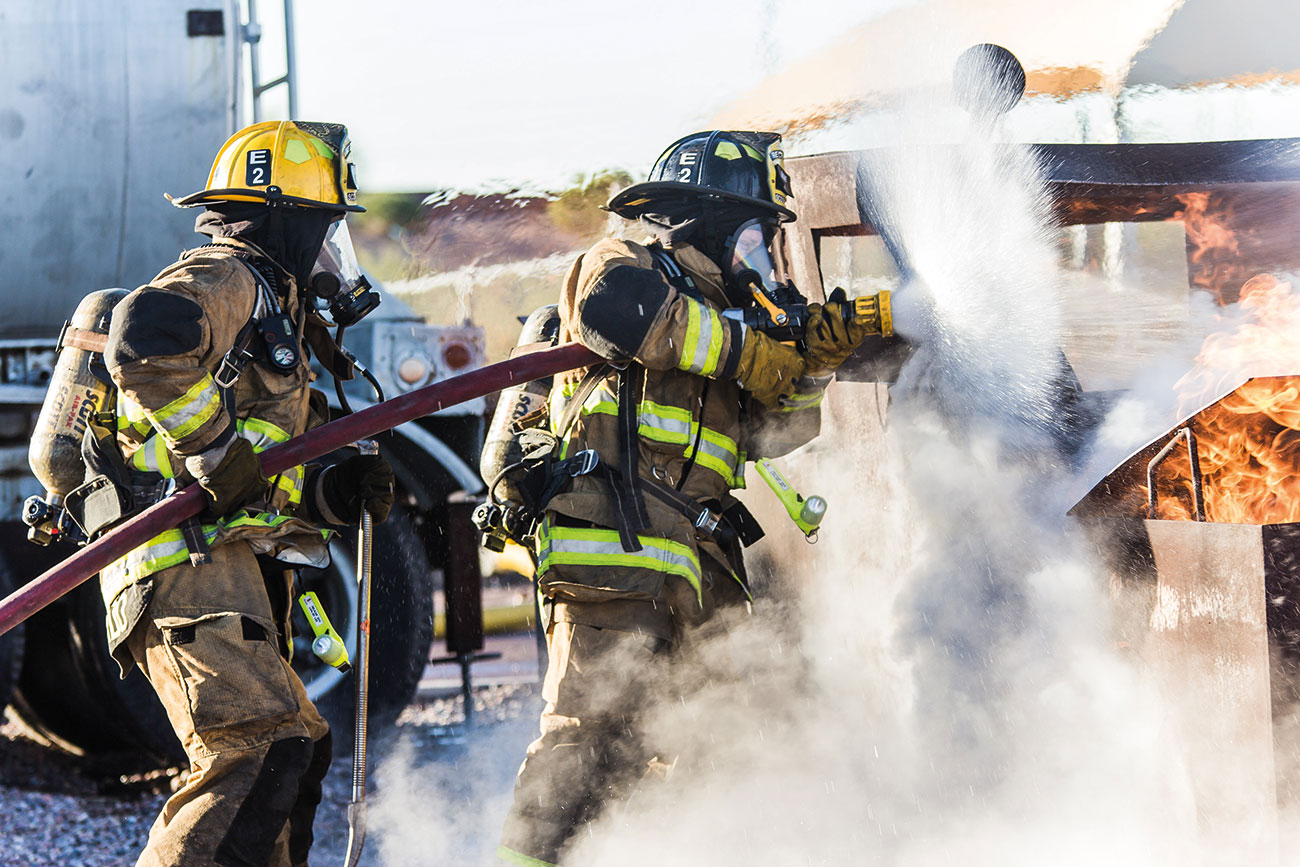
Fire engineering expertise is needed whether you are designing buildings, fire protection systems, commissioning and specifying fire safety systems, signing off on procedures, carrying out inspections and audits, maintaining equipment, assessing risk, planning emergency responses, making decisions about tactical ventilation of buildings, investigating the causes of fires, creating new standards and codes of practice, training and drilling workforces or communities, or at the front line tackling fires.
It is also needed for dealing with fires in the built or natural environment which pose unique challenges. In fact, there are so many challenges such as those posed by new lithium-ion battery technology, where specialist knowledge is being developed on almost a daily basis.
The truth is, there is still a lot we don’t know about fire. We cannot be complacent, particularly when it comes to emerging technologies. In fact, what constitutes ‘state-of-the-art’ in a range of scenarios is changing all the time.
To respond effectively, we must work in partnership, collaborate across specialisms and build our knowledge and skills together. Each person working in the fire industry today brings their own experience and valuable perspective to solving the problems of the future.
As a global organisation, it is truly exciting that we have international peers we can learn from to discover new technology and techniques to address future challenges, whether that is innovations in tackling wildfires or how AR/VR and drone technologies are being used to build skills, knowledge and understanding.
Now, more than ever, fire professionals need to be willing to learn and adapt to new scenarios, come up with fresh thinking for both new and old challenges and create sustainable opportunities to learn and develop in our careers.
In a world that’s changing fast, knowledge, expertise and accountability will give all those working in the industry the tools to make the right decisions and continue to build long-term trust and confidence in the communities they serve.
This will be a transformational year for the IFE, one in which we will build on feedback from members around the world to strengthen our leadership, our communications, our responsiveness and our relevance to fast-changing global fire safety and competency needs to ensure our members continue to thrive as trusted professionals.
For more information, go to www.ife.org.uk
