

In recent years, architects and real-estate developers have been erecting buildings that are increasing in complexity with multiple occupancies. To assess the building’s safety, engineers are relying more and more on conducting egress analysis to see how long it will take people to evacuate such buildings.
This analysis uses various methods, such as simple hand calculations or more complex computer modelling. However, these methods provide a simplified approach to assessing people movement and do not consider some aspects of human behaviour during evacuations, such as realistic exit choice, staff intervention or even how it is affected by culture. This article discusses the uses of egress analysis, scarcity of data, and some of the observed human behaviours during experiments, emergency evacuations and fire drills that should be considered when conducting an egress analysis or developing an emergency evacuation plan.
Prescriptive vs. Performance Based Design
Prescriptive codes are a big part of the life safety community and are applied worldwide due to their relative success, clear approach to safety and ease of implementation. Such codes have been written and revised based on major fire incidents. This can be seen in the great fire of London where a number of laws were passed regarding building separation to minimize fire spread, and more recently the 2001 attacks on the World Trade Centre, which resulted in requiring separate fire service access elevators in tall buildings. While these codes have saved lives over the years, its revisions are taking a passive approach to code evolution rather than a proactive one, where changes are made based on scientific research. In many cases, researchers are unware of the industry’s needs and engineers do not have the time to address those needs with the various project deadlines they deal with. The research and engineering community should coordinate their efforts where practicing engineers highlight areas of code deficiency and researchers would apply the scientific approach to fill-in those gaps.
Safeguarding people from the effects of fire is one of the major objectives that life-safety professionals aim to achieve when involved in any building design. While this can be realized to a certain level through prescriptive building codes, such codes can limit the abilities of architects and fire protection engineers when dealing with complex buildings that house multiple occupancies. This influenced the building-design community to implement a different approach for such “outside the code” buildings, known as performance-based design (PBD) that focuses on achieving the intent of the code rather than its literal wording. As part of the performance-based design approach, engineers should demonstrate that the proposed safety measures provide an acceptable level of safety to the authority having jurisdiction (AHJ), through an engineering assessment. In many cases, this would require the use of the Required Safe Escape Time (RSET) and Available Safe Escape Time (ASET) model, also known as Egress Time Model. This involves conducting an egress analysis, to see how long it might take people to evacuate the premises using modelling techniques that are derived from field observations. However, there is limited information and guidelines on the type of modelling tool that should be used when conducting such analysis, especially with the wide range of modelling approaches that include various aspects of human behaviour.

What We are Missing
Though research into human behaviour in fires can be traced to the early 1950s, there has been an increased interest in this subject since the 1990s, covering a wide range of topics related to the psychological process and social organization. The data generated from these studies is used to develop pedestrian evacuation computational models, and their input variables. In recent years, scientists have highlighted several challenges, such as scarcity of data, ethical challenges of data collection, and inability to compare existing data due to differences in collection methods, location and culture where data was gathered.
There are a number of scientific journals and conferences where engineers and researchers can obtain studies relating to human behaviour during emergencies however, such outlets do not always fall under the same discipline. For example, the effect of physical disabilities on walking speed can be found in various medical journals as well as journals related to fire protection engineering. This can cause engineers and scientists to overlook existing data, use inapplicable data, and waste time and effort by spending time conducting research that has been covered by previous studies. Only a handful of scientists have recognized such issues and have urged the life safety community to make data related to their field readily available in a centralized location online. This will enable scientists and engineers alike to design buildings and scientific experiments that will better cater to their needs.
Much of the data on human behaviour and movement used in fire engineering has been collected through fire drills, interviews and surveys following actual incidents. This data is very valuable to the life safety community as it can be applied to similar occupancies when conducting an egress analysis. However, it is difficult to compare two sets of data from similar studies due to differences in location, setup and the environment. This brings in to question the conclusions extracted from such data as it is difficult to reproduce. For this reason, some scientists have been expressing the need to standardize human behaviour in fire data collection in order to increase the robustness of such data.
When examining the life safety standards around the world, it is apparent that the majority of the life safety standards that are updated periodically originate from Western countries through various code reviews, incident reports and some scientific studies. This has supplied the life safety community with a wealth of knowledge and data covering Western cultures, such as UK, USA and Canada. While such data is very important when conducting an evacuation analysis, one would question its cross-cultural applicability when used for non-Western cultures, especially that recent studies have shown that people in some non-Western cultures tend to walk slower than people from Western cultures due to traditional clothing.

Evacuation Field Observations
With the increasing interest in studying emergency evacuation, a number of misconceptions have been rectified when it comes to how people perceive the threat, interact with the environment and with each other. This can be seen in the over used excuse of “panic”, the way computer models portray people’s exit choice in some software packages, how people perceive and react to an alarm.
In a number of cases after a fire incident with fatalities, the media uses “Panic” to explain why the victims reacted the way they did when evacuating, and illustrate that it was an irrational choice. Psychologists have argued that in hindsight while such actions seem irrational, they were perfectly rational to the victims as they made a choice based on the information that was available to them at that time. Such miss use of the word “Panic” has hindered research efforts for a long period as researchers were reluctant to examine people’s perception of threats. Since then studies have shown that there are number of emergent behaviours, such as helping others (non-relatives) during an emergency evacuation, which contradicts the idea of “panic”.
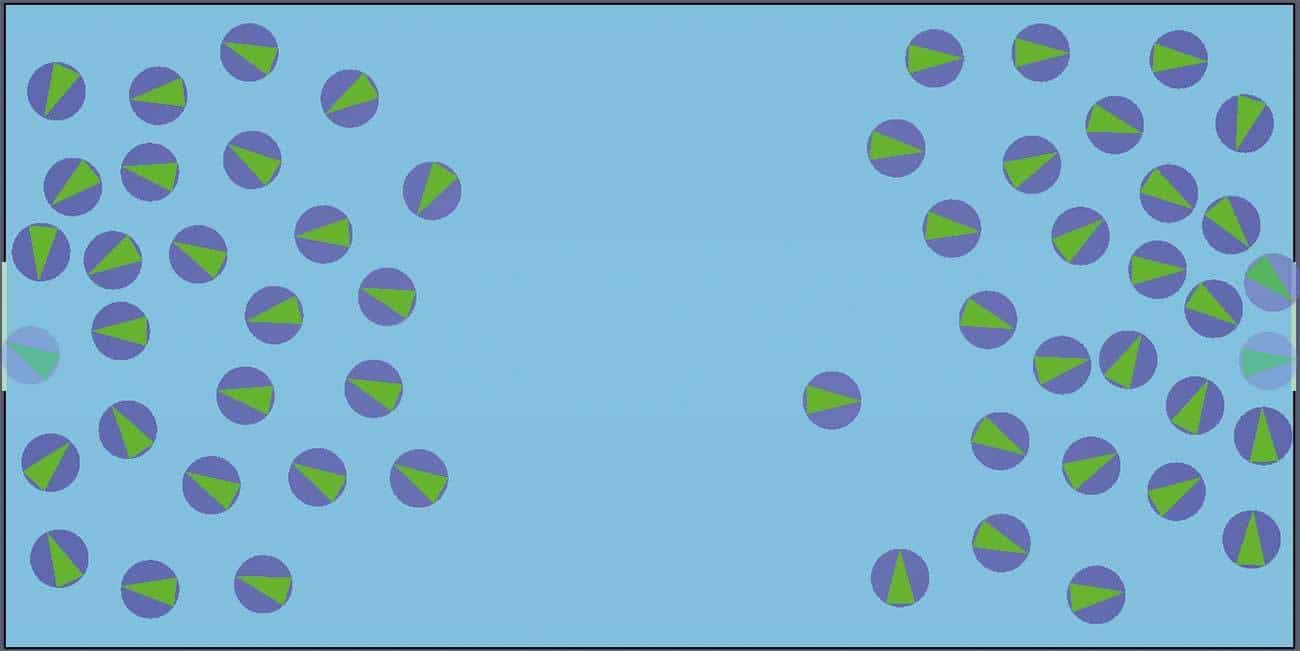
There are various evacuation computer modelling software packages currently available in the market for engineers. Such models allow the user to specify the size, walking speed and even demographics of the modelled population. While these models come with user manuals, there is no clear guidance on the important inputs that should be considered and the various changes that need to be made to the model to obtain realistic results. This can be seen in peoples’ exit choice, where the default setting of such models is usually for the modelled person or “agent” to go to the closest exit. This default behaviour does not correspond to what was seen in field observations, as people are more likely to leave a space or a building through the same doorway they used to access the premises. This has been addressed in some international standards for occupancies catering to a large number of people where it requires that the main entrance / exit be designed to accommodate not less than 50 percent of the population using that space.

Some engineering approaches assume that people will instantly react to an alarm once they hear it, as if they are robots, thus allowing a significant decrease to the total evacuation time when conducting an evacuation analysis. Studies have shown that people tend to react differently to various types of alarm, based on their previous experiences. For example, a 2001 study conducted in Canada to measure people’s ability to recognize a standard fire alarm signal, in that case the Temporal-Three signal, showed that only 6 percent of the population were able to recognize the alarm signal; this was due to the lack of familiarity with the signal even though it was adopted by the Canadian authorities in 1997. When a person perceives an emergency cue (e.g. fire alarm signal, sees or smells smoke), they compare this to similar situations they previously experienced. If they have previously witnessed an emergency alarm, they are more likely to recognize it faster and begin the evacuation process. Cue recognition can also be influenced by staff intervention in department stores, where studies have shown that staff intervention can decrease the time it takes people to recognize and react to an alarm by 50 percent.
Where to go from here?
It is clear that there are a number of deficiencies in life safety and evacuation analysis that require a lot of effort, time and joint collaboration between engineers and scientists in this field. This will be an ongoing effort to correct such shortcomings by collecting data related to how people behave, perceive and process danger cues and their movement abilities for various cultures. Once collected, such data should be saved in a centralized online location with open access to allow all life safety professionals to benefit from them and increase their ability to create unique designs with the highest levels of safety tailored to each building.
For more information contact majed.almejmaj@burohappold.com
About the Author

Majed has a Bachelor and Master of Science in fire protection engineering and has been involved in the industry for 13 years. His experience covers developing and implementing fire protection strategies in various applications, such as hydrocarbon processing plants, high-rise residential / office buildings, training and research establishments. In addition to working with BuroHappold as a Senior Fire Engineer, he is also a PhD candidate at Worcester Polytechnic Institute pursuing a degree in fire protection engineering and his thesis examines the effects of cultural differences on human behavior during evacuation, and how to implement such differences in egress modeling.
