
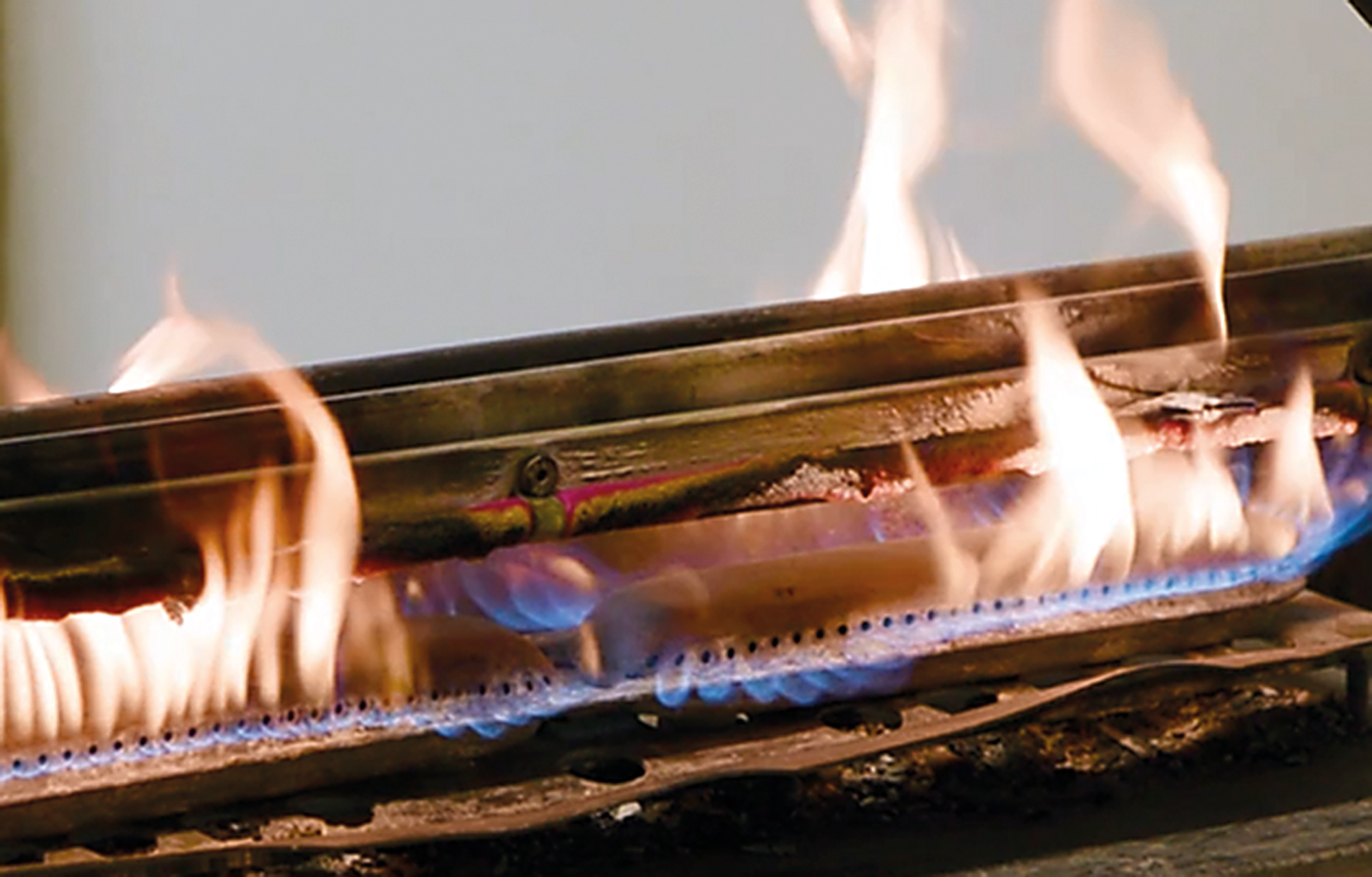
The Oil and Gas industry involves some of the most hazardous operational locations in the world. One of the key hazards to onsite workers and the facility itself is the risk of fire or explosion and how to contain this to prevent a disaster.
If a flame or spark breaks out within an ATEX hazardous environment, then it is the job of specialised equipment to restrict disastrous consequences. It is imperative to limit the spread whilst supporting critical emergency systems giving vital time for a safe evacuation, shutdown procedures and to protect the assets of the facility.
There are dangers, most gases are odourless and invisible but pose an extreme risk, especially if flammable. However, equipment needs power, every single circuit within a hazardous location must ensure they provide adequate safety to greatly reduce the risk of a potential disaster.
The Importance of Selecting the Right Equipment
Electrical circuits all need a feed, whether it be safety-critical such as an emergency shut off, pressure sensors, gas monitor, fire alarm system, or emergency lighting. Even a standard lighting circuit in accommodation quarters or a small motor will be within an environment that must be installed with the risk being considered.
Great efforts are made by consultants to analyse the risk and recommend the safest and most cost-effective solution to any circuit. However, many are unaware of the installation procedures or the origin of their products. Considering the assets these products are meant to protect it is alarming to think how many times the budget-priced item is chosen that seemingly ‘meets the standard’. As we have seen from the catastrophic results of the Grenfell Tower fire, the chosen equipment did not stand up to the tests of a true fire scenario.
Fire Resistant Cables
In hazardous area applications, cables must provide some form of additional function unlike other standard cables. This may be mechanical protection, fire protection, less data interference or environmental protection amongst other factors.
Many of these cable solutions require additions such as conduits, jointing kits or specialist training to install. In certain cases, polymers within the cables may need additives to aid fire resistance or environmental protection, all except one type of cable.
The fire performance of MICC cables is unrivalled. The copper sheath of MICC cables gives protection in some of the harshest environmental conditions. These specialised Fire-Resistant Cables use no plastics, conduits, or resins to aid fire protection. MICC cables survive more than 1000˚C and do not aid flame spread as there is nothing to burn. In fact, MICC is the only cable recognised by London Underground as a Fire Survival cable after undergoing testing. This included a 3-hour fire test at over 930˚C, repeated direct impact on the copper sheath and total immersion in water.
The advantages of using MICC cables in hazardous areas from ATEX / IEC Ex approved manufacturers are countless. These installations can be a third of the cost of other Ex cable systems that have no way of avoiding the spread of flames, gases, or substances in these locations without the use of conduits and or resins. These additional compounds or components not only increase the element of risk, but they also come at a cost in time, labour and in many cases only offer a warranty the tenth of a MICC hazardous area approved cable system.

Reputation and Origin
MICC cable is manufactured to extreme tolerances. There is no other cable in its class that has an overall diameter tolerance of only +/- 0.05mm. There is no other type of fire performance cable that is tested up to SIX times it’s rated voltage by manufacturers before it’s deemed to have passed the British Standard for MICC Cables BS EN 60702-1
When MICC is manufactured with the highest precision and correctly installed this cable system will provide a water, air and gas-tight seal that will save lives and infrastructure in both hazardous and non-hazardous locations. The high-quality brass gland will provide a shield between the explosion and the safe zone. The brass compression ring will clamp around the cable made under extreme tolerances and eliminate the possibility of sparks or substances leaking.
The highly compressed magnesium oxide used in the construction of the cable will eliminate the spread of gases or a spark to other zones which would only increase the risk of further injuries to personnel or damage to infrastructure. The cables manufactured from high quality graded copper will perform in a true fire scenario and survive more than 1000˚C for hours. The cable will continue to function and maintain the integrity of circuits, survive direct impacts from debris, spray from sprinkler systems, immersion in water and even a fire hose.
Many manufacturers offer extended warranties. The timescales of these warranties vary but, some cable systems will be approved for 30 years. The equipment could go decades without any fault, but the scenario could happen in seconds. If something does go wrong the cable system has to be up to the task.
In over 30 years of manufacturing, Wrexham Mineral Cables have supplied over 170 million metres of MICC cables around the world with zero failures in the field.
Steve Williams Commercial Manager of Wrexham Mineral Cables has worked for the company since 2006, “As a supplier into hazardous area markets, we take the tolerances and approvals of our cable gland system extremely seriously. The high-quality raw materials used in WMC products is never compromised. We use only the purest magnesium oxide for the insulation of our cables. We select only the highest grade of copper and brass for our cables and glands respectively. “
Steve said, “Whilst a simple installation can take five minutes the risk of material grades has seen evidence of brass not meeting minimum torque settings. This may not be apparent when first installed but a hairline crack becomes a flame path in any EX system. The tolerances of cable diameters are crucial in our cable system. If a manufacturer cannot show process control it runs the risk of the cable gland system not functioning correctly creating a flame path or leak. We remind everyone these cables must be made to within +/- 0.05mm. Outside of these tolerances, the results could be catastrophic.”
Wrexham Mineral Cables hold both ISO Quality Management and Product Approval certificates through LPCB. Steve added, “We believe this gives complete transparency to our Quality System ensuring our processes, training methods, testing and inspection are in line with our Product Approvals. The process control of our manufacturing facility is impeccable and has made us become market leaders in our field. All our raw materials undergo inspection and chemical analysis ensuring they meet our extremely strict Purchasing Specifications. We are also extremely proud to use the words “Made in the UK” on our cables and advise all consultants to obtain in writing from the manufacturer the origin of their LPCB approved cables. We extend this to our clients and customers to always request in writing the origin of the products. This information has been verified by LPCB who has specific guidelines on product marking. Wrexham Mineral Cables welcome visitors and carry our many Third-Party Inspections (TPI’s) for clients. Our door is always open to anyone wishing to see the facility and the manufacturing of our cables here in the UK. The verification of a product and its origin, clearly marked on its cable and gland and verified by its approval body can give peace of mind to the consultant.
MIC Key Facts:
- MIC cable systems are more cost-effective by up to 85% when compared to the same size Cable, Conduit, ExD connectors, and other gland systems.
- ATEX MIC cable systems are significantly quicker to install compared to resin-filled glands.
- MIC cable sizes diameters are much smaller than other competitive systems and maximise the available space
- Good MIC cable system manufacturers offer a 30-year minimum lifetime.
- MIC cable can operate at a continuous temperature of 250˚C, which is significantly higher than other cable types on the market
- MIC cable provides excellent resistance to impact and will still operate when compressed by 65% of its original outer diameter.
- MIC cables are completely inorganic and silicone-free.
For more information, go to www.wrexhammineralcables.com
About the Author

Steve Williams is Commercial Manager, Wrexham Mineral Cables Ltd.
